
Direct food contact, heat, scratches, and frequency of use help determine whether plastic is a real risk — not the mere presence of a small plastic part. For a plastic free kids lunch, the goal isn’t zero plastic everywhere; it’s zero plastic where food actually touches, especially when that food is hot, acidic, or sitting for hours.
The short version:
Start there. Then, when you’re ready to go deeper, Naturally Non-Toxic’s stainless steel lunchbox comparison, non-toxic snack containers guide, and PFAS-free lunch bag guide cover curated picks with full material notes.
Key Takeaways
Direct food contact, heat, and wear are the three factors that determine whether plastic in kids’ lunch gear is a real concern — not the presence of any plastic part at all.
| Point | Details |
|---|---|
| Prioritize stainless or glass | Use stainless steel or glass for hot foods, acidic foods, and anything stored more than a couple of hours. |
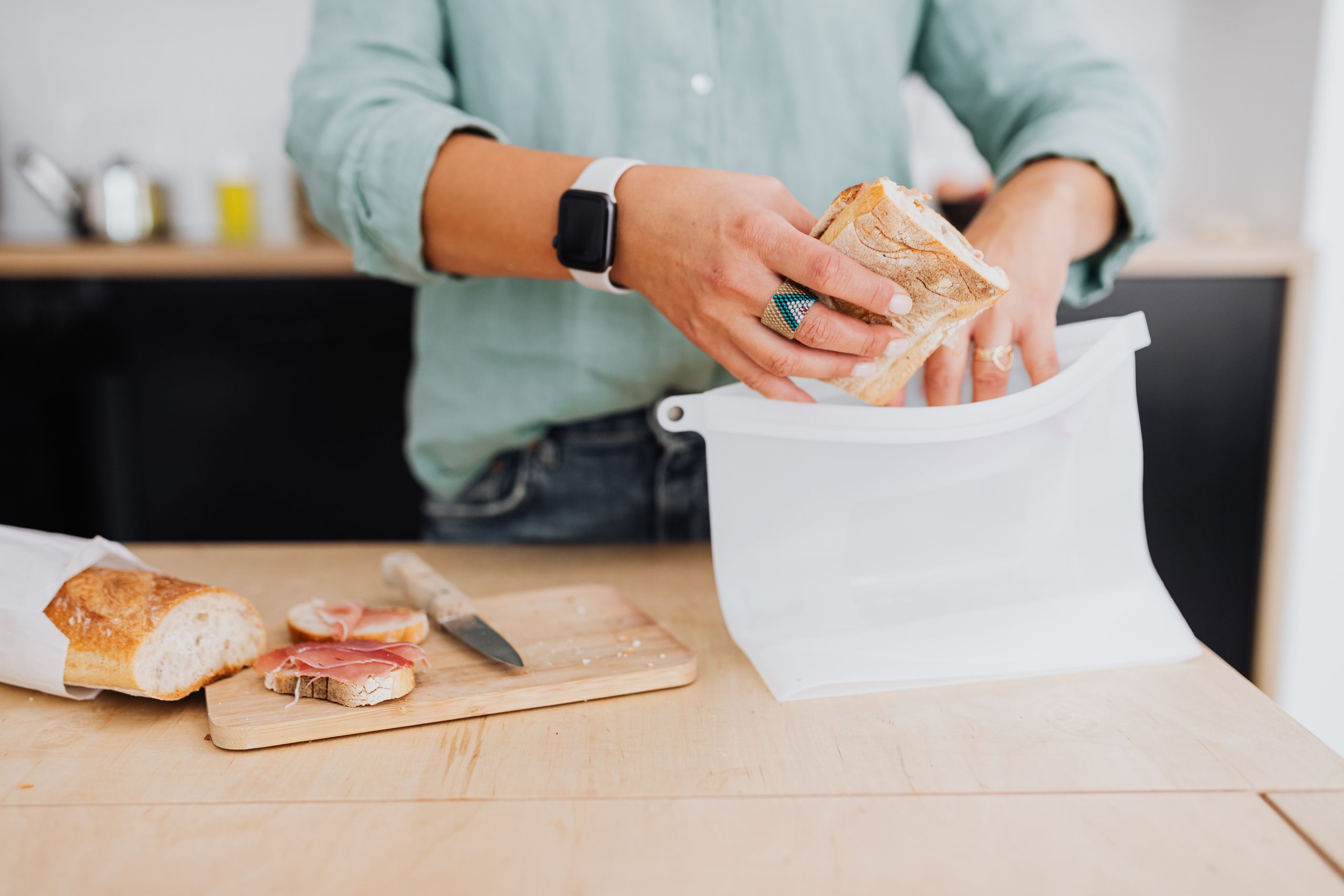
| Silicone and beeswax for wraps | Food-grade silicone bags and beeswax wraps are safer swaps for sandwiches and dry snacks. |
| Test gaskets before school day | Fill, invert, and shake every new container at home; replace gaskets when they no longer sit flush. |
| Replace worn containers | Deep scratches, lingering odors, and warped lids are signs to replace, not reuse. |
Which materials are actually safe for a plastic-free kids lunch?
Not all non-plastic materials are equal, and each has a real-world sweet spot. Here’s how they stack up.
Stainless steel
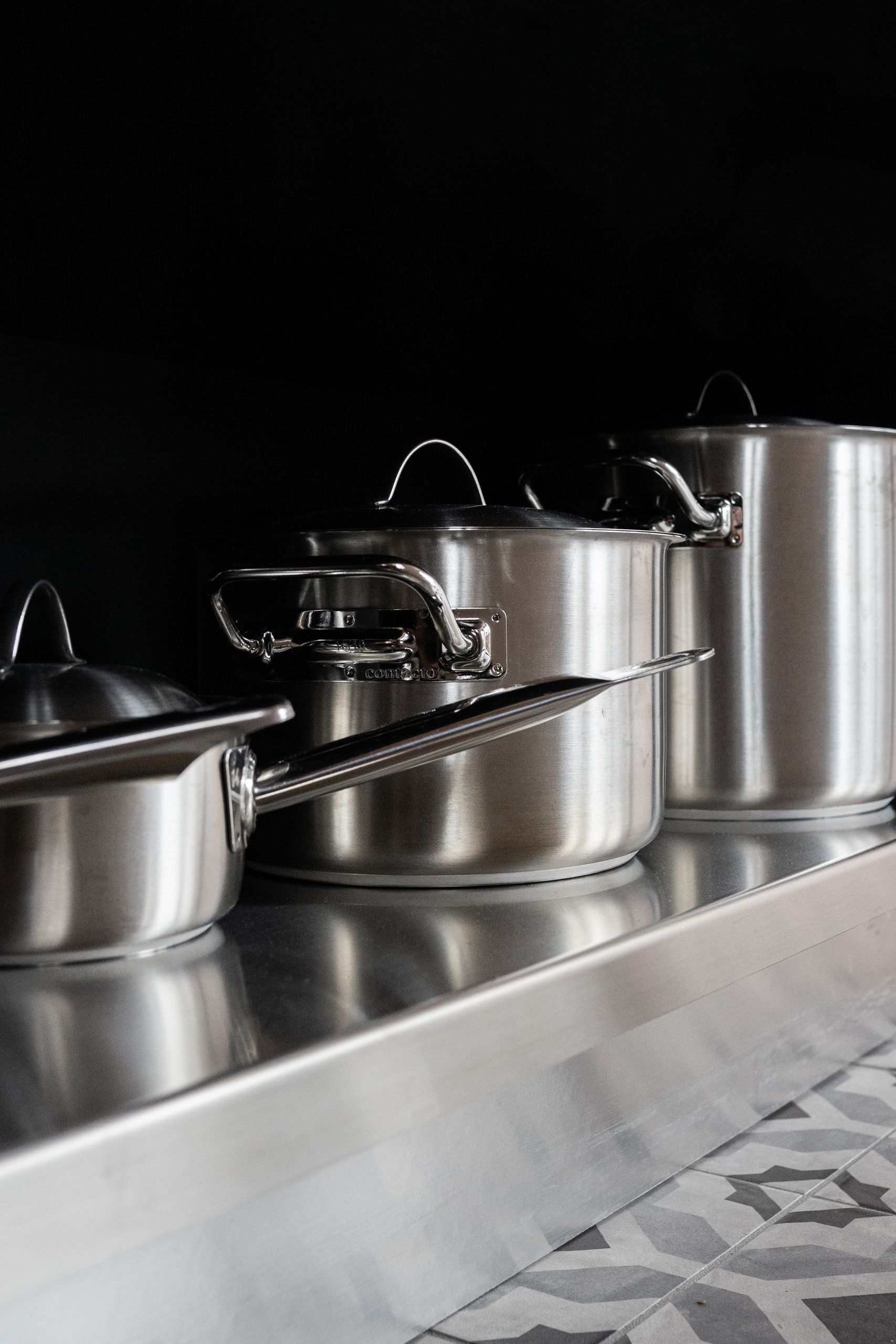
Food-grade stainless steel, especially 18/8 or 304 stainless, is durable, non-porous, and one of my favorite materials for kids’ lunch gear. It does not shed microplastics, handles hot and cold foods well, and can last for years.
The tradeoff is weight: a full stainless bento can feel surprisingly heavy in a preschooler’s backpack. It also dents rather than cracks, which is actually a safety advantage over glass. Best uses: hot lunches in a thermos, main compartment bento boxes, snack tins, and water bottles.
Glass
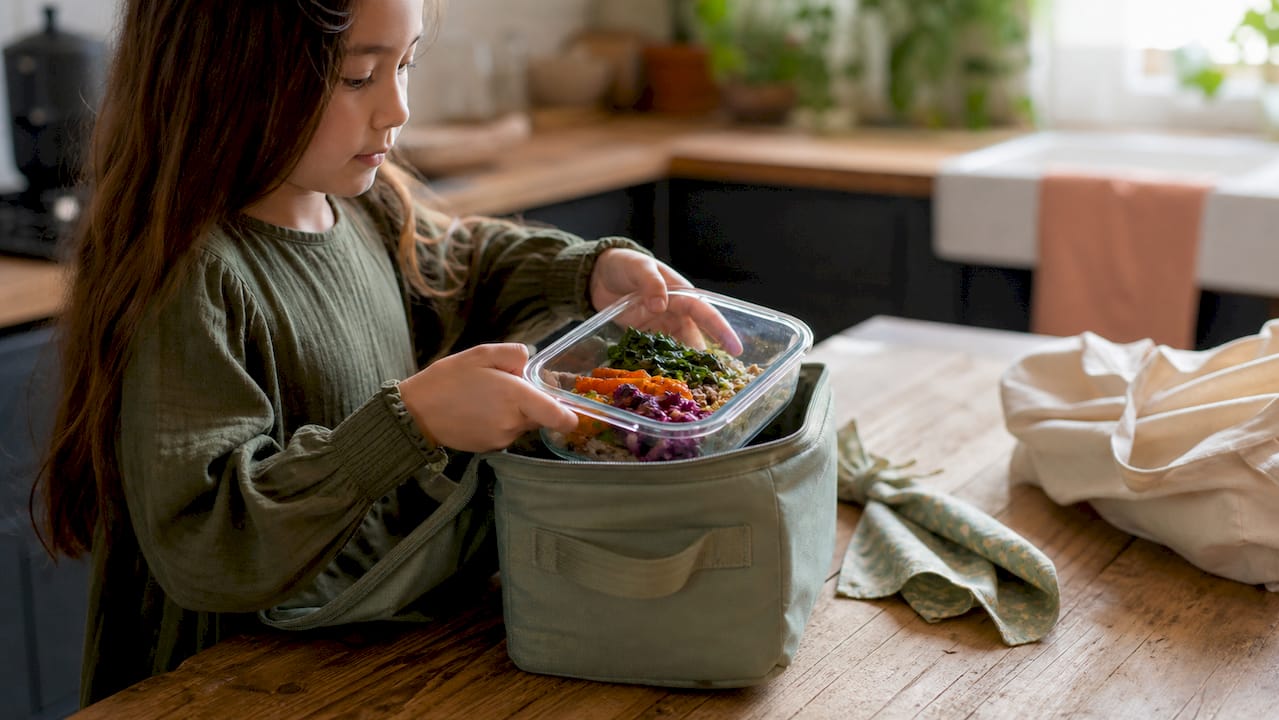
Glass is chemically inert and non-porous, making it one of the cleanest surfaces for food contact. It’s heavier than stainless steel and breakable, which is why many schools ban it outright. Check your child’s school policy before investing. Best uses: refrigerated leftovers packed in a well-insulated bag, older kids who handle containers carefully.
Food-grade silicone
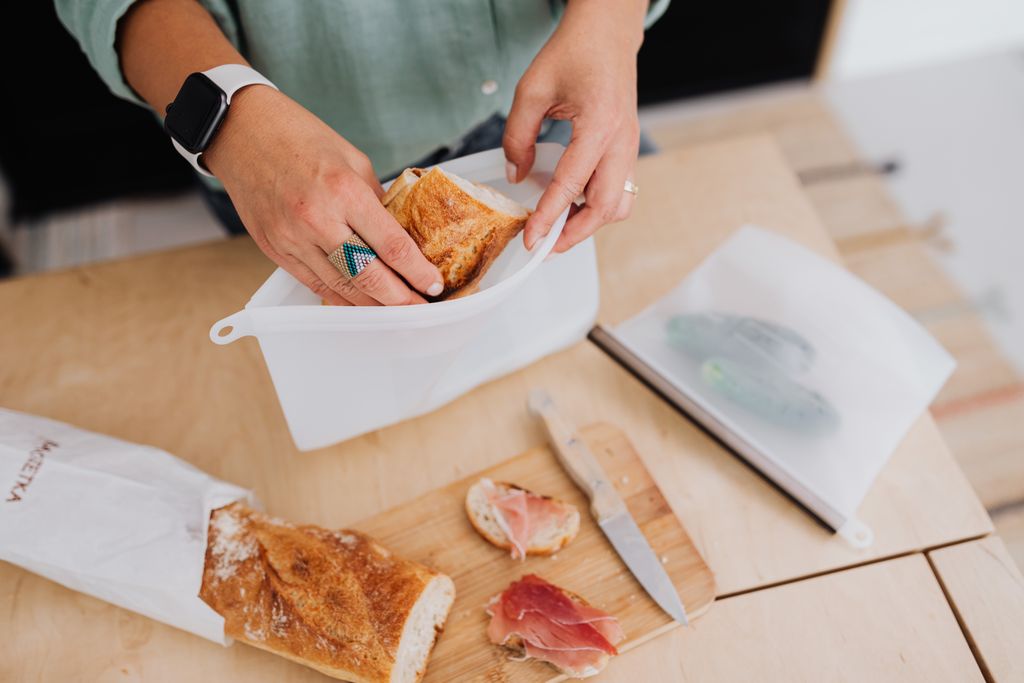
Silicone can be a useful middle ground when stainless steel is too rigid. I look for products from brands that clearly disclose the type of silicone they use, preferably high-quality or platinum-cured food-grade silicone with clear food-contact testing or standards. I like it most for snack bags, dividers, pouches, and gaskets rather than treating every silicone product as automatically “non-toxic.”
Bamboo and wood
Bamboo is trickier than it looks because “bamboo” can mean solid bamboo, coated bamboo, or a molded composite made with bamboo fibers and plastic resins. I would skip composite products with vague material disclosures altogether. For solid bamboo or wood, check what finish or adhesive is used and reserve poorly disclosed products for dry foods rather than wet, hot, or saucy lunches. Best uses: dry snacks, crackers, and foods with no sauce or moisture.
FoodPrint recommends prioritizing stainless steel and glass for direct food contact because they don’t leach chemicals. If small plastic parts are unavoidable, choose BPA/BPS-free components and avoid prolonged contact with hot or acidic foods.
How do you keep a non-toxic lunch box from leaking?
Leakproofing is the most common failure point in reusable lunch gear. A silicone-sealed lid is the most reliable solution for wet foods like yogurt, soups, and sauced dishes.
Home leak test — do this before the first school day:
- Fill the container with water to the level you’d normally pack food.
- Close the lid firmly, including any locking tabs.
- Invert it completely over the sink and hold for 30 seconds.
- Shake it side to side five times.
- Press gently on the lid to simulate bag pressure.
- Open and check the gasket: it should sit flush with no gaps or deformation.
If water escapes at any step, the container isn’t ready for saucy foods.
Design features worth looking for:
Pro Tip: Reserve gasketed containers for wet foods (soups, yogurt, fruit with juice) and use simple snap-lid stainless tins for dry snacks like crackers and nuts. This keeps your gaskets in better shape longer and makes cleanup faster.
What’s the right lunch gear for your child’s age?
Lighter and more rugged often beats material perfection for younger kids. A stainless steel bento box is ideal in theory, but if it’s too heavy for a five-year-old to open or carry, it ends up at the bottom of the bag unopened.
Age-based guidance:
A small exterior plastic handle or safety clip that prevents a lid from popping open in a backpack is a reasonable tradeoff. It keeps food contained, reduces single-use waste from backup plastic bags, and doesn’t contact food directly.
One-week starter plan for sustainable lunch packing
You don’t need to replace everything at once. Sustainability advocates recommend swapping one item at a time to avoid burnout and make the habit stick. Here’s a practical one-week plan:
Day 1: Swap plastic sandwich bags for a beeswax wrap or food-grade silicone bag.
Day 2: Replace a single-use plastic snack bag with a small stainless steel tin.
Day 3: Send a reusable stainless steel water bottle instead of a disposable drink.
Day 4: Add a cloth napkin and a set of reusable stainless utensils.
Day 5: Replace a disposable ice pack sleeve with a reusable ice pack in a cloth cover.
Sample lunches that use these swaps:
Supplies to assemble:
- Beeswax wrap or silicone sandwich bag
- One or two stainless snack tins
- Reusable water bottle
- Cloth napkin
- Reusable utensil kit
- Reusable ice pack
Water bottles deserve their own material check because even a stainless steel bottle may still have plastic in the lid, straw, or drinking spout. My guide to choosing a kids’ water bottle breaks down which parts actually touch the drink and where plastic contact matters most.
How do you clean and know when to replace lunch containers?
Regular cleaning plus a quick visual inspection at the end of each week keeps containers safe and extends their life. The USDA/FSIS guidance on packed lunches focuses on keeping cold foods cold and handling perishables safely. Good hygiene starts with clean containers.
Replace a container when you notice:
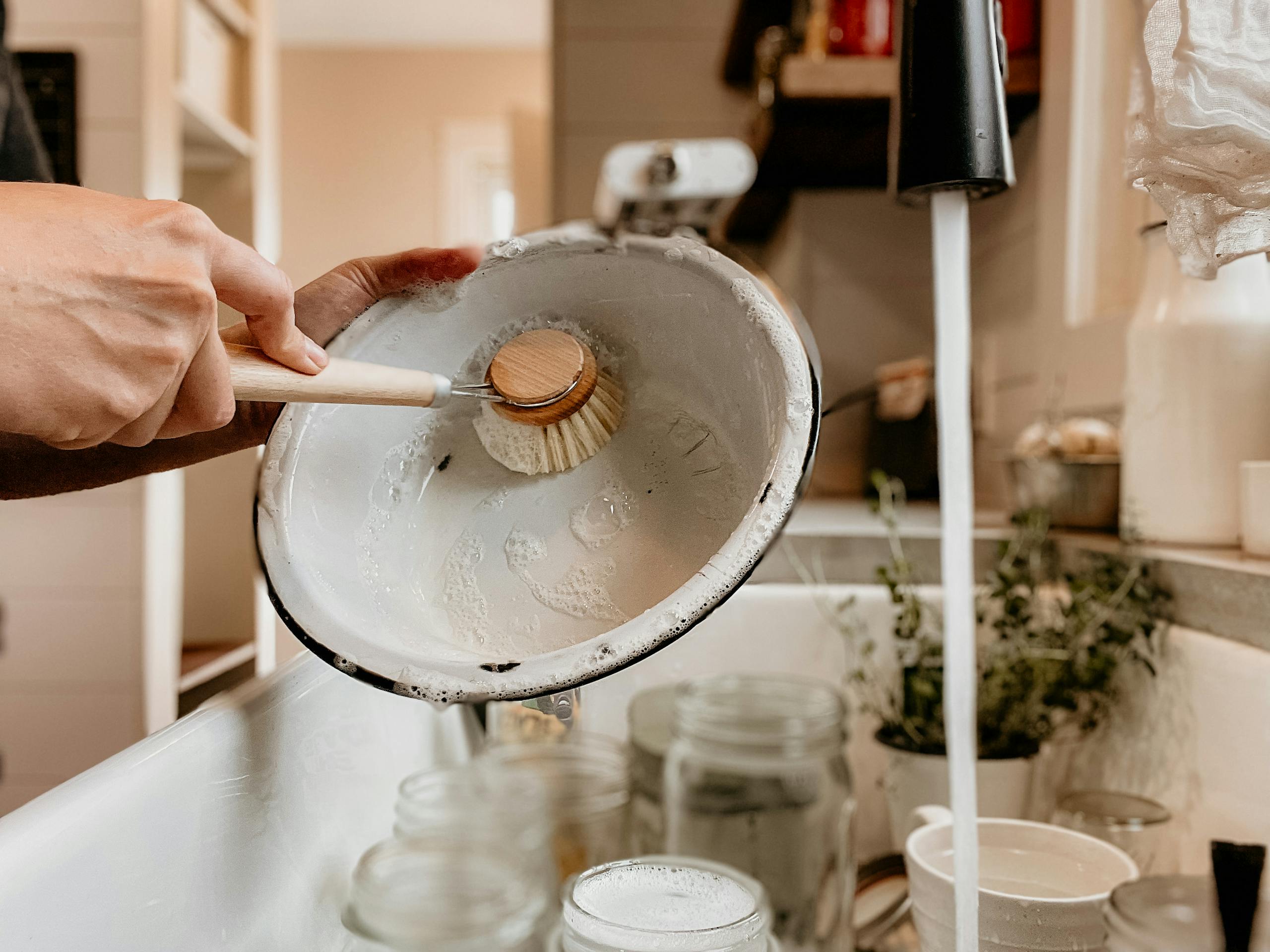
Cleaning by material:
Pro Tip: Before buying, check whether the brand sells replacement lids, gaskets, straws, or other small parts. Replacing a worn $5 gasket is much cheaper and less wasteful than replacing an otherwise perfectly good lunchbox.
What does the evidence actually say about plastic in lunch gear?
The biggest exposure concerns come from heated or acidic foods stored in plastic, and from persistent chemicals like PFAS and certain plasticizers that migrate into food over time. Occasional exterior plastic trim is a much lower concern.
Where the evidence is strongest:
Where risk is lower:
The practical takeaway is consistent: stainless steel and glass for direct food contact, BPA/BPS-free plastic only where unavoidable, and no prolonged contact with hot or acidic foods in any plastic. Reusable containers also reduce household waste meaningfully over a school year. A single student replacing disposable bags and wraps with reusables could eliminate dozens of single-use items per week.
Frequently Asked Questions
A realistic take on plastic-free parenting
The parents who make this work long-term aren’t the ones who replaced every single item on day one. They’re the ones who swapped the sandwich bag first, watched their kid actually bring it home, and felt good enough about that small win to try the next swap the following week.
The research backs the incremental approach. The non-alarmist truth is that you don’t need a perfect zero-plastic lunch to meaningfully reduce your child’s exposure to PFAS, BPA, and phthalates. You need to get the high-contact, high-heat, high-acid situations right. Everything else is a bonus.
Pro Tip: Let your child choose the color or design of their water bottle and snack tin. Kids who feel ownership over their gear are more likely to bring it home, keep it in good shape, and actually use it — which is the whole point.
more back-to-school guides
View all Back to School posts
Sources
- How to make your kids’ school lunch more eco-friendly – FoodPrint
- Keeping bag lunches safe – FSIS/USDA
- Non-Toxic School Lunch Packing Essentials – CEH
- Tips for Packing a Tasty, Planet-Friendly School Lunch – Martha Stewart
- Zero-waste school lunches – Wholefully