Coolers and lunch bags are easy to overlook. Food is often wrapped, boxed, or tucked into a container first, so the bag itself can feel like a minor detail. For beach days, road trips, school lunches, toddler snacks, and family outings, though, that outer layer still matters. Fabrics, liners, waterproofing language, and vague “stain-resistant” promises can tell you a lot about what a brand is, and is not, disclosing.
That does not mean you need a perfect setup. It does mean that if you are trying to build a more practical PFAS-free cooler or PFAS-free lunch bag routine, this is a good category to pay attention to. The EPA, NIEHS, and ATSDR all describe PFAS as a large group of human-made chemicals that break down very slowly, and NIEHS and ATSDR both note that PFAS have been used in products made to resist water, grease, and stains, including some textiles and food-related materials.
So this guide is not a panic post, and it is not a perfection checklist. It is a practical look at what to look for, what to question, and which coolers, lunch bags, and food storage pieces make the most sense right now if you want a more transparent, lower-drama setup.
Quick Answer
A PFAS-free cooler or PFAS-free lunch bag is most useful when the brand is clear about the exterior fabric, interior liner, insulation, and any water-resistant or stain-resistant treatments. PFAS have historically been used in some consumer products for water, stain, and grease resistance, which is why vague performance language is worth a closer look. The goal is not to panic over every insulated bag. It is to choose products with enough material detail to evaluate what you are actually buying.
For anything that touches food directly, I still prefer simple materials first. Stainless steel is my favorite low-maintenance option for snacks, sandwiches, fruit, and kids’ lunches. Glass works well for road trip leftovers or car lunches when breakage is not a realistic concern. Silicone bags are useful for flexible packing, crackers, sandwiches, and freezer prep, especially when the brand clearly discloses food-grade silicone.
A plastic-lined lunch bag is not automatically a crisis, but transparency matters. A liner that is clearly identified, such as PEVA or TPU, is easier to evaluate than one described only as “eco,” “safe,” or “non-toxic.” In this category, clear material disclosure is one of the biggest differences between a product I would consider and one I would skip.
Quick Comparison Table
This table is based on how PFAS show up in consumer products according to the NIEHS and ATSDR, plus current material disclosures from the brands discussed below.
Why PFAS-Free Coolers and Lunch Bags Matter
PFAS, short for per- and polyfluoroalkyl substances, are a large class of human-made chemicals. The EPA describes them as persistent chemicals that can move through the environment and that some PFAS can build up in people and animals over time. The NIEHS similarly notes that PFAS have been used in many industrial and consumer products because they can repel water, grease, and stains.
That matters in this category because coolers, non-toxic cooler bags, and lunch bags often lean hard on exactly those performance claims. If a bag is marketed as extra stain-resistant, heavily waterproof, grease-resistant, or performance-treated, I want more detail, not less. The ATSDR specifically recommends being aware that some consumer products, including certain water-repellent clothing, stain-resistant treatments, and grease-resistant food packaging, may contain PFAS.
What I Mean by a PFAS-Free Cooler or Lunch Bag
In this guide, a cooler or lunch bag makes the cut if it gets as close as possible to the following:
How I Vetted These Coolers and Lunch Bags
I looked at more than just the words “PFAS-free” on a product page. For each cooler and lunch bag, I checked the exterior material, interior liner, insulation details, food-contact language, waterproofing claims, PVC-free language, size, portability, and how easy it looked to clean.
I also reached out to brands directly when the product page did not answer the PFAS question clearly. If a company could confirm the materials, I considered it. If they gave me a vague answer, skipped the PFAS question, or could not verify the product, I left it out of my top picks.
This is also why the list is shorter than a typical cooler roundup. Some brands share a lot about durability or leakproof design, but very little about the coatings or treatments being used. I would rather keep the recommendations tight than guess.
Best PFAS-Free Coolers for Beach Days and Road Trips
PFAS-free coolers are much harder to verify than stainless steel lunch boxes, silicone bags, or glass food containers. Many cooler brands advertise BPA-free liners, leakproof seams, waterproof fabric, or food-safe interiors, but they do not always explain whether PFAS are used in the exterior fabric, water-resistant finish, liner, zipper coating, or other treated components.
Because of that, this section is intentionally short. Right now, there is only one cooler I am comfortable recommending as a current pick with clear product-level PFAS-free language.

The Out of the Woods Walrus Cooler is my top pick for a PFAS-free soft cooler because the brand clearly lists this product as PVC and PFAS free. It is made with FSC-certified washable paper, polyester handles, and a PEVA heat-sealed lining.
This is a soft-sided cooler, not a heavy-duty hard cooler, so I would use it for family beach snacks, road trip lunches, park days, grocery runs, and packed food that will be eaten within a reasonable window. It holds up to 24 cans, has a full zipper closure, an exterior pocket, and an inner mesh zippered pocket.
The biggest practical caveat is temperature control. Out of the Woods says the insulated cooler keeps frozen food chilled for up to 5 hours and recommends ice packs for best results. I would not treat this like a rugged camping cooler or use it for loose ice.
Best for: Beach snacks, short road trips, picnics, park days, grocery runs, and family outings.
Why it made the list: Clear product-level PVC-free and PFAS-free language from the brand.
Material notes: FSC-certified washable paper exterior, polyester handles, and PEVA heat-sealed lining.
PFAS-free note: The brand lists this product as PVC and PFAS free.
Downside: Not a hard cooler, not designed for loose ice, and best paired with ice packs.
Best Non-Toxic Lunch Bags and Kids’ Lunch Gear
Lunch bags are a little easier to shop for than full-size coolers, but they still deserve a closer look. This is the gear that gets tossed into backpacks, left in warm cars, wiped down after spills, and used around snacks, lunches, and toddler leftovers.
For this section, I looked for lunch bags and small coolers with clearer material details, PFAS-free language, PVC-free claims where available, and designs that make sense for real family use. I also paid attention to whether the bag is actually insulated, how easy it is to clean, and whether it works better for school lunches, work meals, picnic snacks, or short outings.

Out of the Woods is one of my favorite brands to browse for PFAS-free lunch coolers because the materials are much clearer than the average insulated lunch bag. Their lunch collection includes several washable paper lunch coolers in different shapes and sizes, so this is a good place to start if you want something lightweight, simple, and easy to carry.
The Paper Sack Lunch Cooler, for example, is made with FSC-certified washable paper and a PEVA heat-sealed lining. The brand lists it as a PVC and PFAS free product, which makes it a stronger pick than lunch bags that only say “eco” or “food-safe” without explaining the liner. It has a water-resistant exterior, holds 6 cans, and is insulated.
This is best for packed lunches, school snacks, work meals, park days, and short outings. It is not meant for loose ice, so I would pair it with reusable ice packs instead.
Best for: Work lunches, snacks, short outings, and everyday family use.
Why it made the list: Clear PVC-free and PFAS-free product language on the brand’s lunch cooler pages.
Material notes: Washable paper exterior, PEVA heat-sealed lining, and cotton or polyester handles depending on the style.
Downside: Not a rugged cooler and not designed for loose ice.
 Fjällräven Kanken Mini Cooler
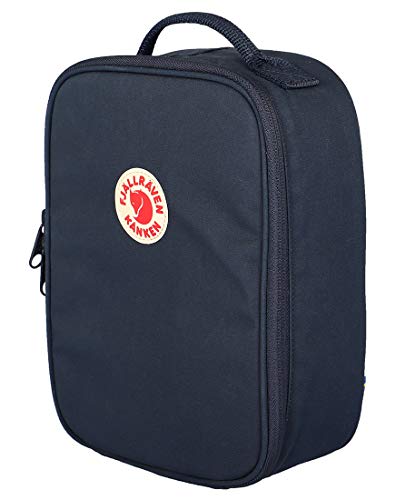
The Fjällräven Kånken Mini Cooler is a compact lunch cooler that works well if you want something small, polished, and easy to tuck inside a backpack. Fjällräven lists this product as produced without PFAS, and the material details are much clearer than most lunch bags.
It is made from durable G-1000 HeavyDuty S fabric, which is a blend of recycled polyester and organic cotton, with recycled polyamide listed in the material details. It has foam padding for insulation and a wipe-clean interior.
This is a better fit for a small lunch, snack bag, picnic add-on, or older kid’s lunch setup than a full food system. It only has a 2.5 L capacity, so it is not the roomiest option.
Best for: Small lunches, school snacks, picnic food, and carrying inside a Kånken backpack.
Why it made the list: Fjällräven lists the Kånken Mini Cooler as produced without PFAS and publishes clear material details.
Material notes: Recycled polyester, organic cotton, recycled polyamide, and foam padding.
Downside: Small capacity, not machine washable, and not the best choice for bulky containers.
 Fluf Lunch Bag
If you’re looking for a soft lunch bag that’s truly non-toxic, Fluf delivers. The exterior is GOTS-certified organic cotton, and the food-safe lining is made from recycled polyester with a tested non-toxic water-resistant finish—free from BPA, phthalates, and no PFAS. It zips shut, fits most bento-style boxes (including PlanetBox), and is fully machine washable, inside and out.
 PlanetBox Adventurer Insulated Lunch Bag
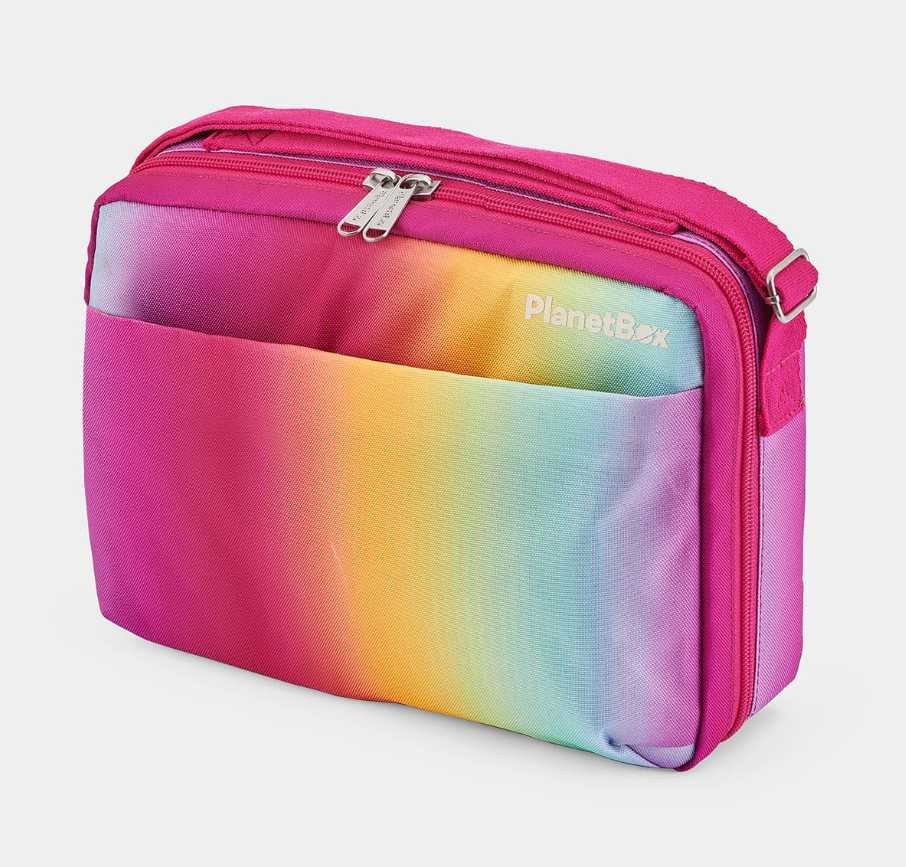
A practical insulated lunch bag made to fit every PlanetBox lunch box, plus snacks and a water bottle. PlanetBox lists the Adventurer bag as DWR/PFAS-free, with a recycled PET exterior, recycled PET interior with TPU coating, and polyethylene foam insulation. It has exterior pockets, an interior mesh pocket for an ice pack or utensils, and an adjustable strap for school, camp, or everyday packed lunches.
Best for families who already use a PlanetBox lunch box and want a matching insulated bag with clearer material details than the average kids’ lunch bag.
What I Would Pack for a Beach Day
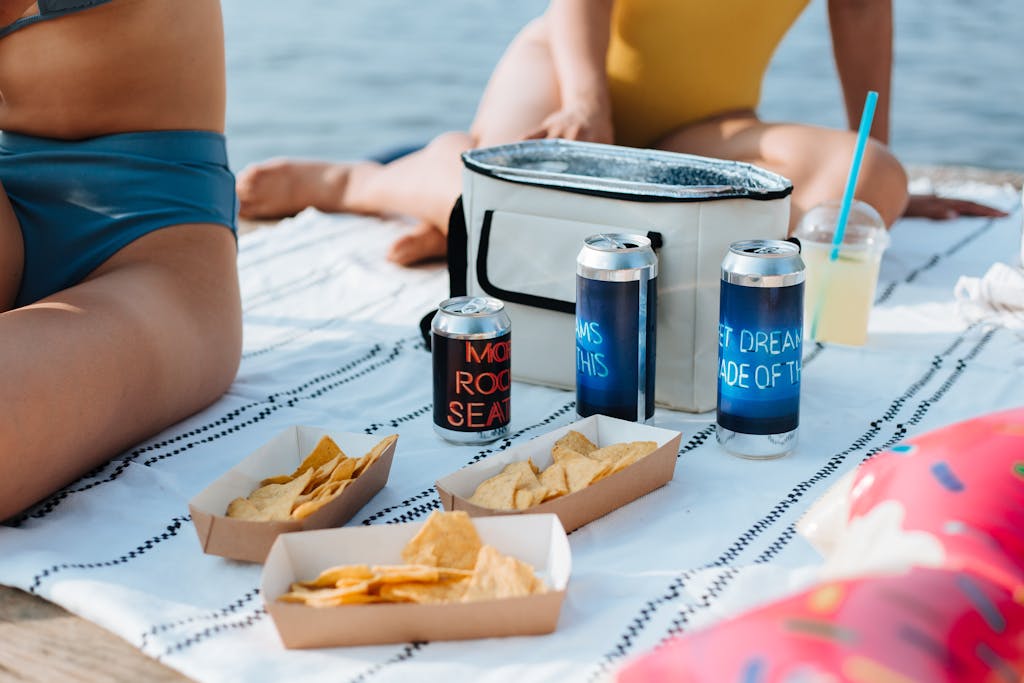
For a lower-tox beach setup, I would start with the pieces that touch food most directly: a PFAS-free cooler or lunch cooler, stainless steel food containers, a silicone snack bag, reusable water bottles, and ice packs with clear material details.
If you already have a few safer food storage basics, this gets much easier. I’d pull from the same simple setup I use for everyday snacks: stainless steel containers for fruit, crackers, sandwiches, cheese, or pasta salad, plus a silicone bag for dry snacks or cut fruit. If you need more ideas, I have a full guide to The Best Non-Toxic Snack Containers and Reusable Bags.
I’d also add a reusable water bottle, a small wet bag or reusable bag for wrappers and damp napkins, and whatever sun gear makes the day easier. If you are building a full beach setup, my guides to Non-Toxic Summer Gear, My Non-Toxic Summer Survival Kit, and Safe & Effective Non-Toxic Sunscreens are good next stops.
The goal is not a perfect beach cooler. It is a setup that keeps food organized, limits direct contact with mystery liners or flimsy plastic, and still works when everyone is sandy, hungry, and ready to go home.
Materials and Claims I Watch Closely
What I Avoid
Columbia Coolers
I’m skipping Columbia coolers for this PFAS-free cooler guide. I reached out to Columbia Customer Care to ask whether their coolers are free from intentionally added PFAS in the liner, exterior fabric, and coatings. They confirmed that Columbia does not currently offer coolers that are completely free of PFAS.
That does not mean every Columbia cooler is automatically unsafe. It simply means they do not meet the standard for this particular guide, where I’m only including cooler options with clear PFAS-free support.
How to Transition Without Replacing Everything
You do not need to toss every lunch item you own.
This is one of those categories where slow changes make sense. A stainless lunch box and one better cooler often do more than a total aesthetic reset.
Some Frequently Asked Questions
Final Takeaway
Start with the pieces that touch food directly: stainless steel containers, glass containers where practical, silicone bags, and ice packs with clear material details. Then, when you are ready to replace your cooler or lunch bag, look for brands that actually disclose the liner, exterior materials, coatings, and PFAS status.
A cooler does not need to be fancy to be a better choice. It just needs to be durable, easy to clean, practical for how you use it, and transparent enough that you are not guessing what your food gear is made from.