For most kids, I prefer stainless steel over a plastic bottle body, but material isn’t the only thing that matters. Weight, lid design, plastic contact, lead-free construction, cleanability, and whether your child can actually use the bottle independently all matter. A bottle can look great on paper and still be a terrible fit if it’s too heavy when full, leaks in a backpack, or has a straw mechanism that’s miserable to clean.
And while “BPA-free” is worth looking for, I don’t consider it the finish line. Some stainless steel bottles still use plastic drinking components, silicone seals, exterior coatings, or vacuum-sealing methods that deserve a closer look. For younger kids especially, I also pay attention to how much of the drink actually comes into contact with plastic and whether the bottle is easy enough for little hands to open and carry without help.
This guide walks through the materials, lids, straws, sizing, insulation, cleaning, and other details I look at before recommending a kids’ water bottle. If you already know what you’re looking for and just want the actual bottles that made the cut, you can jump straight to my full guide to the best non-toxic kids’ water bottles.
Key Takeaways
For kids’ water bottles, I prioritize materials first, then weight, lid design, cleanability, and durability. Stainless steel is one of my favorite choices, but the details matter, especially how an insulated bottle is sealed and which materials actually touch the water.
| Point | Details |
|---|---|
| Best material overall | Stainless steel is durable, easy to clean, and avoids a plastic bottle body. For insulated bottles, I also look for transparent lead-free manufacturing whenever possible. |
| For toddlers and preschoolers | Keep weight and independence in mind. A smaller, lightweight bottle with a lid your child can open and close on their own is often more practical than a large insulated bottle. |
| Look beyond “BPA-free” | BPA-free is a good baseline, but it doesn’t tell you everything about a bottle. Consider the materials used in the body, lid, straw, seals, coatings, and vacuum-insulation construction. |
| Cleanability matters | Choose lids, straws, and seals that can be removed and thoroughly cleaned. Complicated drinking mechanisms with hard-to-reach areas can be more difficult to keep clean. |
| Replacement parts are a big plus | Replaceable straws, seals, and lids can extend the life of a bottle and keep one worn component from sending the entire thing to the trash. |
What Are Kids’ Water Bottles Made From?
When shopping for kids water bottles, the bottle body is only one part of the materials picture. A stainless steel bottle may still have a plastic lid and straw, while a glass bottle might use a silicone sleeve and polypropylene cap. That doesn’t automatically make either option “bad,” but it does mean I look beyond whatever material is printed in giant letters on the front of the packaging.
Stainless steel
Stainless steel is generally my first choice for everyday kids’ drinkware. It’s durable, doesn’t require a plastic bottle body, handles drops better than glass, and works especially well for school, travel, and outdoor activities.
For durable water bottles for kids, 18/8 stainless steel is extremely common. With vacuum-insulated bottles, however, I also want to know how the insulation is manufactured. Some brands use lead in an inaccessible sealing component, while others have moved to lead-free vacuum-sealing methods. That distinction matters to me, even when the lead-containing component is designed to remain completely enclosed.
Glass
Glass has one big advantage: the water itself can have very little contact with plastic when the bottle is thoughtfully designed. It also doesn’t retain flavors or odors easily.
The downside is pretty obvious when we’re talking about small children. Glass is heavier and breakable. Silicone sleeves help protect it, but I generally see glass as a more practical option for home use or older children than for a preschool backpack being launched across the playground.
Plastic
A BPA-free kids water bottle can be lightweight, affordable, and much easier for a toddler to carry than a chunky insulated stainless steel bottle. BPA-free is still a worthwhile baseline, but I don’t use that claim alone to decide whether a bottle meets my standards.
If you’re choosing plastic, look at what the manufacturer actually discloses about the material rather than relying solely on a BPA-free logo.
Silicone
Silicone shows up more often in collapsible bottles, straws, mouthpieces, seals, and protective sleeves than as the entire bottle body. I prefer food-contact silicone from manufacturers that clearly disclose their materials, especially for pieces your child will repeatedly put in their mouth.
How to Choose the Best Kids Water Bottle for Your Child
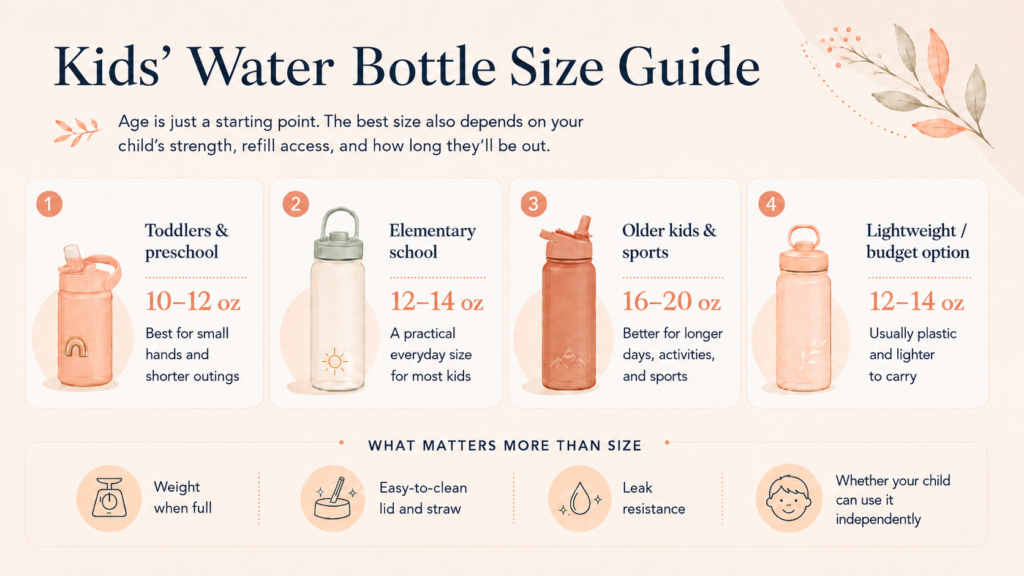
There isn’t one “best” bottle for every child. The best kids water bottles are the ones that balance safer materials with your child’s age, strength, daily routine, and drinking habits.
Red flags to avoid:
Straw, Spout, Chug or Open Lid?
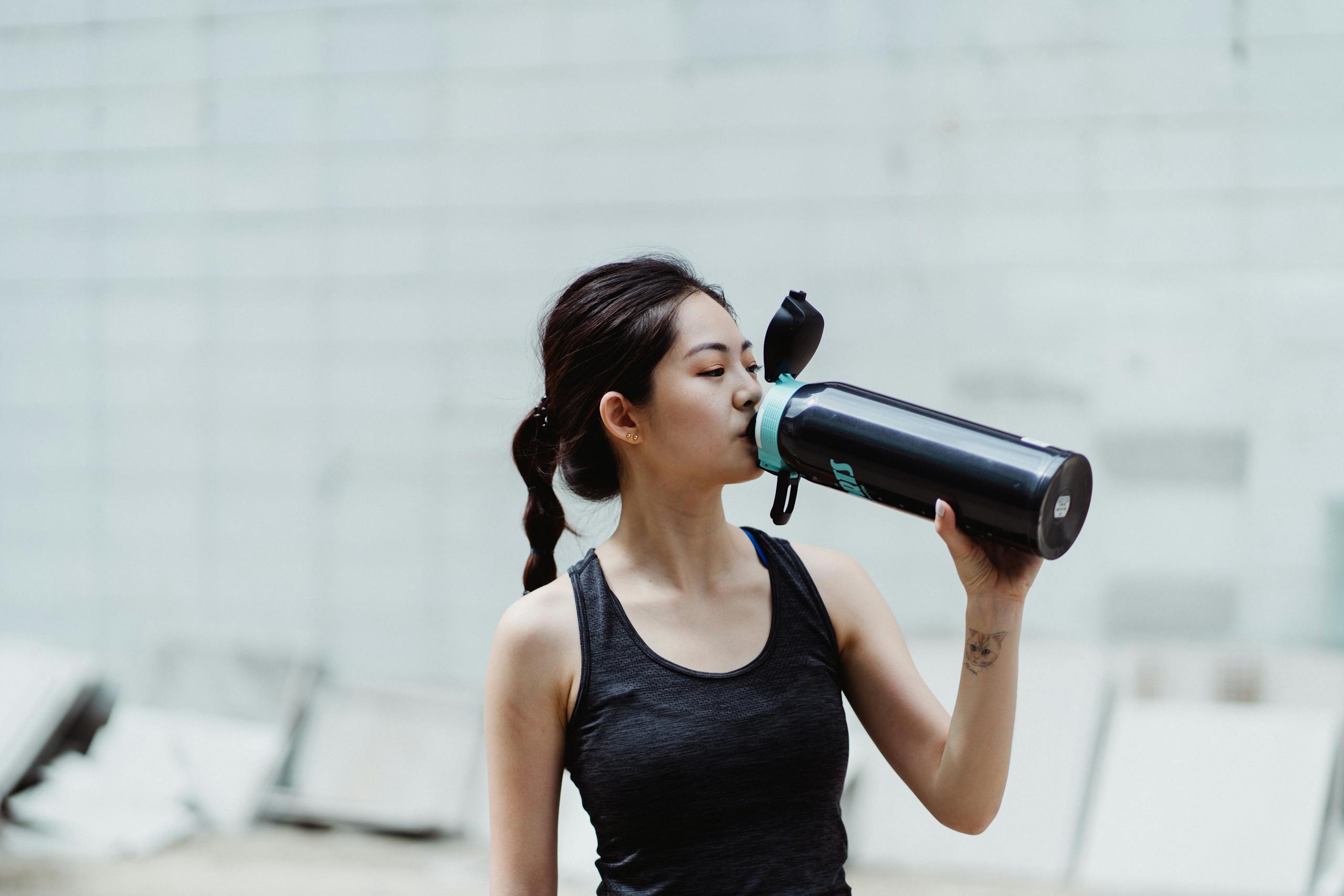
The most kid-friendly drink bottles aren’t necessarily the ones with the fanciest lids. For younger children, independence matters more: Can they open it, drink without soaking themselves, and close it again?
Straw lids:
Easy for younger kids, usually good while moving, but often contain the most pieces and require the most careful cleaning.
Soft spouts/bite valves:
Kid-friendly, controlled flow, but the mouthpiece itself gets chewed and eventually needs replacement.
Chug lids:
Simpler construction and often easier cleaning, but generally better for older children who can control the flow.
Open-mouth bottles:
Least complicated from a materials and cleaning standpoint, but terrible if your preschooler treats drinking water like an extreme sport.
Pro Tip: Before committing to a bottle, fill it with water, close the lid, flip it upside down, and shake it over the sink. Many straw caps are leak-resistant when upright but will drip when inverted.
Are Insulated Water Bottles for Kids Worth It?
Insulated water bottles for kids can be fantastic, but I don’t think every child automatically needs one. Vacuum insulation adds weight, bulk, and usually cost. For a child carrying a bottle around school all day, spending hours outside, or living somewhere hot, that tradeoff may absolutely be worth it.
For toddlers, I’m less convinced that maximum cold retention should be the priority. A smaller single-wall stainless bottle can be significantly lighter, and that may matter more if the child needs to carry and open it independently.
Consider insulation when:
For shorter outings, daycare, meals at home, or children who struggle with heavier bottles, a non-insulated option may be perfectly practical.
The best bottle isn’t necessarily the one that keeps ice frozen the longest. It’s the one your child can comfortably use.
What Makes a Kids’ Water Bottle Actually Durable?
For durable water bottles for kids, I look beyond whether the bottle survives being dropped. The lid is often the first thing to fail.
A stainless steel body might last for years while a tiny hinge, valve, gasket, handle, or straw becomes the reason the entire bottle gets replaced. That’s why availability of replacement parts matters almost as much as the bottle material itself.
Look for:
Minor dents in stainless steel are often cosmetic, although deeper damage can affect the bottle’s insulation, stability, or fit. Broken lid mechanisms are much harder to work around.
More Guides You May Find Helpful
ditch plastic water bottles
Does Color or Bottle Design Matter?
More than you might think.
You can shop all day for the technically perfect bottle, but if your child hates it and refuses to carry it, congratulations: you now own a very expensive kitchen decoration.
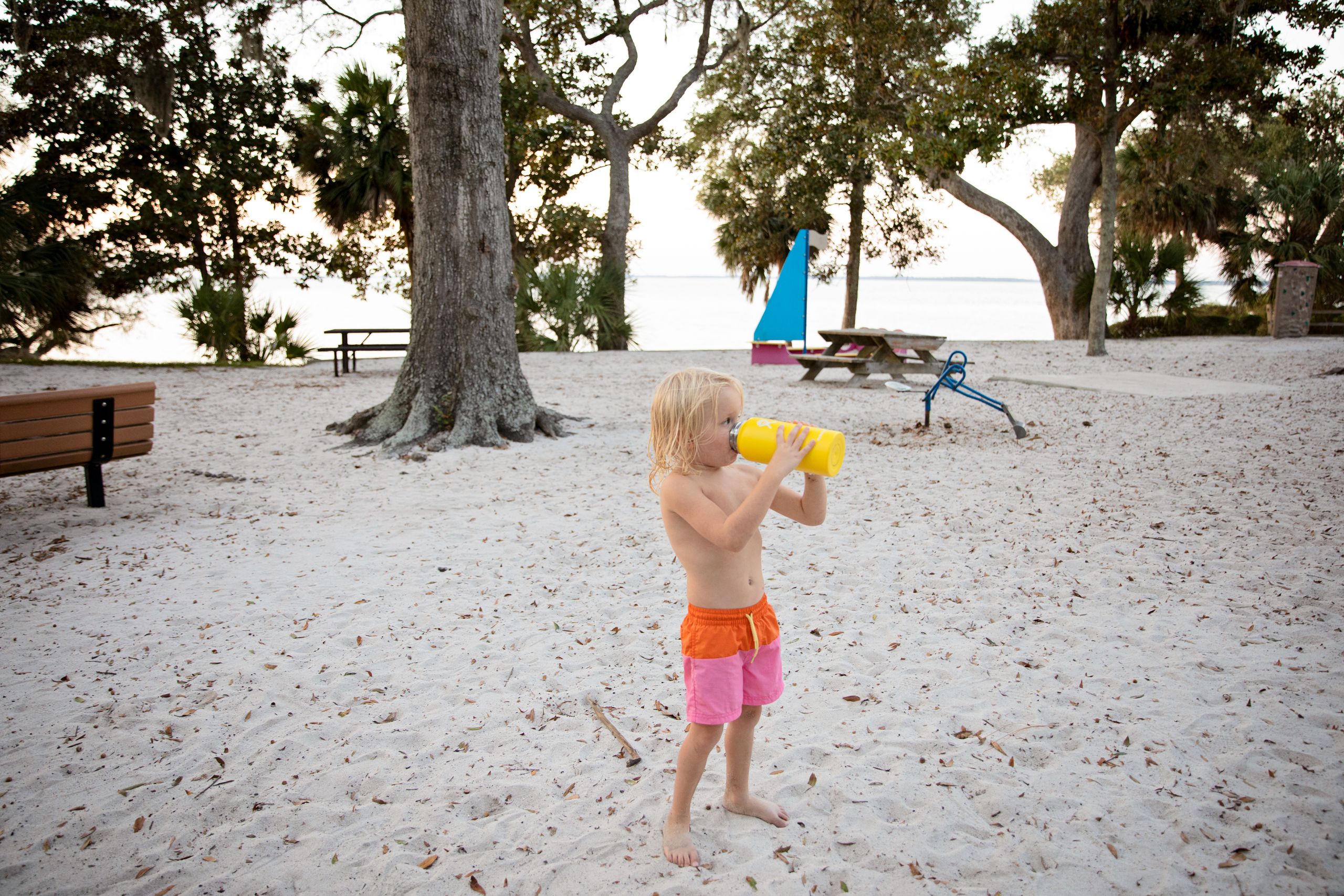
Colorful kids hydration bottles and water bottles with fun designs can give children some ownership over the choice. Especially with preschool and elementary-age kids, letting them choose between a few parent-approved colors or patterns can make the bottle feel like theirs.
I wouldn’t choose a bottle purely because it has a dinosaur on it, but once you’ve narrowed the options down based on materials and function, there’s absolutely nothing wrong with letting the dinosaur break the tie.
What Makes a Kids’ Water Bottle More Eco-Friendly?
The most eco-friendly kids bottles aren’t necessarily the ones with the greenest packaging or the biggest sustainability claims. Longevity matters.
A bottle that lasts through several school years is generally a better buy than one that needs to be replaced every few months because the straw, gasket, or lid can’t be replaced.
I give extra credit for:
This is also why I care so much about replacement parts. Keeping one bottle in use longer is a lot more compelling to me than replacing the whole thing because of a two-dollar silicone seal.
Cleaning, Maintenance & Replacement Parts
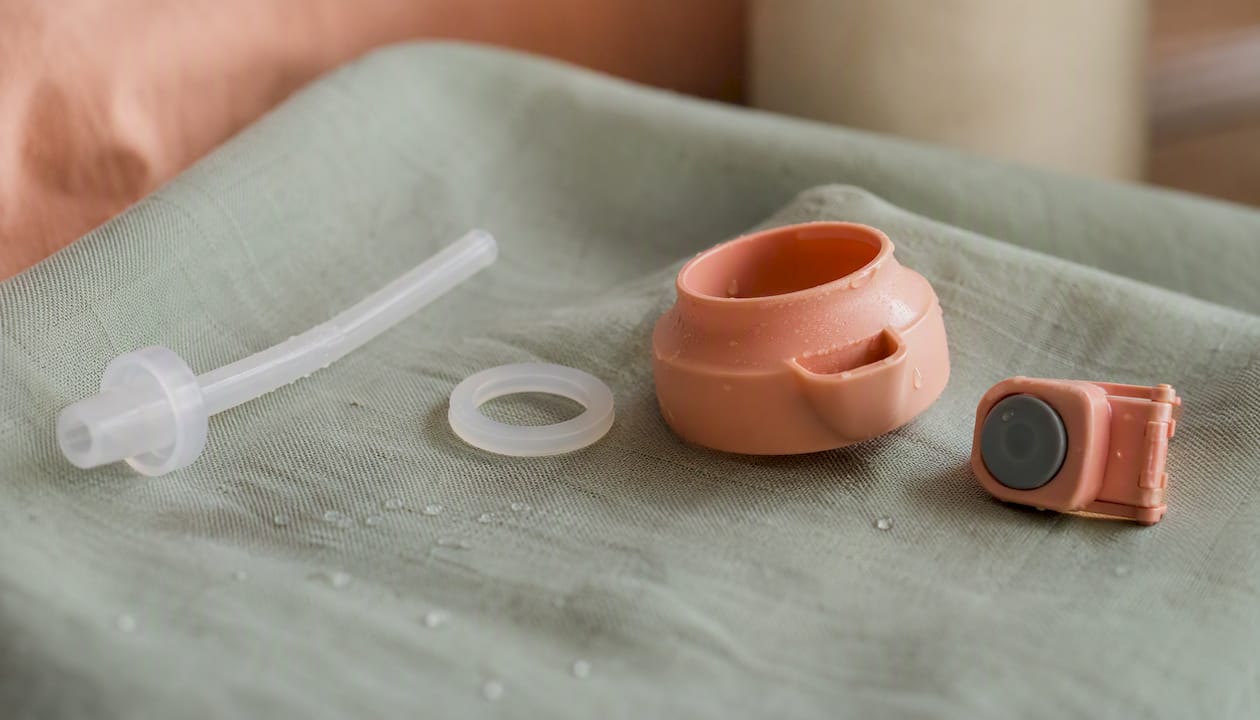
A bottle that isn’t cleaned properly is worse than no bottle at all. Reusable bottles can harbor bacteria when they aren’t washed thoroughly, which is one reason I prefer lids and straws that can be easily disassembled, cleaned, and completely dried.
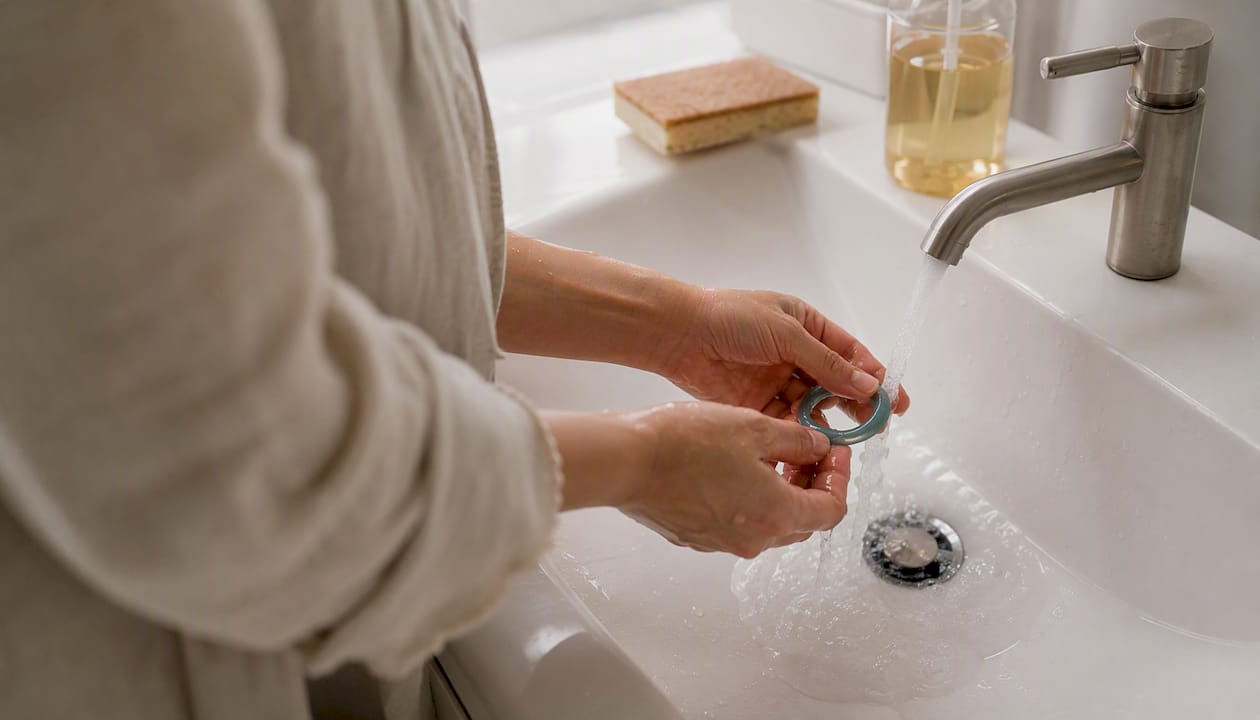
Wash according to the manufacturer’s instructions, fully separate removable lid and straw parts, allow everything to dry completely, and inspect silicone pieces and seals regularly for cracking, discoloration, damage or persistent residue. Replace components according to the manufacturer’s guidance or sooner if they’re damaged.
Pro Tip: Don’t just wash the parts you can see. Periodically remove any detachable straws, seals, valves, and gaskets according to the manufacturer’s instructions and check for residue, discoloration, cracking, or damage.
Frequently Asked Questions
Check Out These Guides


References
- National Institute of Environmental Health Sciences (NIEHS). Bisphenol A (BPA). Background on BPA exposure, food-contact materials, and ongoing research into potential health effects.
NIEHS: Bisphenol A (BPA) - Wang, H-S., et al. Effect of Common Consumer Washing Methods on Bisphenol A Release in Tritan Drinking Bottles. Peer-reviewed research examining BPA release detected in some Tritan drinking bottles and the effects of different washing methods.
PubMed Central: BPA Release in Tritan Drinking Bottles - Daily Use Water Bottles as a Hub for Microbial Population: A Comparative Study of PET vs. Stainless Steel Water Bottles and Outcome of Washing Strategy Intervention. Peer-reviewed research examining microbial contamination in reusable stainless steel and plastic water bottles and the effects of cleaning.
PubMed Central: Microbial Contamination in Reusable Water Bottles - Centers for Disease Control and Prevention (CDC). About Childhood Lead Poisoning Prevention. Public-health guidance on childhood lead exposure and why minimizing lead exposure is especially important for children.
CDC: Childhood Lead Poisoning Prevention - U.S. Consumer Product Safety Commission (CPSC). Total Lead Content. Federal requirements governing lead content in accessible components of children’s products.
CPSC: Total Lead Content - Children’s Hospital of Orange County (CHOC). How Much Water Should Kids Drink? Pediatric guidance on children’s hydration needs, including considerations for age, activity, and hot weather.
CHOC: How Much Water Should Kids Drink?