
The single most important thing to look for is a clear, explicit PFAS-free disclosure ideally backed by a third-party lab report or recognized certification — not just a “non-toxic” sticker on the packaging. A genuinely safe lunch bag for kids also needs a food-safe liner and washable or removable parts. Here’s what to scan before you read any further:
One thing worth saying upfront: “PFAS-free” alone doesn’t close every safety question. A bag can be free of fluorinated coatings and still contain PVC, phthalates, or BPA in its liner. Materials and construction still matter, and this guide walks you through all of it.
Key Takeaways
A clear PFAS-free disclosure, ideally supported by product-specific third-party testing or a relevant recognized certification, combined with a well-disclosed liner and practical cleaning instructions, is the gold standard for a safer kids’ lunch bag.
| Point | Details |
|---|---|
| Lab report beats a label | The strongest evidence is product-specific third-party testing or a recognized certification that meaningfully covers PFAS and the materials used in that particular bag. |
| Liner material is the priority | The liner sits closest to your child’s food and regularly comes into contact with containers, hands, crumbs, and spills; confirm it’s food-grade silicone, OEKO-TEX certified fabric, or PEVA with a no-PFAS disclosure. |
| Waterproofing = trade-offs | Better built-in water resistance usually means more coating chemistry; removable liners and ice packs are a lower-risk alternative. |
| Cleaning tips | Follow the manufacturer’s care instructions. Gentle washing can help extend a bag’s life, but some PFAS-free water-repellent finishes have specific drying or reactivation instructions. |
How to shop for a PFAS-free lunch bag step by step
Shopping for a safe lunch bag is easier when you work through these checks in order. The first two are deal-breakers; the rest are trade-offs you can weigh against your kid’s specific needs.
Verify the PFAS-free claim first. Look for an explicit written statement on the product page, not just a logo. Ideally, a downloadable third-party lab report or certificate backs it up. If the brand only says “non-toxic” or “clean,” keep digging.
Check the liner material and seams. The liner is what touches your child’s food containers directly. Look for food-grade silicone, OEKO-TEX certified fabric, or PEVA with a confirmed no-PFAS disclosure. Welded or taped seams are more leak-resistant than stitched ones.
Assess insulation and removable parts. A removable insulated pouch is easier to wash and replace than a permanently bonded foam liner. If the bag relies on a built-in thermal layer, confirm it’s free of fluorinated treatments.
Confirm washability and stain resistance. Machine-washable bags are the gold standard for kids’ lunch gear. A bag that can only be wiped down is harder to keep truly clean, and some wipe-down coatings are exactly where PFAS hide.
Ask for the evidence. If the product page doesn’t show a lab report, email the brand. A credible company can name the test lab, the chemicals screened, and the date of the test. If they can’t, that’s a signal.
Check the warranty and return policy. A brand confident in its safety claims usually backs them with a reasonable return window. If the product turns out to be different from what was advertised, you want a clear path to a refund.
Pro Tip: When a product page is vague, search the page for terms like “fluorinated,” “DWR,” “C6,” “C8,” or “PFOA.” Their absence doesn’t guarantee safety, but their presence is an immediate red flag. You can also paste those terms into the brand’s site search or email support directly.
What PFAS are and which materials to avoid or choose
PFAS (per- and polyfluoroalkyl substances) are a large family of synthetic chemicals used in manufacturing because they repel water, oil, and stains. On lunch bags and textiles, they most often appear as durable water repellent (DWR) coatings, specifically fluorinated versions using C6 or C8 chemistry. These coatings make fabric feel water-resistant right out of the box, but research on PFAS-treated functional textiles has shown that PFAS and fluorinated materials can be released as treated fabrics weather and age.
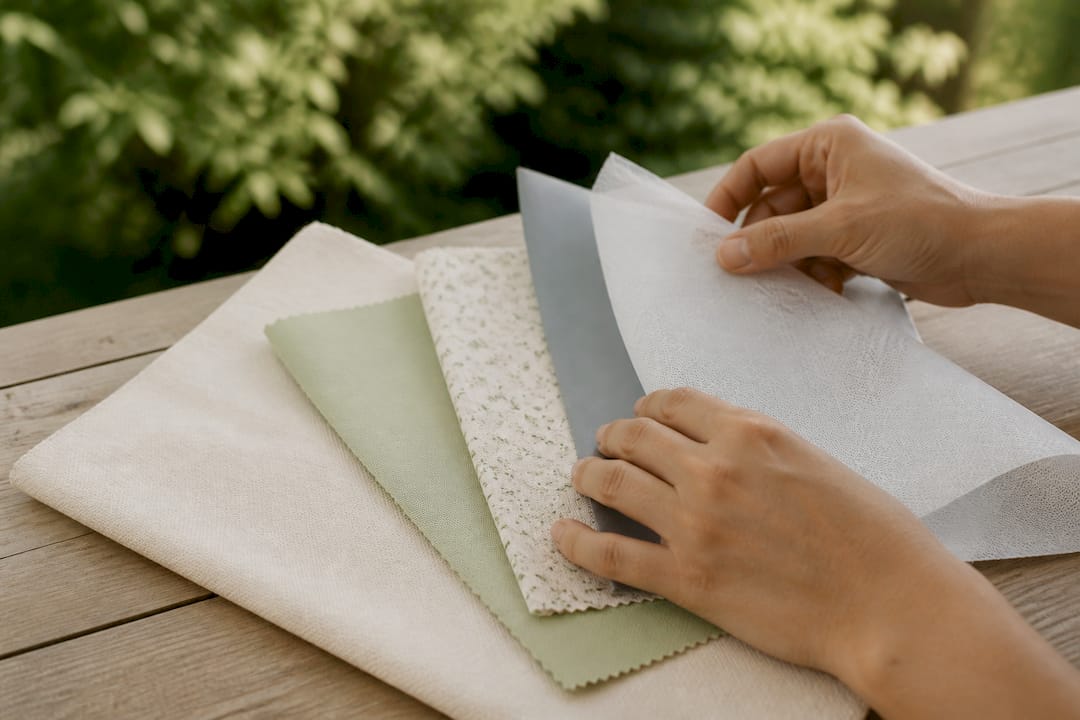
The problem is that these coatings are rarely labeled. As the Center for Environmental Health’s consumer guide notes, many lunch bags and backpacks use water-repellent treatments that can contain PFAS, and those treatments are often unlabeled. That’s why you can’t rely on the absence of a warning label to mean a bag is safe.
Materials and finishes to avoid:
Safer exterior and liner alternatives:
How waterproofing and insulation work, and what the trade-offs are
Most lunch bags achieve water resistance through one of four methods, and each carries a different level of PFAS risk.
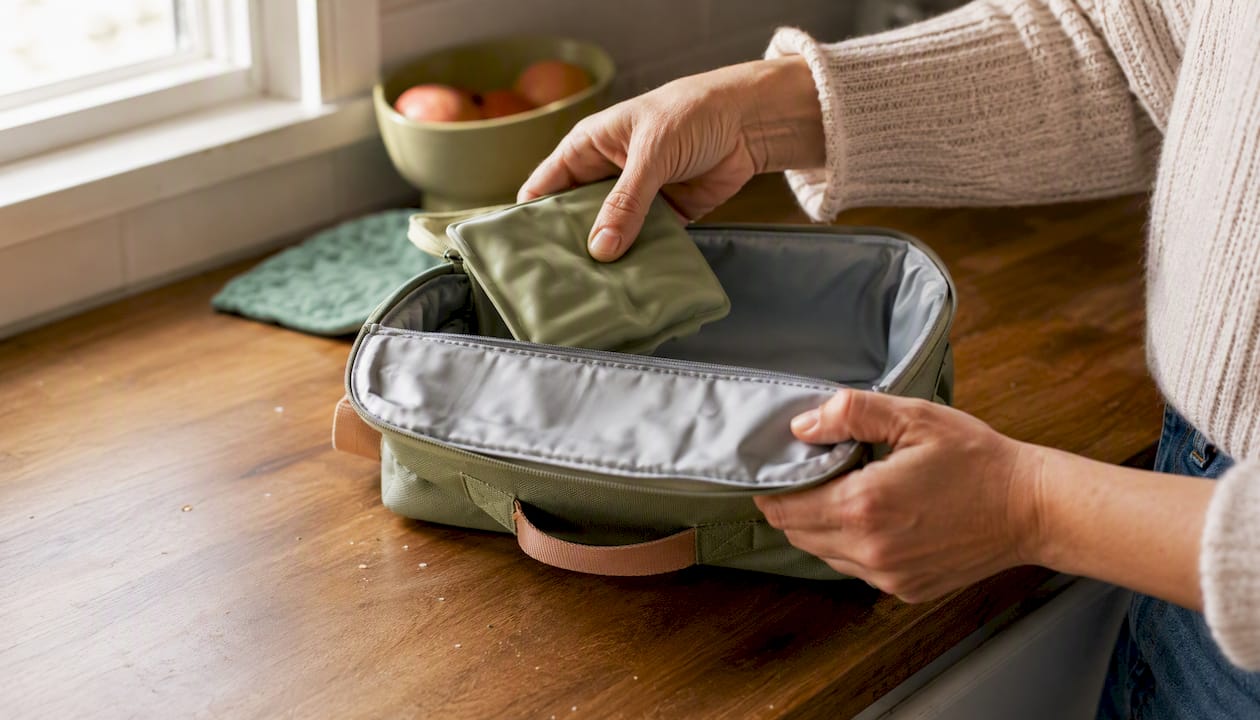
Insulation is a separate layer from waterproofing. Common options include foam cores bonded to the bag’s interior, removable insulated pouches, and thick thermal liners. Foam cores bonded directly to the shell are harder to wash and harder to verify for chemical content. Removable insulated pouches win on both washability and transparency — you can check the pouch material independently.
For a kindergartner’s snack bag, you probably don’t need heavy insulation at all. A simple organic cotton bag with a food-safe liner and a small ice pack does the job without the chemical complexity. For a middle schooler carrying multiple containers for a full school day, a removable insulated pouch with welded seams and a confirmed PFAS-free liner is worth the extra research. The trade-off is real: better built-in water resistance usually means more coating chemistry, which means more testing is necessary to confirm safety.
How to verify a PFAS-free claim before you buy
A brand’s word alone isn’t enough. Here’s what a trustworthy claim actually looks like:
Red flags to watch for:
Questions to ask manufacturers and how to read their answers
These questions are short enough to paste directly into a brand’s contact form or email:
What a credible answer looks like: The brand names a specific third-party lab (SGS, Bureau Veritas, Intertek, or similar), lists the chemicals screened (ideally a broad PFAS panel, not just PFOA/PFOS), gives a test date within the last two to three years, and offers a downloadable certificate or report.
What a red-flag answer looks like: A generic “our products are safe and non-toxic” reply with no specifics, a slow response with no follow-up, or a statement that they “never tested” because they “trust their suppliers.” Supplier trust is not the same as independent verification.
On returns: look for language that explicitly covers “not as described” or “material misrepresentation.” A brand confident in its PFAS-free claims should have no issue with a return if the product doesn’t match what was advertised.
U.S.-available brands that show what good disclosure looks like
These examples illustrate the level of transparency parents should expect. Always check the current product page and lab reports before buying, since formulations and certifications can change.
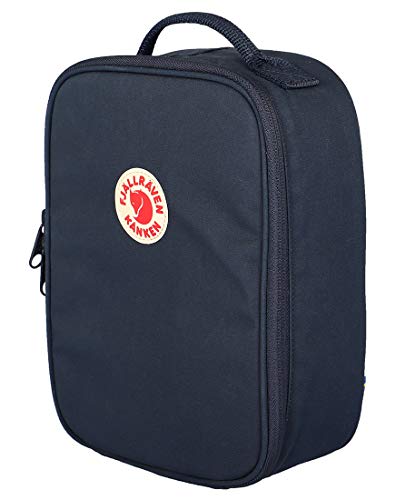
The Fjällräven Kånken Mini Cooler is a compact lunch cooler that works well if you want something small, polished, and easy to tuck inside a backpack. Fjällräven lists this product as produced without PFAS, and the material details are much clearer than most lunch bags.
It is made from durable G-1000 HeavyDuty S fabric, which is a blend of recycled polyester and organic cotton, with recycled polyamide listed in the material details. It has foam padding for insulation and a wipe-clean interior.
This is a better fit for a small lunch, snack bag, picnic add-on, or older kid’s lunch setup than a full food system. It only has a 2.5 L capacity, so it is not the roomiest option.
Best for: Small lunches, school snacks, picnic food, and carrying inside a Kånken backpack.
Why it made the list: Fjällräven lists the Kånken Mini Cooler as produced without PFAS and publishes clear material details.
Material notes: Recycled polyester, organic cotton, recycled polyamide, and foam padding.
Downside: Small capacity, not machine washable, and not the best choice for bulky containers.

If you’re looking for a soft lunch bag that’s truly non-toxic, Fluf delivers. The exterior is GOTS-certified organic cotton, and the food-safe lining is made from recycled polyester with a tested non-toxic water-resistant finish—free from BPA, phthalates, and no PFAS. It zips shut, fits most bento-style boxes (including PlanetBox), and is fully machine washable, inside and out.

Bentgo’s Kids Prints Lunch Bag is an easy-to-find option for parents who want a practical insulated lunch bag without PFAS. Bentgo explicitly states that the bag is PFAS-free and BPA-free, with water-resistant fabric, thick double insulation, kid-friendly zippers, and enough room for a lunch box, water bottle, snacks, and an ice pack. I also like the adjustable shoulder strap and buckle handle that can attach to a backpack.
Pros: PFAS-free and BPA-free; double insulated; lightweight; lots of kid-friendly prints; multiple carrying options; readily available on Amazon.
Cons: Bentgo does not provide the same level of detailed material disclosure or readily accessible product-specific PFAS testing that I’d ideally like to see, and the bag is wipe-clean rather than machine-washable.
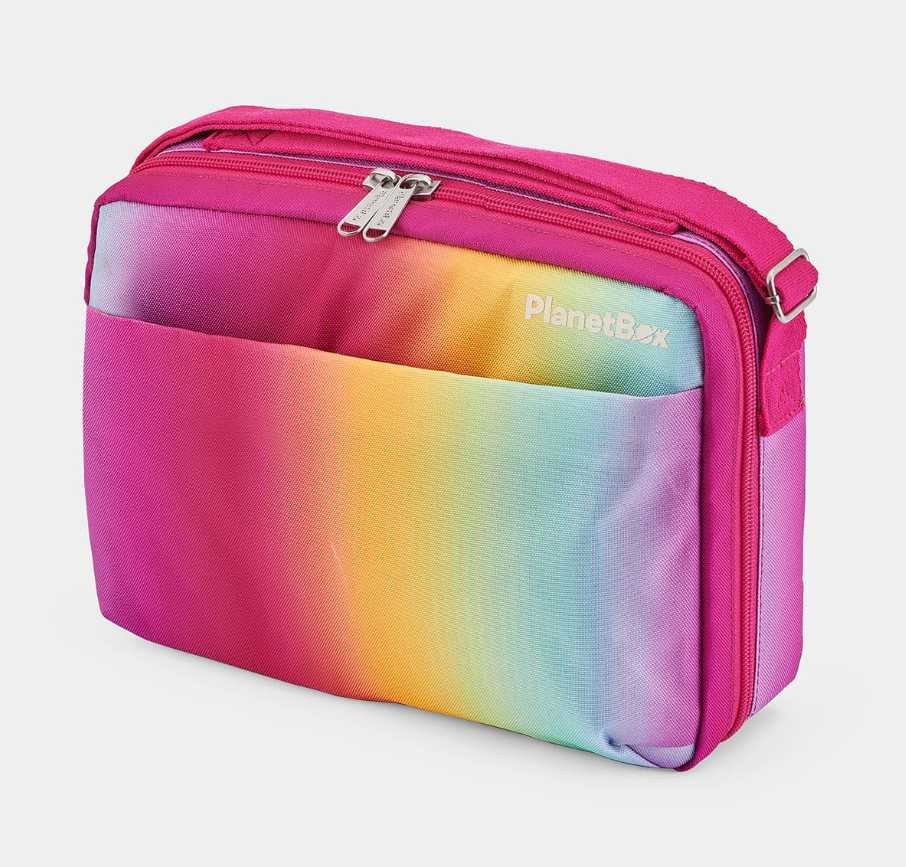
A practical insulated lunch bag made to fit every PlanetBox lunch box, plus snacks and a water bottle. PlanetBox lists the Adventurer bag as DWR/PFAS-free, with a recycled PET exterior, recycled PET interior with TPU coating, and polyethylene foam insulation. It has exterior pockets, an interior mesh pocket for an ice pack or utensils, and an adjustable strap for school, camp, or everyday packed lunches.
Best for families who already use a PlanetBox lunch box and want a matching insulated bag with clearer material details than the average kids’ lunch bag.
Practical note: Model-specific information lives on individual product pages, not brand homepages. Look for a “specs,” “materials,” or “certifications” tab, and check whether a downloadable PDF is available. If it isn’t, the contact form is your next stop.
What the science and regulators say about PFAS in textiles
Research has documented PFAS in treated textiles and shown that PFAS can be released as those materials weather and age. Many PFAS are extremely persistent in the environment, and some can accumulate in people and animals over time. Research has linked exposure to certain PFAS with a range of adverse health outcomes, although toxicity and exposure risks vary across this very large chemical family.
Practical risk frame: A lunch bag is only one potential PFAS exposure source among many. Drinking water, food, household dust, food packaging, and treated consumer products can all contribute to exposure. Choosing a PFAS-free lunch bag simply removes one avoidable source from the equation.
Actionable takeaways from the science:
Frequently Asked Questions
Recommended Guides


Sources
Product materials, coatings, formulations, and certifications can change. Always confirm current manufacturer disclosures and testing before purchasing.