Food storage is one of the easier kitchen categories to improve over time. You do not need a picture-perfect pantry, and you do not need to throw everything out this weekend.
If you are trying to build a more PFAS-free food storage setup, the goal is usually not perfection. It is choosing better materials for the foods you store most often, especially leftovers, lunch packing, freezer staples, and reheating. The EPA and NIEHS both note that PFAS are used in many products and that food, food packaging, and household items can all be part of the picture, which is why storage choices matter, just not in a panic-driven way. See EPA’s PFAS overview, EPA’s current understanding of PFAS risks, and NIEHS’s PFAS page.
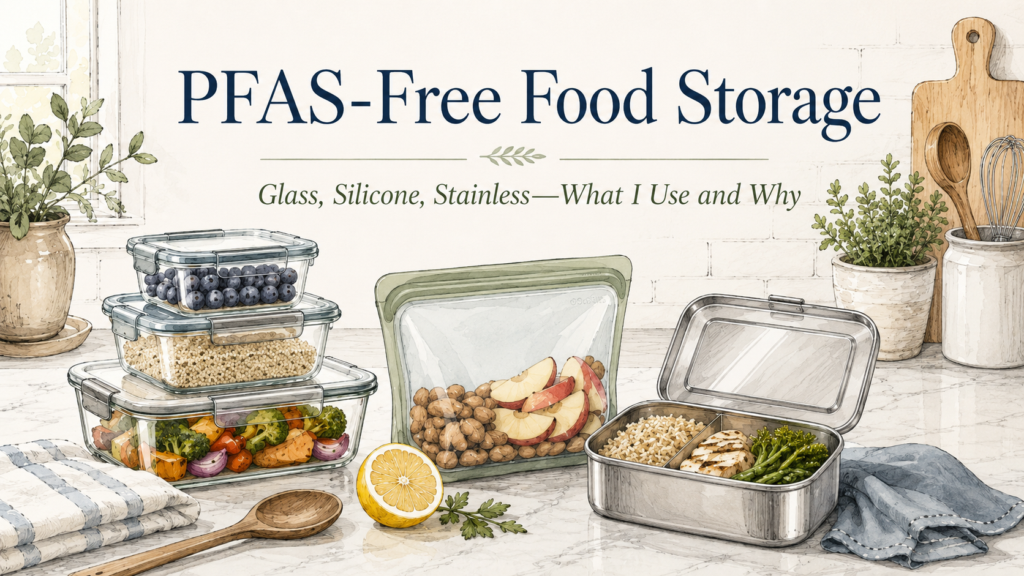
In my opinion, glass, silicone, and stainless steel can cover almost every storage job in a normal family kitchen. This guide compares them in real life, where I would prioritize upgrades first, and which product categories make the most sense in 2026.
Quick Answer
If you want the short version, glass is my first choice for leftovers, fridge storage, and reheating. Stainless steel is my first choice for lunch packing, dry snacks, and kid use because it is durable and simple. Silicone is most useful when flexibility matters, especially freezer use, travel, or replacing disposable bags.
Quick Comparison Table
The table below reflects how I think about PFAS-free food storage in a real kitchen, alongside the source-backed points covered later on about PFAS, food-contact chemicals, and the manufacturer instructions for the reusable silicone and stainless examples I mention.
| Material | Best use | Avoid using for | Pros | Downsides | My take |
|---|---|---|---|---|---|
| Glass | Leftovers, meal prep, sauces, reheating | Rough travel, places where breakage is likely | Non-porous, easy to see, easy to clean, great for fridge use | Heavy, breakable, lids are often plastic | Best all-around home base |
| Silicone | Freezer storage, snacks, flexible storage, travel | If you want a rigid stackable system | Lightweight, flexible, useful for bags and lids | Can hold odors, quality varies | Best as a supplement, not a whole system |
| Stainless steel | Lunches, toddler snacks, dry pantry overflow, on-the-go meals | Microwave reheating | Durable, long-lasting, simple material | You cannot see contents, not microwave-safe, many boxes are not leakproof | Best for packed food and daily wear |
Why PFAS-Free Food Storage Matters
The EPA describes PFAS as a large family of manufactured chemicals that have been used for decades because of useful performance traits, including resistance to grease, water, and heat. EPA and NIEHS both note that PFAS can show up in food, food packaging, cookware, fabrics, dust, and water, and that many PFAS break down very slowly. EPA also says current scientific research suggests that exposure to certain PFAS may lead to adverse health outcomes, while emphasizing that the science is still evolving across different PFAS and exposure levels. See EPA’s PFAS overview, EPA’s risk page, and NIEHS’s overview.
For food-related exposure, the piece that concerns me most is not every reusable container in my cabinet. It is the combination of grease-resistant disposable packaging, coated materials, and repeated contact between food and materials that are not very transparent about what they are made from. EPA specifically lists grease-resistant paper, fast-food wrappers and containers, microwave popcorn bags, pizza boxes, and candy wrappers as examples of food packaging that may involve PFAS.
That still does not mean a “PFAS-free” label solves everything. A 2024 open-access review found evidence of 3,601 food contact chemicals in humans and noted that many have hazard concerns or limited toxicity data. So PFAS-free is useful, but it is only one filter. I also care about plain materials, no mystery coatings, clear care instructions, and how I actually use the container around heat.
What I Mean by PFAS-Free Food Storage
In this article, PFAS-free food storage means a storage setup that aims to avoid intentionally added PFAS coatings and other vague, grease-resistant or nonstick treatments in food-contact products. It also means choosing materials that are easier to understand on sight, like glass, food-grade silicone, and stainless steel, instead of relying on broad “eco” or “non-toxic” claims that do not explain the material itself.
It also means keeping expectations realistic. A glass container with a plastic lid is still an improvement in many kitchens. A stainless lunch box is useful even if it is not leakproof. A silicone bag can earn its place even if you still prefer glass at home. Better materials and better use patterns matter. Perfection is not required.
Glass Food Storage
Glass food storage containers are the easiest workhorse for leftovers. If I were building a kitchen setup from scratch, this is the category I would prioritize first for everyday fridge use. Glass is simple, visible, easy to clean well, and especially practical for foods that I am likely to reheat later.
This is where glass shines most: last night’s dinner, chopped fruit, soup, grains, roasted vegetables, sauces, and meal-prep portions. It also makes life easier because you can see what is in the container without opening it.
If you often move food between colder and hotter conditions, you may prefer borosilicate glass. If not, an ordinary food-storage glass set can still be perfectly practical.
The main downside is not chemical, it is practical. Glass is heavier, it breaks, and most lid systems still use plastic or silicone somewhere. That does not cancel out the value of glass. It just means I treat the lids like the weak point and replace them when they crack, warp, or stop sealing well.
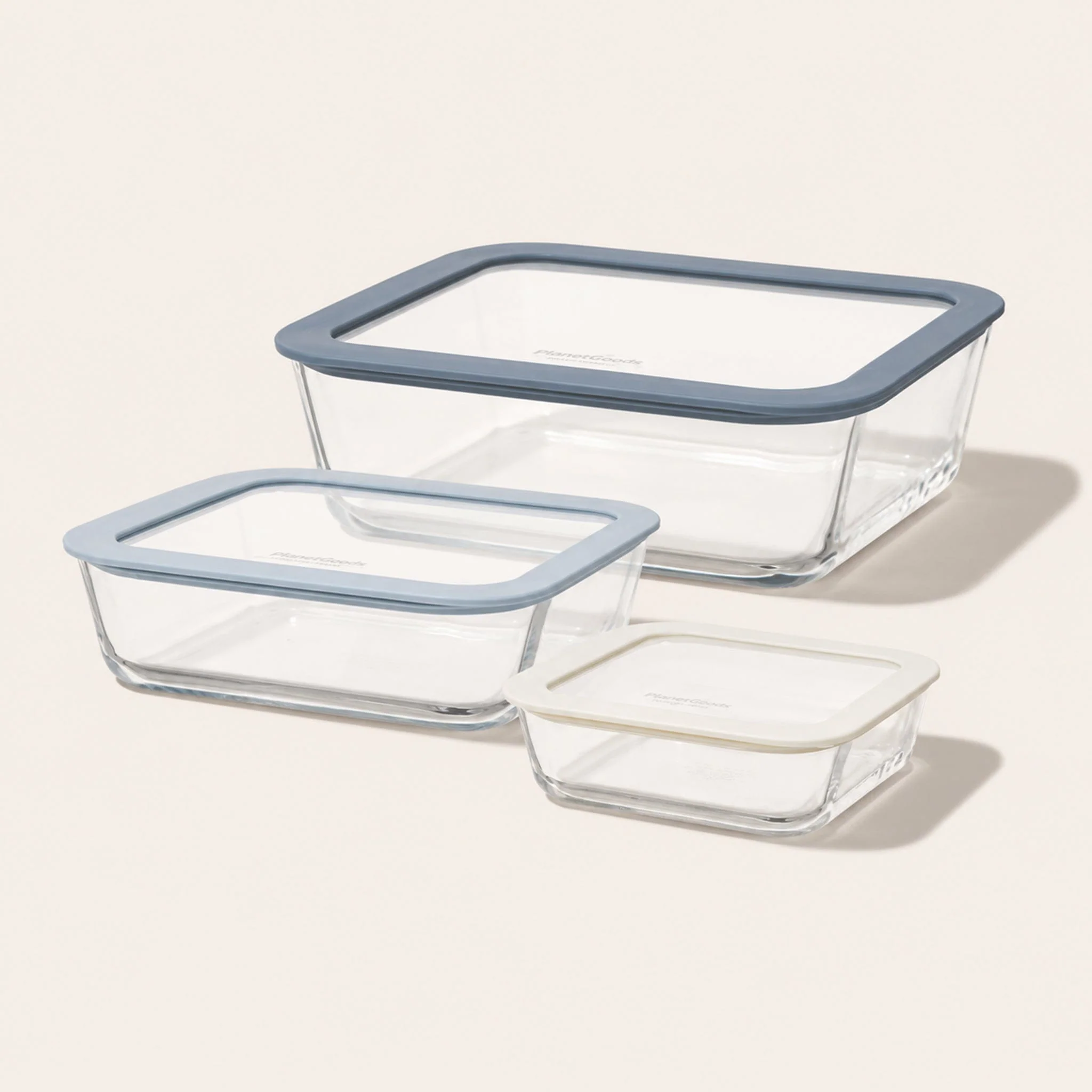
If you want glass food storage without the usual plastic lids, this is one of my favorite designs. The set includes three roomy borosilicate glass containers with matching glass lids and LFGB-certified silicone seals, so your food-contact surfaces stay refreshingly simple. The square shape stacks neatly in the fridge, and the three sizes work well for everything from small leftovers to full meal-prep portions. They’re freezer, dishwasher, and microwave safe, although the lid should be removed before microwaving.
The biggest drawback is weight. Glass bases and glass lids make these noticeably heavier than standard storage containers. Still, for home food storage, I love that this set skips plastic lids entirely.
Pros:
- Borosilicate glass bases and lids
- LFGB-certified silicone seals
- Leakproof design
- Freezer, microwave, and dishwasher safe
- Three useful sizes: 20 oz, 36.8 oz, and 64 oz
- Stackable when full and nestable when empty
Cons:
- Heavier than glass containers with plastic lids
- Glass requires more care around kids and travel
Best For: Leftovers, meal prep, sauces, and everyday refrigerator storage
Silicone Food Storage
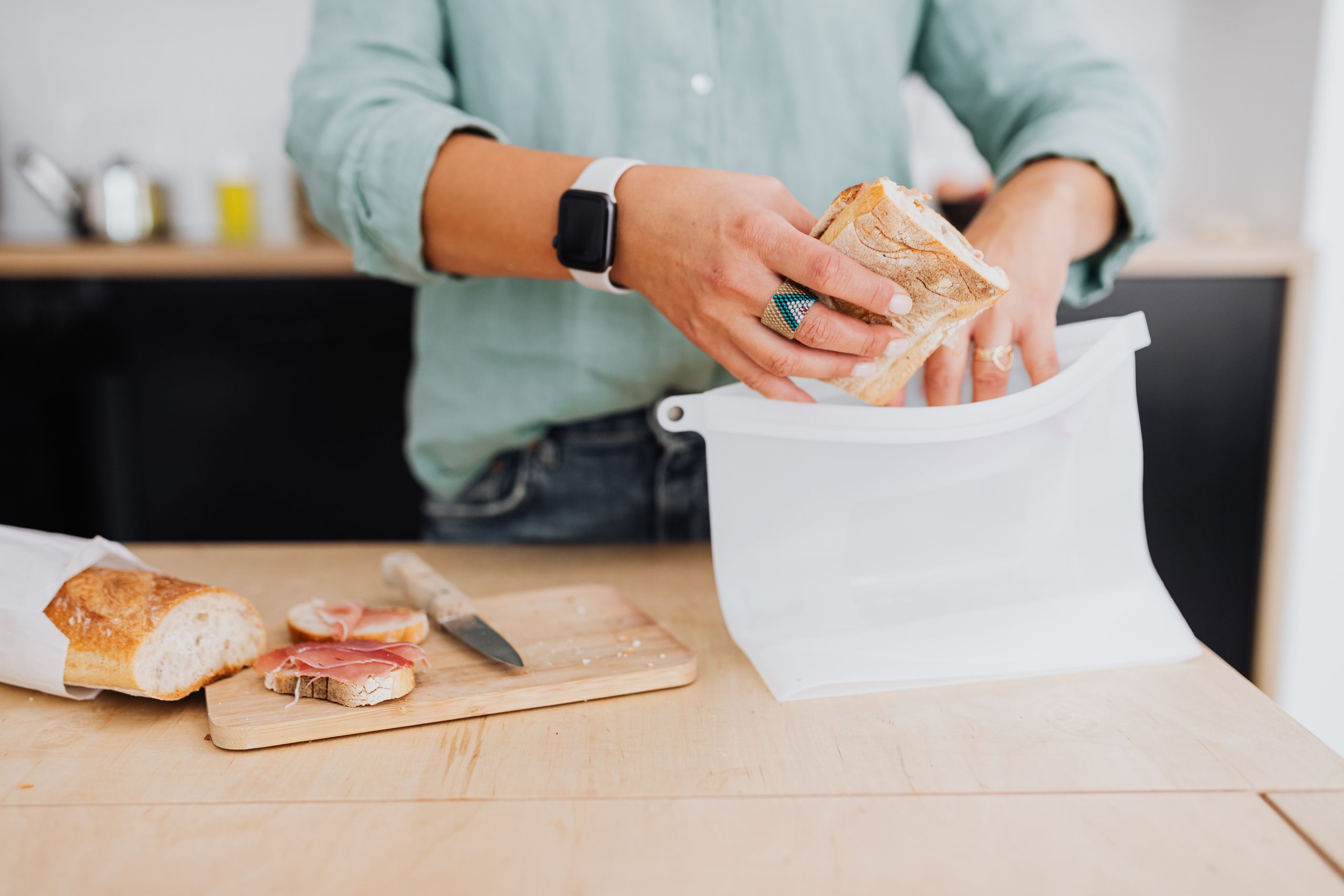
Silicone food storage bags are useful in the places where glass is awkward. Freezer storage is the biggest one. Flexible bags take up less room than hard containers, and they are easier for chopped fruit, muffins, trail mix, and odds-and-ends that do not stack neatly.
For a specific example, the Stasher Sandwich Bag is endlessly reusable, made from food-grade platinum silicone, free of BPA, BPS, lead, latex, and phthalates, and safe for the dishwasher, microwave, and oven up to 425°F. Stasher also says its silicone meets FDA and EU food-contact requirements and describes the material as inert and versatile. Those are brand claims, not a blanket statement about every silicone product on the market, but they are the kind of transparency I want to see before I recommend a silicone option.
Silicone also has limits. It can hold onto smells, especially after onions, garlic, tomato-heavy foods, or freezer odds and ends that sit for a while. That is not a dealbreaker for me, but it is a good reminder that silicone is not magically maintenance-free.

Stasher is my top silicone pick because the brand is unusually transparent about its materials. They’re especially handy for snacks, freezer storage, and replacing disposable bags.
Pros: Durable, flexible, leak-resistant, well-documented materials.
Cons: Pricey upfront and silicone can retain odors over time.
Stainless Steel Food Storage
Stainless steel food containers make the most sense to me for lunches, snacks, and food that needs to leave the house without the breakage risk of glass. They are especially practical for school lunches, toddler snacks, beach-day fruit, sandwiches, and other foods that get tossed into a lunch bag and carried around for hours.
I like stainless best for dry or semi-dry foods such as crackers, berries, sliced vegetables, cheese, muffins, and sandwiches. It is durable, easy to clean, and does not require a nonstick coating to do its job.
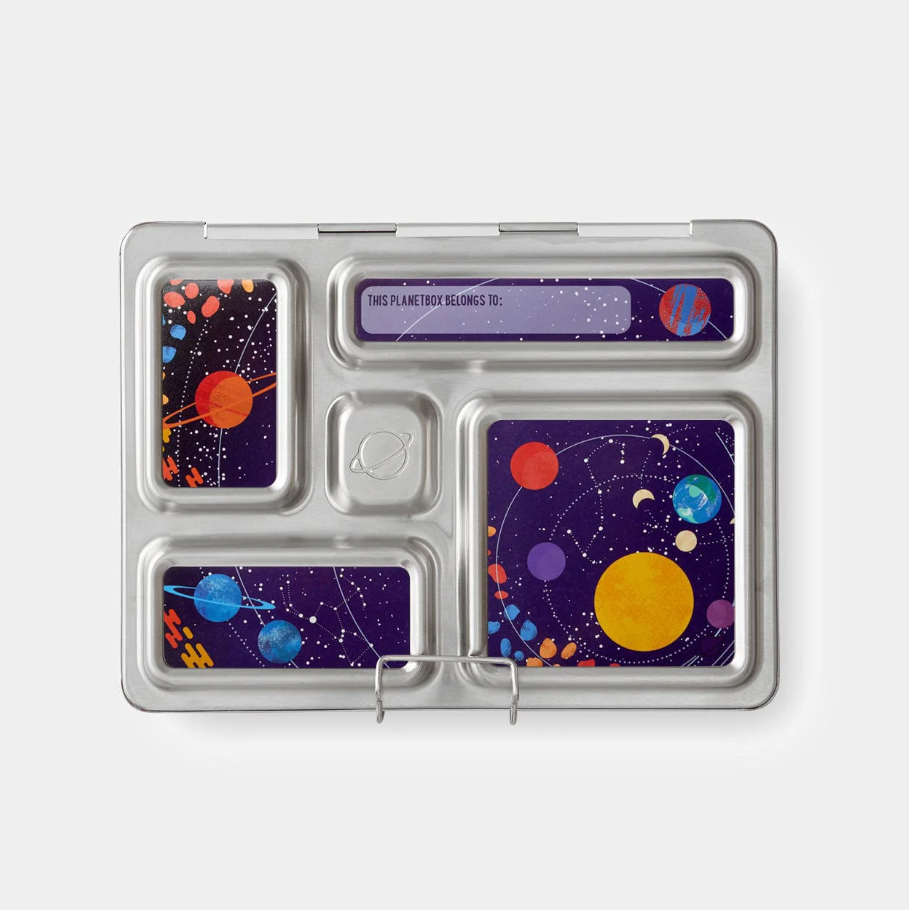
A good example is the PlanetBox Rover Stainless Steel Lunch Box. The main tray is made from 18/8 (304) stainless steel, while the lid uses 18/0 (430) stainless steel. It has five built-in compartments and comes with stainless steel Dipper containers with food-grade silicone lids for wetter foods such as yogurt, sauces, and dips. PlanetBox also says its products are tested by third-party laboratories for applicable FDA, CPSC, and CPSIA requirements.
The main Rover box is dishwasher safe, but it is not completely leakproof, so juicy or liquid foods belong in the included Dippers instead. Like most stainless steel containers, the lunch box itself should not go in the microwave. That makes PlanetBox a particularly good fit for packed lunches and snacks, but less convenient if you need to reheat lunch directly in the storage container.

I own and use the PlanetBox Rover with my toddler, and its five compartments make it especially easy to pack a varied lunch from simple foods. The recycled stainless steel set includes two leakproof Dipper containers for yogurt, applesauce, sauces, and other wet foods. The main compartments are not leakproof, and the box is heavier and shallower than it appears, but it remains my favorite of the two for everyday lunches.
The current Rover has five compartments and includes two leakproof Dippers. PlanetBox identifies it for ages 3+ and instructs users to remove the decorative magnets before washing.
How to Build a PFAS-Free Food Storage Setup
Start with the habits that give you the biggest practical improvement.
First, stop heating food in plastic whenever you reasonably can. You do not need to throw everything out. Just move reheating into glass or ceramic first.
Next, add a few glass containers for leftovers. Even a small mixed-size starter set covers a surprising amount of day-to-day use.
Then add stainless steel for lunch packing and snacks.
After that, add silicone only where flexibility actually helps. I like it most for freezer storage and replacing disposable bag use, not for every single container in the kitchen.
Then replace old plastic slowly. I would start with scratched, stained, warped, or frequently heated containers before replacing lightly used cold-storage pieces.
❌ What I Avoid
EPA’s packaging examples are a good reminder that coated and grease-resistant products deserve more scrutiny than plain materials.
Care Tips So Your Containers Last Longer
GLASS
The main rule is boring and important: follow the manufacturer’s thermal limits, avoid sudden temperature swings, and retire chipped or cracked pieces.
SILICONE
Check folds and seals for trapped food, wash thoroughly, and deal with odor early rather than later. Stasher specifically recommends checking the seal, and using sunlight or a vinegar soak for lingering smells.
stainless steel
Look for simple construction and keep expectations clear.
lids
I treat them as consumable parts. Whether the base is glass or stainless, the lid is usually what fails first. If a lid cracks, warps, or stops sealing, replace it if the brand offers parts. If not, rethink whether that set is worth expanding.
freezer
Container name, date, and a short note if needed. The less mystery in the freezer, the less food waste in the long run.
Frequently Asked Questions
Final Takeaway
PFAS-free food storage is not about building a perfect kitchen. It is about choosing better materials for the foods and habits that matter most.
If you want a simple version, start with glass for leftovers, stainless steel for lunches, and silicone for freezer flexibility. Phase down plastic where it makes sense, and stay skeptical of any product that sounds reassuring but will not clearly tell you what it is made from.
Related Naturally Non-Toxic Guides
View all Kitchen Posts
References
- U.S. Environmental Protection Agency. PFAS Explained.
https://www.epa.gov/pfas/pfas-explained - U.S. Food and Drug Administration. Authorized Uses of PFAS in Food Contact Applications.
https://www.fda.gov/food/process-contaminants-food/authorized-uses-pfas-food-contact-applications - U.S. Food and Drug Administration. Market Phase-Out of Grease-Proofing Substances Containing PFAS.
https://www.fda.gov/food/process-contaminants-food/market-phase-out-grease-proofing-substances-containing-pfas - U.S. Food and Drug Administration. Questions and Answers on PFAS in Food.
https://www.fda.gov/food/process-contaminants-food/questions-and-answers-pfas-food - U.S. Food and Drug Administration. Food Packaging & Other Substances That Come in Contact With Food: Information for Consumers.
https://www.fda.gov/food/food-ingredients-packaging/food-packaging-other-substances-come-contact-food-information-consumers - National Institute of Environmental Health Sciences. Per- and Polyfluoroalkyl Substances (PFAS).
https://www.niehs.nih.gov/health/topics/agents/pfc - National Institute of Environmental Health Sciences. PFAS Research.
https://www.niehs.nih.gov/research/supported/exposure/pfas - Agency for Toxic Substances and Disease Registry. PFAS and Your Health.
https://www.atsdr.cdc.gov/pfas/about/index.html - Agency for Toxic Substances and Disease Registry. How PFAS Impacts Your Health.
https://www.atsdr.cdc.gov/pfas/about/health-effects.html - National Toxicology Program. Per- and Polyfluoroalkyl Substances (PFAS).
https://ntp.niehs.nih.gov/research/topics/pfas