When comparing ceramic vs stainless steel cookware, there isn’t one universally better choice. Stainless steel excels at durability, high-heat cooking, and long-term value, while ceramic-coated cookware offers genuinely easy nonstick performance without traditional PTFE coatings.
Stainless steel is the better fit if you want cookware that can handle searing, deglazing, oven cooking, and decades of regular use. Ceramic makes sense if effortless food release is a priority, especially for eggs, pancakes, fish, and other delicate foods.
The biggest trade-off is longevity. Quality stainless steel can last for decades, while ceramic cookware has a coated cooking surface that requires gentler care and will eventually lose some of its nonstick performance.
Personally, I still lean toward stainless steel as the backbone of a kitchen, but I don’t think ceramic needs to be written off. A well-made PFAS-free ceramic pan can be incredibly useful when you understand what it does well and how to care for it.
Ceramic vs Stainless Steel Cookware: Side-by-Side Comparison
| Attribute | Ceramic-Coated | Stainless Steel (Multi-Ply) |
|---|---|---|
| Best for | Eggs, fish, pancakes, low-fat cooking | Searing, deglazing, pan sauces, braising |
| Heat tolerance | Best on low to medium heat; oven limit varies by brand | Handles higher heat; oven and broiler compatibility varies by construction |
| Nonstick performance | Very slick when new; usually declines within a few years | Not coated; releases well with proper heat, oil, and technique |
| Durability / lifespan | a few years before coating degrades | durable enough to last decades with proper care |
| Care | Hand-wash; avoid high heat, abrasives, and metal utensils | Hand-washing is gentlest; metal utensils are usable but can leave scratches |
| Induction compatible | Only when made with a magnetic base | Only when made with a magnetic exterior or base; check the manufacturer |
| Safety profile | Usually PFAS/PTFE-free | May leach trace nickel/chromium; concern for nickel-sensitive cooks |
| Long-term value | Lower upfront cost, but a shorter useful life | Higher upfront cost, but quality pieces can last for decades |
For a lot of home cooks, the most practical setup is actually a mix: stainless steel for high-heat cooking, sauces, and everyday durability, with ceramic for the foods where easy nonstick release makes life simpler.
Quick advantages at a glance:
What are ceramic and stainless steel pans actually made of?
Understanding how ceramic vs stainless steel pans are made helps explain their differences in durability and performance.
Stainless steel construction
Consumer stainless cookware is graded by its chromium and nickel content. 18/10 stainless (18% chromium, 10% nickel) is the most common in quality cookware; it resists corrosion well and holds a bright finish. 18/0 (no nickel) is used in budget lines and induction-specific bases.
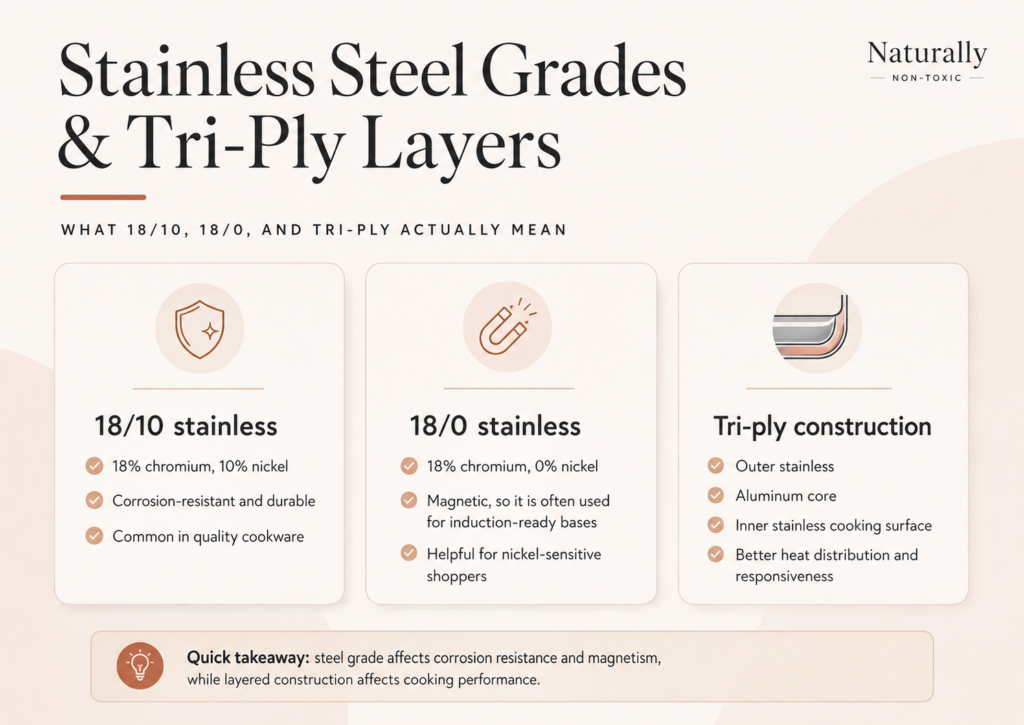
Stainless alone conducts heat poorly, which is why quality pans are built as tri-ply or five-ply: a stainless exterior, an aluminum (or copper) core for fast, even heat distribution, and a stainless cooking surface.
This fully clad construction is used by premium stainless brands such as Heritage Steel, while 360 Cookware also uses a layered stainless construction with a sealed aluminum core. The core is what separates a pan that sears evenly from one that scorches in the center.
Not all stainless steel cookware is constructed the same way, so ply count, cooking-surface grade, handle design, and overall transparency still matter. I compare the best options in my complete guide to Top-Rated Non-Toxic Cookware Sets That Are Worth Buying. It goes beyond ceramic vs stainless steel to compare cast iron, carbon steel, and other coating-free options.
 Heritage Steel Cookware
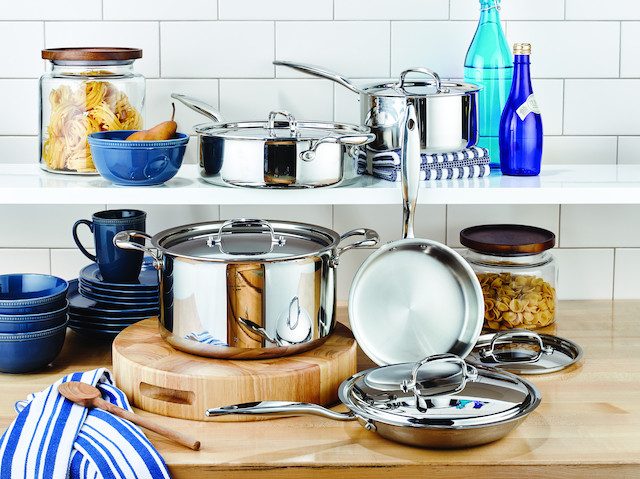
Heritage Steel is my top stainless steel cookware pick for anyone who wants to move away from coated nonstick pans and invest in cookware that can last for decades. Both the Eater and Titanium Series use fully clad 5-ply construction for more even heating, with an uncoated stainless steel cooking surface that can handle searing, sautéing, deglazing, and oven cooking. The cookware is made in the USA, induction-compatible, and backed by a lifetime warranty.
Pros: Durable enough for everyday use, no PFAS or nonstick coating to wear away, excellent heat retention, oven-safe, and available in two price tiers. The Eater Series is the better value, while the Titanium Series has a more corrosion-resistant 316Ti stainless steel cooking surface.
Cons: Stainless steel has a learning curve and may stick if the pan is not properly preheated. It is also more expensive upfront than basic cookware, and hand-washing is best if you want to minimize water spots, discoloration, and cosmetic scratches.
Ceramic cookware: coating vs. full ceramic
Most pans marketed as “ceramic” are actually ceramic-coated: a metal body (almost always aluminum) with a silica-based sol-gel coating applied to the cooking surface. The aluminum body heats quickly; the ceramic layer provides the nonstick surface and the PFAS-free claim.
One example of this construction is Our Place’s Ceramic Nonstick collection. The Always Pan and Perfect Pot use an aluminum body with the brand’s Thermakind ceramic nonstick coating. Our Place states that the coating is made without PFAS, including PTFE and PFOA, as well as lead and cadmium, and the company publishes cookware disclosures in accordance with California AB 1200.
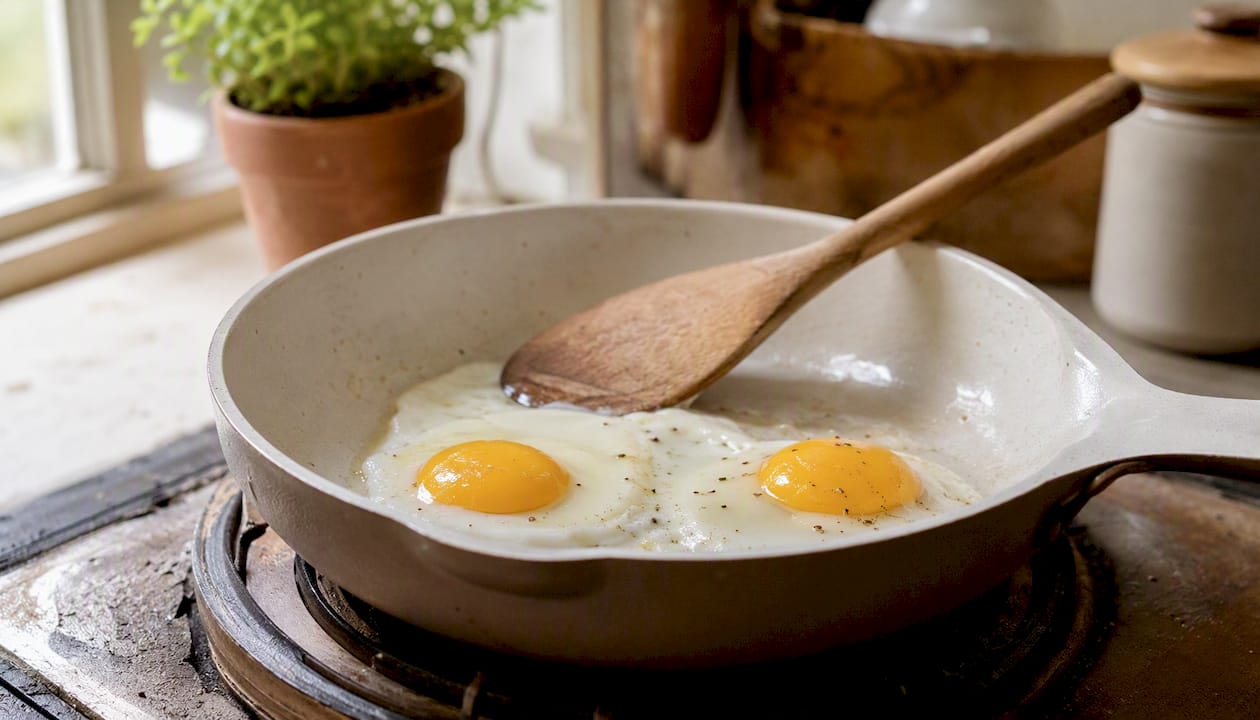
True single-piece ceramic (fired clay, like a tagine or a ceramic casserole dish) is a different product entirely. It heats slowly, retains heat well, and is far heavier. Most home cooks comparing “ceramic vs stainless” are actually comparing ceramic-coated aluminum against stainless multi-ply, which is the focus here.
A few construction notes worth knowing:
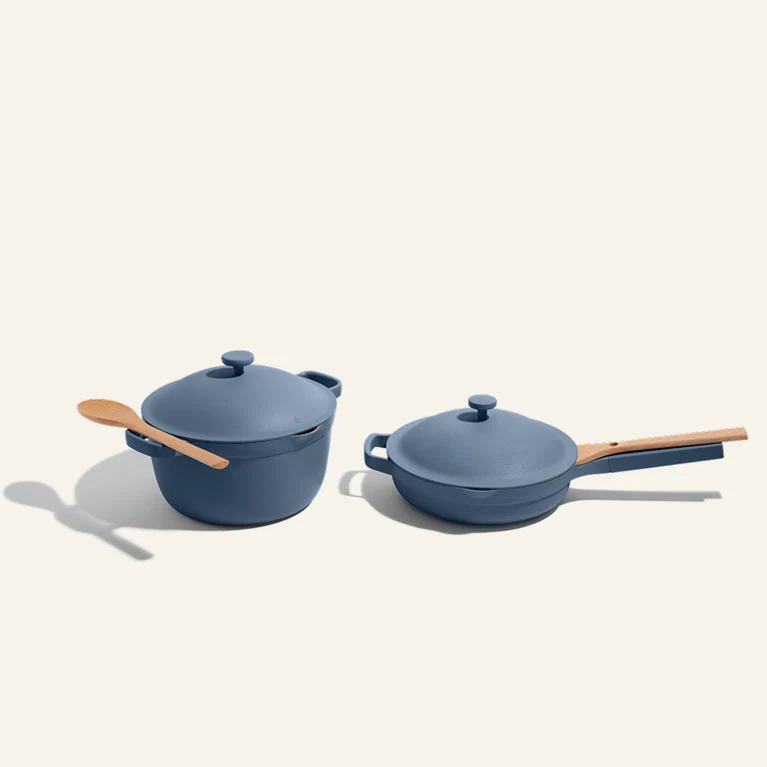 Our Place Cookware Duo
The Our Place Cookware Duo is my ceramic pick for cooks who prioritize easy nonstick performance and multifunctionality. It pairs the bestselling Always Pan with the Perfect Pot, giving you two versatile pieces that can handle everything from eggs and sautéed vegetables to soups, braises, steaming, and oven cooking. Both have lightweight aluminum bodies for quick, even heating and a ceramic nonstick cooking surface made without PFAS, including PTFE and PFOA, as well as lead and cadmium. They also work on all cooktops, including induction.
Pros: Very easy nonstick performance, lightweight compared with stainless steel or cast iron, versatile designs that replace several traditional pieces of cookware, induction-compatible, attractive enough for stovetop-to-table serving, and backed by a 100-day trial and 3-year warranty.
Cons: This is still ceramic-coated cookware, so it does not have the longevity of uncoated stainless steel. The nonstick surface requires gentler heat and care and will eventually lose performance as the coating wears. For that reason, I prefer stainless steel for a long-term cookware investment, but this is the ceramic set I would choose for someone who specifically wants the convenience of PFAS-free nonstick.
How does each material actually perform in the kitchen?
Heat, searing, and fond development
Stainless steel with a bonded aluminum or copper core is the better choice for high-heat cooking. It tolerates the temperatures needed for a proper Maillard reaction (the browning that creates flavor on a steak or chicken thigh), and it survives the deglazing step that lifts those browned bits into a pan sauce. Testing consistently shows that stainless with a quality core produces more even browning than ceramic-coated pans, where the sol-gel layer can create subtle hot spots.
Ceramic pans heat up fast because of the aluminum body, but pushing them to searing temperatures accelerates coating wear. Most manufacturers recommend medium heat as the ceiling for daily use.
Nonstick behavior and delicate foods
For eggs, pancakes, and delicate fish, ceramic has a very real advantage. The slick cooking surface requires less technique than stainless, usually needs less added fat, and makes cleanup much easier.
This is where a pan like the Our Place Always Pan makes the most sense to me. Its aluminum body heats quickly, while the ceramic coating gives you the easy release people are usually looking for when they buy nonstick cookware. Our Place recommends low-to-medium heat, wooden or silicone utensils, and hand-washing to preserve the coating.
Stainless can behave nearly nonstick, but it takes a specific approach:
Ceramic vs Stainless Steel: Which Is Safer?
PFAS, PFOA, and PTFE
Traditional nonstick pans use PTFE (polytetrafluoroethylene, sold under the Teflon brand name), and older manufacturing processes used PFOA, a PFAS chemical linked to health concerns. Ceramic coatings are usually marketed as free of PTFE, PFOA, and PFAS, which is a genuine advantage for families who want to avoid that entire chemical class.
That said, certification and third-party lab results are the most reliable way to verify these claims. Marketing language like “non-toxic” or “PFAS-free” is useful as a starting point, but it is not a regulated term. Look for brands that publish third-party test results or carry certifications from recognized labs. For more on how to evaluate PFAS-free claims across kitchen appliances, the guide to non-toxic air fryers on Naturally Non-Toxic walks through the same verification process.
Metal leaching from stainless steel
Studies have found that stainless steel cookware can release small amounts of nickel and chromium, particularly when the cookware is new or when acidic foods are cooked for extended periods. This is most relevant for people with a diagnosed nickel allergy or sensitivity.
For most households, quality stainless steel remains one of the most practical uncoated cookware choices. Anyone who is highly nickel-sensitive may want to discuss cookware choices with a qualified healthcare professional or consider nickel-free alternatives.
What “PFAS-free ceramic” does and does not tell you
PFAS-free is not the same as coating-free. Most ceramic nonstick frying pans use a silica-based sol-gel coating over an aluminum body. A PFAS-free claim should be supported by clear material disclosures and reliable testing, but it does not necessarily reveal every ingredient used in the coating or explain how the surface behaves as it wears.
Research on commercially available nanoceramic cookware has found greater titanium and silicon migration after simulated scouring and scratching than from unused pans. That does not prove that ordinary use causes harm, but it does reinforce why ceramic coatings should be treated according to the manufacturer’s care instructions and replaced when the surface becomes damaged or significantly deteriorated.
Lead and cadmium concerns apply more directly to traditional glazed ceramic cookware and pottery. These are different from the sol-gel coatings used on most pans marketed as ceramic nonstick.
😱 Heads up: “PFAS-free” is a marketing claim, not an independent safety certification. Look for brands that clearly identify their coating materials, disclose what the cookware is made without, provide care instructions, and make required cookware disclosures easy to find. Our Place, for example, specifically states that its Thermakind ceramic coating is made without PFAS, PTFE, PFOA, lead, and cadmium and provides a California AB 1200 cookware disclosure.
Pro Tip: When evaluating a ceramic pan’s safety claims, search the brand’s website for a “testing” or “certifications” page. Reputable brands publish this information directly. If you can’t find it, email the company and ask for their third-party test results before buying.
How should you care for each type of pan?
Getting the most out of either material comes down to a few consistent habits.
For ceramic-coated pans
For stainless steel pans
Pro Tip: For rainbow-colored heat tint, wipe the cooled pan with a little diluted white vinegar, rinse thoroughly, and dry. For cooked-on food, simmer water in the pan for a few minutes before cleaning rather than reaching for an abrasive powder.
Oven limits: most ceramic-coated pans cap at 400–450°F (always check the manufacturer’s spec). Quality stainless multi-ply handles 500°F or higher and is typically broiler-safe. Never put a ceramic pan under the broiler unless the manufacturer explicitly states it is safe.
What do ceramic and stainless steel pans cost over time?
The long-term cost of ceramic vs stainless steel cookware looks very different once replacement frequency is considered.
Ceramic cookware usually costs less upfront, but the coating gives it a limited useful life. Quality stainless steel costs more initially, yet a well-made pan can remain in regular use for decades. For anyone planning to cook at home long term, stainless usually offers the better cost per year.
When should you replace a ceramic-coated pan?
Replace a ceramic-coated pan if the surface begins chipping, peeling, blistering, or flaking. A major loss of nonstick performance also usually means the coating has reached the end of its useful life. Do not attempt to season or aggressively scrub the surface back into working condition.
Some frequently asked Questions
Ceramic vs Stainless Steel: Which Would I Choose?
Stainless steel still gets my vote for the best long-term foundation for a kitchen. I love that quality stainless cookware can handle nearly anything, withstand higher temperatures, and stay in use for decades without relying on a coated cooking surface.
But ceramic absolutely has its place. It is easier for foods that notoriously stick, requires less technique, and gives people who want to avoid traditional PTFE nonstick a much more convenient option. A well-made ceramic pan that clearly discloses its materials and is cared for properly is better than conventional “non-stick” pans.
If I were building a kitchen from scratch, I would invest most heavily in quality stainless steel and add ceramic where its nonstick performance genuinely makes cooking easier. If you strongly prefer nonstick cookware, a PFAS-free ceramic set from a transparent manufacturer can also be a perfectly reasonable choice.
Ultimately, ceramic vs stainless steel is less about finding a universal “winner” and more about choosing the trade-offs that make sense for the way you actually cook.
Check out these Favorites