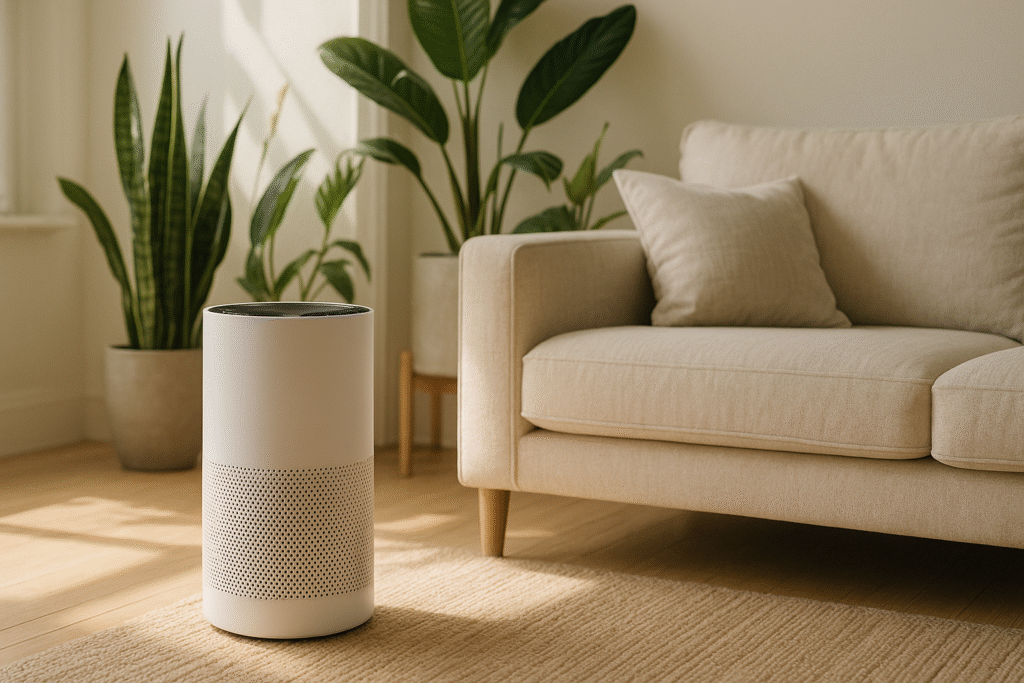
Indoor air quality can be 2–5 times more polluted than outdoor air – a startling fact for anyone striving for a healthy home. If you’re a health-conscious woman (or anyone) looking to create a cleaner sanctuary for your family, investing in a non-toxic air purifier is a smart move.
But not all air cleaners are created equal. Some devices can release ozone or chemicals that worsen your air! In this guide, we’ll clear the air on what “non-toxic” air purifiers are, how to choose one, and review the best non-toxic air purifiers available. We’ll also share tips, do’s and don’ts, and answer FAQs to help you breathe easier without introducing new toxins into your home. Let’s dive in!
Before You Shop…
Many of the items below ship with Amazon Prime. Not a member yet? Prime Trial offers new customers a 30-day trial for Prime or a 6-month trial for Prime for Young Adults.
What Is a “Non-Toxic” Air Purifier?
A non-toxic air purifier is simply an air cleaning device that cleans your air without adding any harmful substances in the process. Many conventional purifiers use ionizers or UV lamps that can produce ozone, a lung irritant. Others might be made of materials that off-gas (release) plastic fumes or chemicals when running. A non-toxic model avoids all that.
In a nutshell, a non-toxic air purifier should have:
01.
True HEPA Filtration (No Ozone) – It relies on mechanical HEPA filters to trap particles, not ionizers or ozone generators. Look for units that are CARB-certified for zero or negligible ozone emission.
02.
Activated Carbon Filters (No Fragrance Gimmicks) – Instead of masking odors with chemicals, they use activated carbon to absorb VOCs and smells. This removes pollutants like formaldehyde, smoke, and fumes naturally.
03.
Safe Materials (No Off-Gassing) – High-quality purifiers use materials that won’t emit fumes. Some top brands use metal housing or ABS plastic with no BPA/phthalates, so the device itself doesn’t pollute your air.
04.
High Efficiency & Smart Design – They effectively clean the air (capturing 99.97% of tiny particles or better) without extra “chemical” gimmicks. Many have energy-efficient motors and smart sensors.
05.
Certifications & Proven Testing – Look for purifiers tested by third parties. Certifications like Energy Star, AHAM (Clean Air Delivery Rate), or Asthma and Allergy Friendly are good signs.
By choosing a purifier that meets these criteria, you ensure you’re removing indoor pollutants (dust, pollen, pet dander, smoke, VOC fumes, etc.) without introducing new irritants. Now, let’s explore the top non-toxic air purifiers that fit the bill!
Top Non-Toxic Air Purifiers (2025 Review)
Below we’ve curated a list of the best non-toxic air purifiers – from high-end powerhouses to budget-friendly options. Each of these purifiers uses HEPA (or better) filters, has no ozone-emitting gimmicks, and is well-reviewed for safety and performance. Whether you need to allergy-proof a large living area or keep your baby’s nursery air pure, we’ve got you covered.
1. Austin Air HealthMate Plus – Solid Steel, No Off-Gassing Powerhouse
When it comes to non-toxic air cleaning, Austin Air sets the gold standard. The HealthMate Plus is a medical-grade purifier built with safety in mind. Its all-metal construction and powder-coated finish mean there’s zero plastic odor or off-gassing – ideal for the chemically sensitive. Austin Air was actually the first home air purifier made in the USA and is trusted by organizations like FEMA and the Red Cross for disaster air cleanup.

- The HealthMate Plus uses multiple filtration stages in one freestanding unit.
- The large unit needs floor space and model-specific replacement filters.
Keep in mind: This unit is heavy (45 lbs) and not cheap. It’s built like a tank (on wheels for portability). Noise is a dull hum on higher speeds. But for serious air cleaning without any off-gassing or ozone, the HealthMate Plus is worth the investment to many. (Prefer a compact pick? The Austin Air “it” Room Air Purifier is an excellent choice.)
2. IQAir HealthPro Plus – Medical-Grade HyperHEPA Performance
The IQAir HealthPro Plus is another top-tier pick for non-toxic air purification, often seen as Austin Air’s high-tech Swiss cousin. IQAir’s purifiers are Swiss-made and designed for ultra-fine particle filtration. In fact, the HealthPro Plus’s HyperHEPA filter is tested to capture 99.5% of particles down to 0.003 microns – far beyond normal HEPA. This means it can snag the tiniest pollutants, including some viruses and combustion particles that others miss. Importantly, it achieves this with pure mechanical filtration (no ions, no ozone).

- The smart purifier and particle filtration suit someone choosing a unit for a larger room.
- Large-room performance depends on fan speed, and replacement filters are an ongoing cost.
Keep in mind: The IQAir HealthPro Plus is premium priced (often $900+). It’s also sizable (about 3 feet tall) and weighs ~35 lbs. Filter replacements are costly (though they last 1–2+ years). If budget isn’t a concern and you need the absolute best particle and chemical filtration with no ozone, this unit is a superstar.
3. AirDoctor 5500i Smart – UltraHEPA Power for Open-Concept Spaces
AirDoctor has earned its reputation in the wellness world—and the 5500i Smart is the family’s heavy hitter. Built for extra-large rooms and open layouts, it uses pure mechanical filtration (UltraHEPA + carbon/VOC) to tackle ultra-fine particles and everyday fumes without gimmicks. A built-in air quality sensor and Wi-Fi app control make it easy to set and forget.

- The AD5500i combines particle and carbon filtration in a model designed for open spaces.
- Its size and model-specific filters are a bigger commitment than a compact bedroom unit.
Keep in mind: This is a large, premium unit designed for spacious areas. Replacement filters are proprietary and typically need annual changes (VOC/carbon may vary with use). The housing is durable plastic; if you prefer all-metal builds, consider a steel-cased model like Austin Air. On the highest setting, you’ll hear a steady fan rush—use Auto or lower speeds for everyday quiet. Overall, the 5500i Smart is a strong pick when you want non-toxic, high-capacity purification for big spaces.
4. Levoit Vital 200S-P – Smart Ozone-Free Purifier for Large Spaces
If you want a budget-friendly, truly ozone-free purifier with smart features, the Vital 200S-P is a strong pick. It’s CARB certified and AHAM Verifide, so performance and safety are independently verified. Use it in living rooms, bedrooms, basements, or open areas—then let Auto Mode handle the rest.

- A washable prefilter and air-quality monitor make day-to-day maintenance easier to track.
- Only the prefilter is washable. The main filter remains a recurring purchase.
Keep in mind: Housing is plastic (common at this price). If you notice a “new unit” scent, run it on high in a ventilated space for a day. Rely on CADR to size your room; coverage claims vary by air-changes-per-hour. Replace the main filter about every 6–12 months; rinse the pre-filter regularly for best airflow.
5. Rabbit Air MinusA2 – Sleek & Customizable with Whisper-Quiet Operation
For those who want an air purifier that blends into decor and runs so quietly you’ll forget it’s on – meet the Rabbit Air MinusA2. Rabbit Air is a premium brand known for elegant design and zero-ozone filtration. The MinusA2 is unique: it’s wall-mountable, ultra-thin, and you can even choose artistic panel designs. It uses a 6-stage filtration process to clean the air thoroughly without any harmful outputs.
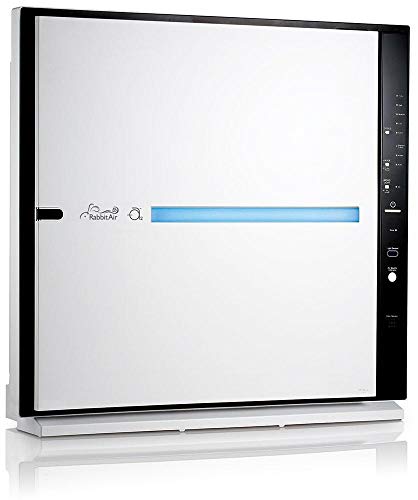
- The slim MinusA2 can mount on a wall, freeing floor space.
- Wall mounting requires a suitable location, and the filters still need access for changes.
Keep in mind: The Rabbit Air MinusA2 is a premium option (around $600+). But you’re paying for design, quiet operation, and versatility. If you hate the look or sound of typical air purifiers, this one solves both issues while keeping your air toxin-free. Just remember to disable the ionizer for absolute zero ozone (or leave it on low – it’s safe). This purifier proves you can have form, function, and non-toxic air cleaning all in one.
6. Coway AP-1512HH “Mighty” – Reliable, Budget-Friendly Classic (Ozone-Safe)
The Coway Mighty is often crowned in expert reviews as one of the best bang-for-buck air purifiers. It’s a medium-room purifier that’s affordable, efficient, and mostly mechanical (it does have an optional ion feature, but you can turn it off to ensure zero ozone). For years, this model has been a go-to recommendation for general home use – and it fits nicely into a non-toxic lifestyle when used correctly.

- Auto and eco modes adjust operation, and a filter indicator helps track maintenance.
- It needs clearance for airflow and periodic filter replacements.
Keep in mind: To keep it 100% non-toxic, turn off the “ionizer” (PlasmaWave) feature – there’s a dedicated button for it. This feature is not necessary for cleaning and the device still performs excellently without it. Some users report a slight plastic smell on first use – we suggest running it on high in a well-ventilated space for a day to eliminate any factory odors. After that, it should be fine. All in all, the Coway Mighty is a trustworthy, effective air purifier that, with one setting tweak, becomes a safe, ozone-free solution for clean air on a budget.
7. Medify MA-112 – Heavy-Duty Filtration for Extra Large Spaces
Have a really large area to clean or severe air quality issues? The Medify Air MA-112 is a beast of an air purifier that can handle it – and it does so with medical-grade filtration and an optional ionizer that can remain off to stay non-toxic. Medify Air is a newer brand committed to using high-grade HEPA filters (H13 or H14) in all their models. The MA-112 is their largest unit, suitable for big living spaces, basements, or even some light commercial uses.

- The large MA-112 offers substantial particle filtration for an open room.
- It takes up floor space. A one-hour coverage figure doesn't describe the same air cleaning rate in every room.
Keep in mind: The MA-112 is a larger appliance. It’s also on the higher end cost-wise (usually around $500-$600). Replacement filters come in a dual pack and can be a bit pricey (but remember, you’re getting two HEPA filters). If your air quality demands serious filtration and wide coverage, the Medify MA-112 is a non-toxic option that can deliver massive clean air volume. (For smaller spaces, Medify’s MA-40 or MA-22 are excellent compact choices that are also ozone-free.)
8. Vornadobaby Purio – Nursery-Safe Air Purifier for Babies & Kids
For parents wanting to ensure the cleanest, safest air in the nursery, the Vornadobaby Purio is a gem. It’s specifically designed for babies’ rooms, with every detail tuned for safety: rounded corners, child-lock controls, quiet operation and, of course, absolutely no ozone. This little purifier uses a True HEPA and activated carbon filter combo to keep your child’s air free of dust, allergens, and odors without any ionizers or UV that could be harmful.
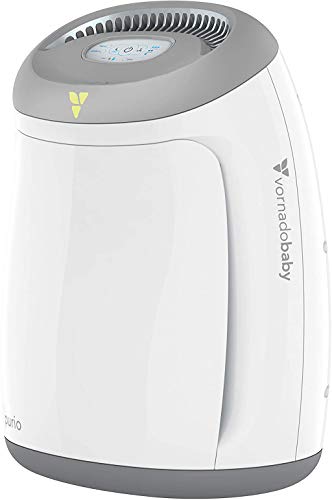
- The nursery-focused design includes a glow light and a particle filter in one unit.
- The light and filter are built into one appliance, and replacement filters are model-specific.
Keep in mind: The Purio is optimized for small spaces; for bigger kids’ rooms or playrooms, you might need a larger unit (or multiple Purios in separate rooms). It doesn’t have smart features or remote control – it’s a simple dial and switch operation (which some may prefer for ease of use). All in all, Vornadobaby Purio earns its spot as a best non-toxic air purifier for babies, giving parents peace of mind that junior’s air is as pure as can be, without any hidden nasties.
9. Honeywell HPA304 – No-Frills HEPA Workhorse (Large Room Coverage)
Rounding out our list is a trusted classic in the air purifier world: the Honeywell HPA304. This purifier may not have fancy smart tech, but it’s a reliable true HEPA unit with zero ozone emission, backed by a big brand name in home air quality. If you want simple operation and proven performance for a large room, the HPA304 delivers – and it does so without any ionizers or gimmicks.

- The larger Honeywell unit offers particle filtration without a whole-home installation.
- Its size and replacement filter costs matter if you need one in several rooms.
Keep in mind: On its highest setting, the HPA304 can be loud (like a box fan on high). Fortunately, you’ll typically use the lower settings for continuous use, which are much quieter (the lowest is library quiet). The unit is a bit plain-looking (a black plastic grill box) – not a conversation piece, but it’s relatively compact for what it does. If you don’t need app connectivity or ultra-modern design, and just want clean, allergen-free air with no ozone, the Honeywell HPA304 is a reliable, reasonably priced workhorse that gets the job done.
Additional Tips for Cleaner Indoor Air
Using a non-toxic air purifier will dramatically improve your indoor air quality, but it’s not the only step you can take. Here are a few tips and tricks to keep your home’s air as fresh and healthy as possible:
Open Windows for Ventilation
It might sound counterintuitive, but even in a city, a bit of fresh outdoor air can dilute indoor pollutants. Crack open windows when weather permits to allow natural air exchange – just avoid peak traffic hours or wildfire smoke days.
Incorporate Houseplants
Certain indoor plants can act as natural air purifiers. A famous NASA study found that plants like Snake Plant, Spider Plant, Dracaena, and Peace Lily can help remove toxins like benzene and formaldehyde from the air. While you’d need a jungle of them to equal a machine, a few green friends around the house can supplement your purifier and add oxygen and humidity. Plus, they brighten the mood!
No Smoking (and Go Easy on Candles)
Cigarette smoke is an obvious no-no for indoor air, but also be mindful of burning scented candles or incense frequently. They can release soot and VOCs. If you love candles, opt for 100% beeswax candles with cotton wicks – they burn cleaner (and some say they even ionize the air, though that’s debated). Always use in moderation and with ventilation.
Use Non-Toxic Cleaning Products
Many conventional cleaners, air fresheners, and paints release strong VOCs that linger. Switch to low-VOC or VOC-free paints, and use natural cleaners (or simple ones like vinegar, baking soda, and castile soap). Fewer harsh chemicals used means fewer for your purifier to capture.
Leave Shoes at the Door
A lot of indoor dust (and toxins like lead or pesticides) come in from outside on our shoes. Having a no-shoes policy indoors can reduce the introduction of pollutants. Less dust and dirt also means your air filter will last longer!
Maintain Your Purifier
Change your filters on schedule. A clogged HEPA or carbon filter can’t clean effectively. Mark your calendar or set reminders for filter changes as recommended. Also, vacuum the pre-filter if it’s reusable, and keep the area around the purifier free of obstructions.
Do’s and Don’ts of Using Air Purifiers
Do This
Not that
FAQs about Non-Toxic Air Purifiers
In conclusion, clearing the air in your home doesn’t have to involve harsh chemicals or risky devices. By choosing one of these top non-toxic air purifiers, you’re opting for clean air delivered in the safest way possible. Each of our recommended models uses proven filtration technology (like HEPA and activated carbon) to remove contaminants without ozone, without off-gassing plastics, and without gimmicks.
Whether you splurge on a high-end unit like the Austin Air or IQAir for ultimate protection, or grab a budget-friendly Levoit or Coway for everyday improvement, you’ll be taking a positive step for your health. Remember, the goal is to reduce the toxic load in your home’s air – and even small improvements can have a meaningful impact over time.
So go ahead and clear the air – literally! Breathe deeply knowing that the air in your home is as pure and fresh as nature intended, and free from unwelcome chemicals or irritants. Here’s to a healthier, happier home and family. Breathe clean, live well, and stay non-toxic!