Titanium cookware can be a good choice if you want a durable cooking surface without a conventional nonstick coating. But “titanium” can describe very different products, from solid titanium camping pots to titanium-lined pans, titanium-strengthened stainless steel, and coated nonstick cookware. What matters is the material touching your food and how the pan is constructed.
Key Takeaways
Is Titanium Cookware Safe? It Depends Which Kind You Bought
The word “titanium” is a starting point, not a complete materials description. Here are the main types you’ll encounter:
The useful question is simple: What touches the food, and what materials make up the rest of the pan? For understanding family safety around kitchen items, parents might also find healthy eating in childcare explained for parents a helpful resource.
Does Titanium Cookware Leach Into Food?
Titanium naturally develops a thin protective oxide layer that helps it resist corrosion. This surface behavior, called passivation, is a major reason titanium is considered useful for food-contact applications.
Research supports that potential. A study examining titanium’s resistance to aggressive food simulants concluded that titanium could be considered a candidate food-grade material.
However, research on titanium as a material does not establish an exact leaching rate for every finished pan. Construction, surface treatment, food acidity, temperature, and contact time all matter. The EDQM’s guidance on food-contact metals explains why release testing needs to account for the material and its intended use.
For shoppers, the practical takeaway is to choose clearly disclosed materials and look for testing relevant to the actual product. Claims such as “zero leaching” or “the safest cookware in the world” go further than general titanium research can establish.
Does Titanium Cookware Contain PFAS?
Some titanium-branded cookware does. “Titanium-reinforced” may describe a PTFE nonstick coating with added material for durability. PTFE belongs to the PFAS family, so titanium reinforcement does not make that coating PFAS-free.
If your goal is to avoid PFAS in cookware, choose an uncoated metal cooking surface or a ceramic coating explicitly disclosed as PFAS-free. “PFOA-free” alone does not mean PTFE-free or PFAS-free.
Titanium vs. Stainless Steel, Aluminum, Cast Iron, and Ceramic
Every cookware material trades safety characteristics for cooking performance, and titanium is no exception.
Stainless steel is the most common comparison point, and it holds up well on most fronts, but it isn’t allergen-free. Many stainless alloys contain nickel, and CP titanium contains essentially none, which makes titanium the more sensible choice if you have a known nickel allergy or sensitivity. For everyone else, stainless steel’s leaching profile is also low under normal use, and it sears better than titanium tends to.
Aluminum, when uncoated, is more chemically reactive with acidic foods than either titanium or stainless steel. It’s the material most likely to show measurable metal transfer when you cook something like tomato sauce for an extended period, which is why most aluminum cookware today is either anodized or clad with a nonreactive layer.
Cast iron can add iron to food, especially during acidic cooking. That extra iron is not beneficial for everyone. It also demands seasoning maintenance that titanium simply doesn’t need.
Ceramic-coated cookware offers the closest nonstick convenience to a PTFE pan without the fluoropolymer chemistry, but ceramic coatings degrade faster than titanium’s oxide layer and lose their nonstick properties over time, with lifespan depending on the coating, cooking temperatures, utensils, and cleaning. Our comparison of ceramic and stainless steel cookware breaks down that trade-off in more detail.
If you want to avoid conventional nonstick coatings, both titanium cooking surfaces and stainless steel are worth considering. Cooking performance depends on the whole pan: thin titanium camping cookware behaves differently from a titanium-clad pan with an aluminum core. Ceramic-coated cookware offers easier food release, but its coating will eventually wear.
Titanium Cookware Sets Worth Considering
Taima Titanium Cookware Sets
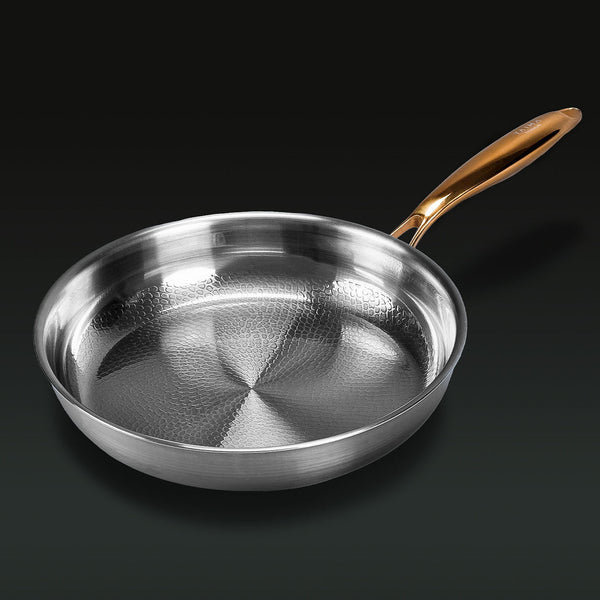
Taima is an option for cooks who specifically want a titanium cooking surface. The brand describes its cookware as having an uncoated Grade 1 titanium interior, aluminum layers for heat distribution, and a stainless steel exterior.
Its 8-piece Signature Pan Set includes three pans, three lids, and two utensils. The larger 14-piece set adds more cookware for a broader kitchen setup. Taima lists these sets as induction-compatible and dishwasher-safe.
- Uncoated titanium surface, no PTFE or PFAS
- Aluminum core for even heating
- Induction, gas, and electric compatible
- Dishwasher- and metal-utensil-safe
- Lifetime warranty
- Premium price
- Requires cooking fat and heat control
Heritage Steel Titanium Series
Heritage Steel’s Titanium Series is a strong option for everyday stainless steel cooking. Its 316Ti cooking surface contains titanium as part of the steel alloy, and its five-ply construction includes an aluminum core to distribute heat.
Made in Tennessee with global materials, the series suits cooks who want durable, uncoated cookware for browning, sautéing, and making sauces. The important distinction is that its cooking surface is stainless steel and contains nickel.

- 316Ti stainless steel cooking surface
- No PFAS/PTFE nonstick coating
- 5-ply fully clad construction
- Oven-safe to 800°F and broiler-safe
- Excellent heat retention
- Made in Tennessee with global materials
- Polished finish shows marks easily
- Hand washing recommended
What to Check Before You Buy Titanium Cookware
Before buying, check four things:
- The cooking surface: Is it titanium metal, stainless steel, or a nonstick coating?
- The construction: Is the cookware solid titanium or a layered design? Other metals beneath the cooking surface can improve performance.
- The documentation: Look for clear material disclosures and relevant food-contact testing when available. A purity certificate and a finished-product migration test answer different questions.
- The practical details: Confirm induction compatibility, oven limits, washing instructions, warranty terms, and what the set actually includes.
If the description is unclear, ask the brand to explain it. Missing information is a reason to investigate further, not automatic proof that a product is unsafe.
Caring for Titanium Cookware Without Undermining Its Safety
Solid titanium cookware is forgiving in ways coated pans aren’t, but a few habits matter.
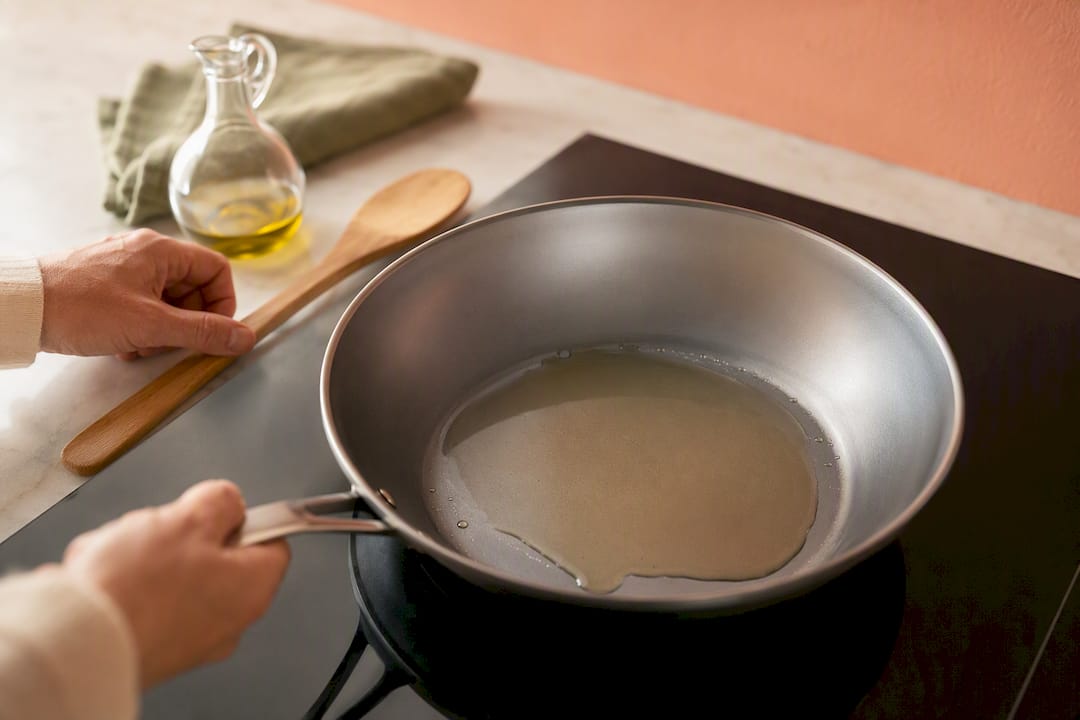
Preheat gradually rather than blasting a titanium pan to high heat immediately. Titanium conducts heat less evenly than aluminum or copper, so a slow, even preheat with a bit of oil or fat helps prevent hot spots and sticking, especially since uncoated titanium has no nonstick layer to fall back on.
Follow the washing instructions for your specific cookware. Taima lists its titanium sets as dishwasher-safe, while Heritage Steel recommends hand washing. An uncoated cooking surface does not automatically mean that every component of a pan is suitable for repeated dishwasher cleaning.
Heat-related color changes can occur on titanium and do not automatically mean the surface is damaged. If you notice actual peeling, pitting, or separation between layers, stop using the pan and contact the manufacturer. A persistent unusual taste also deserves investigation, but it cannot identify the metal grade or prove contamination on its own.
Beyond Leaching: Allergies and Other Health Considerations
Metal leaching gets most of the attention, but it isn’t the only health angle worth understanding. True titanium allergies are rare compared to nickel or chromium sensitivities, which is part of why titanium is used in medical implants and dental hardware for patients who react to other metals. If you already know you’re sensitive to nickel-containing stainless steel, switching to solid titanium cookware might be a better option.
There’s also a category of concern that has nothing to do with titanium directly: titanium dioxide (TiO2) as a food additive, used as a whitening agent in some processed foods, has drawn separate regulatory scrutiny in recent years. That’s a different exposure pathway entirely, ingested as an additive rather than present as a stable cookware surface, and it shouldn’t be confused with the oxide layer that forms naturally on titanium pans. Conflating the two is a common but avoidable mix-up.
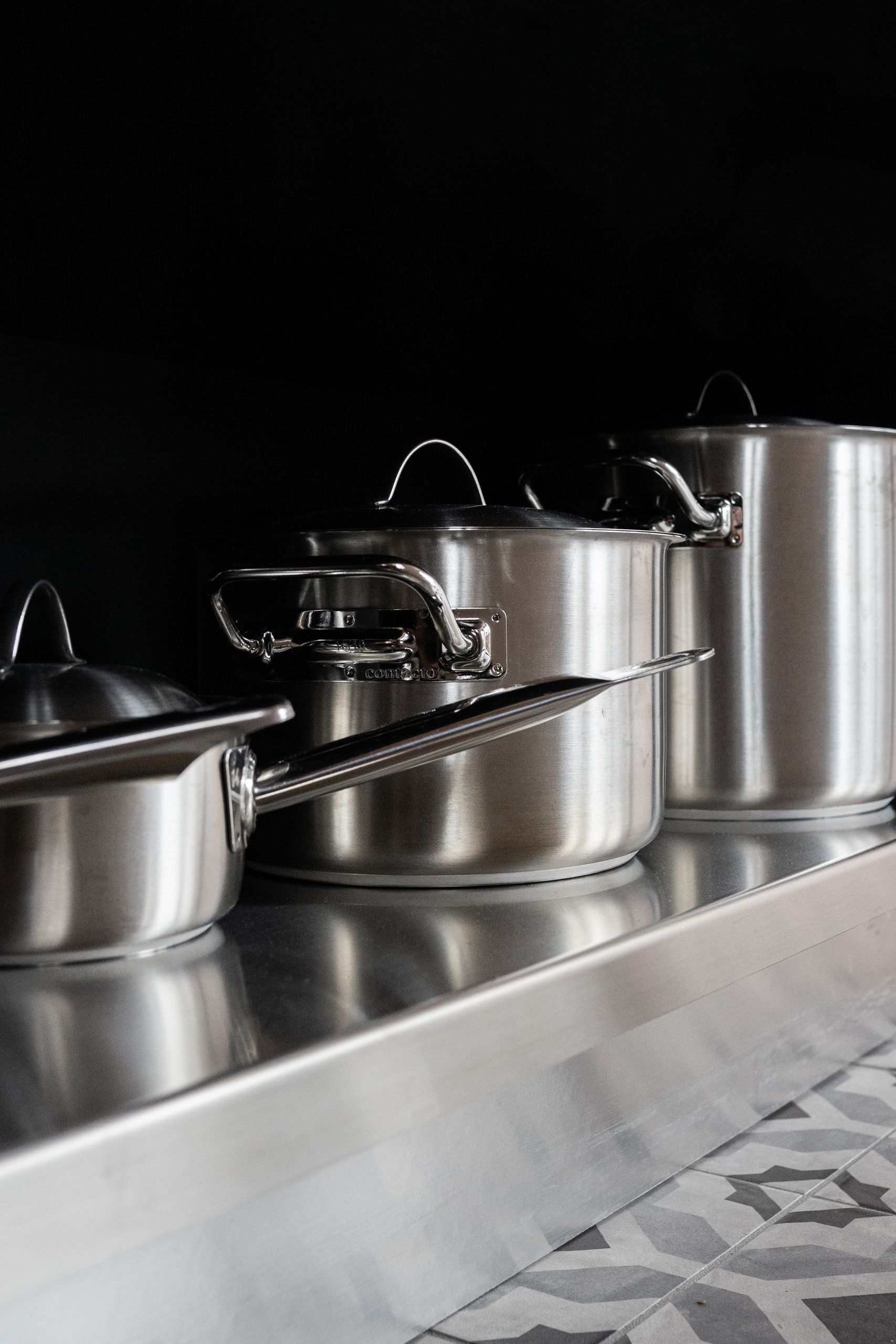

Where to Go From Here for Non-Toxic Cookware
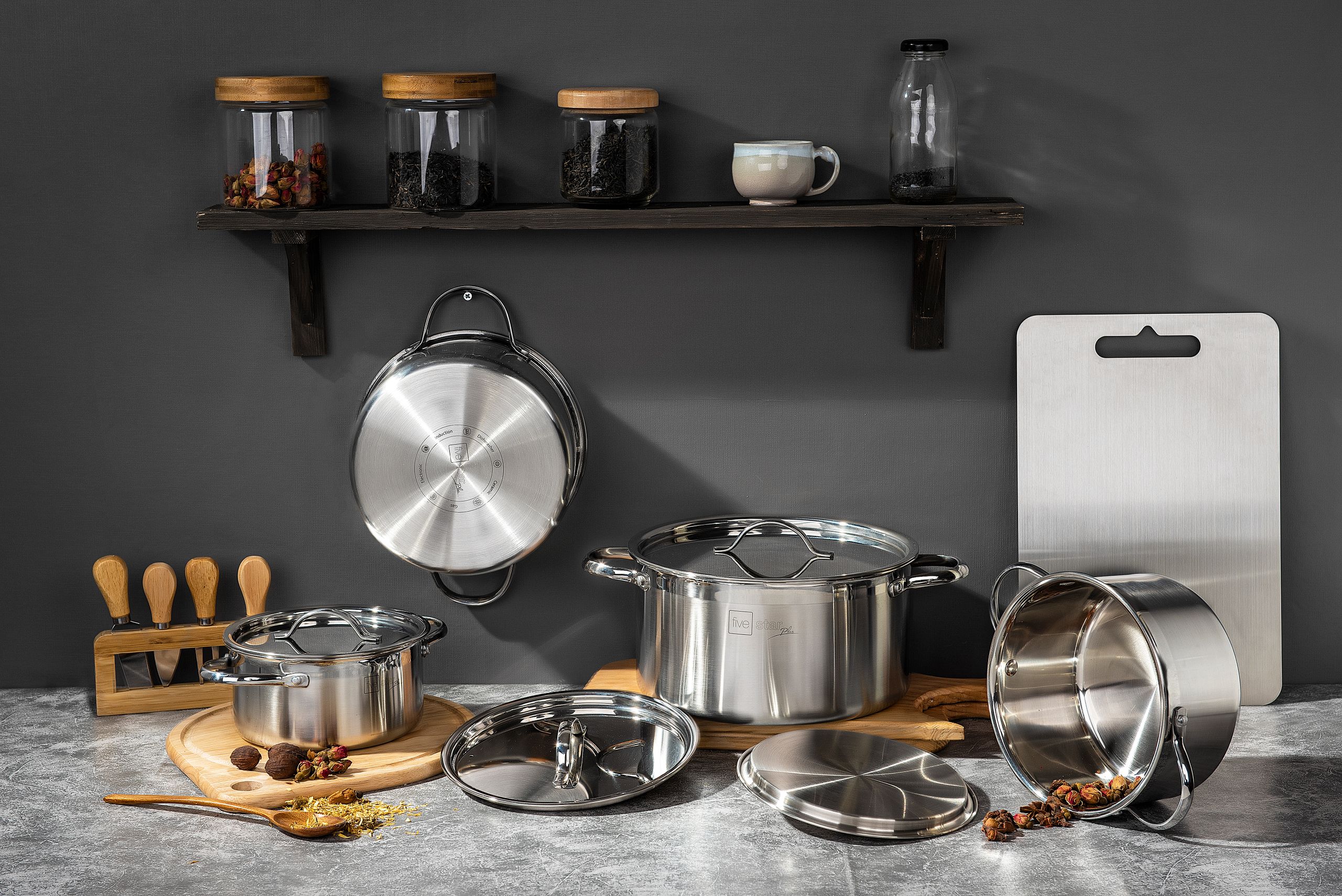
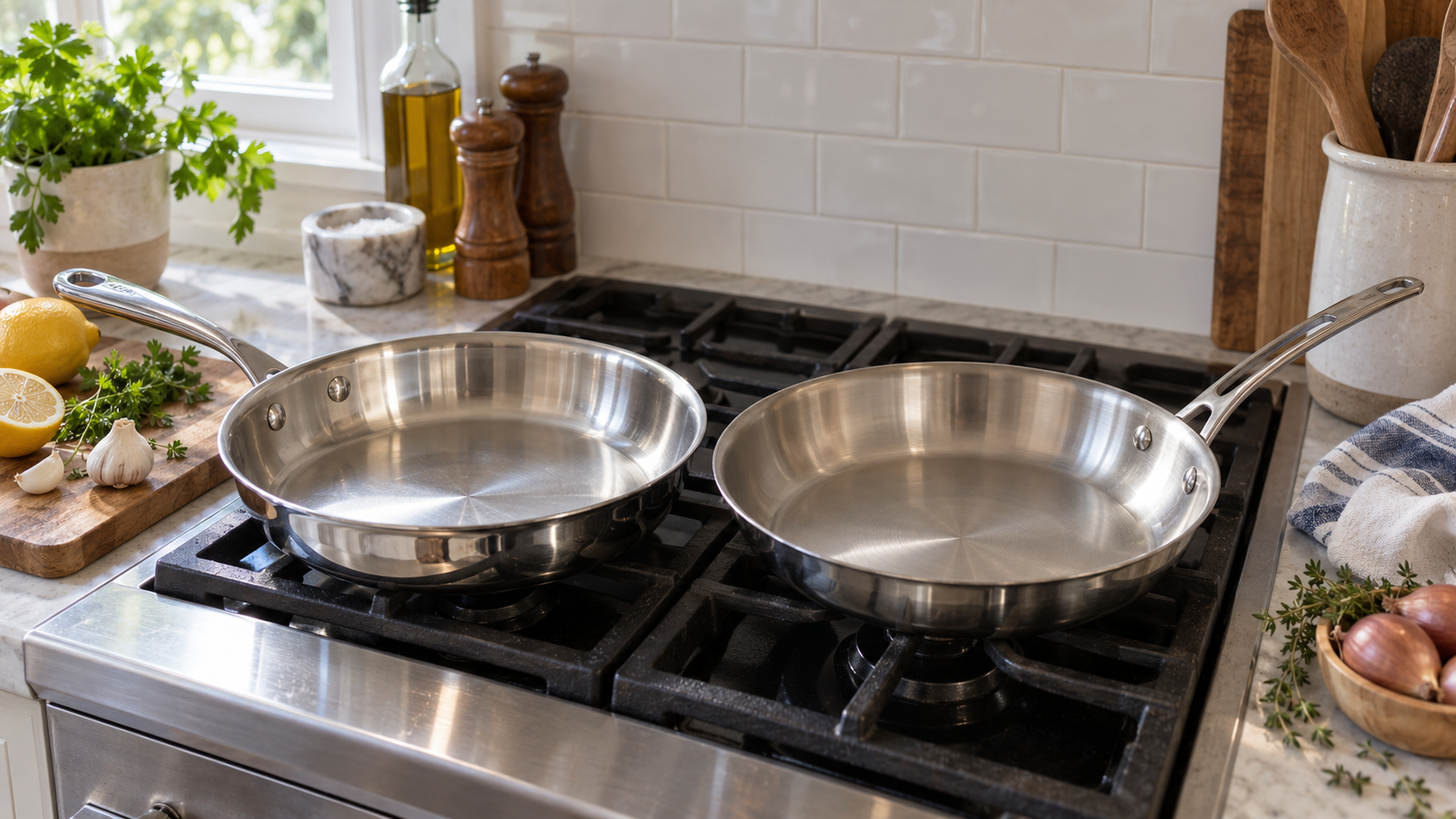
If you’re ready to shop instead of just research, our roundup of top-rated non-toxic cookware sets covers vetted options across titanium, stainless steel, and ceramic, so you’re not starting your search from a blank product listing with no verification already done.
If you’ve already got a “titanium” pan in your cabinet and you’re not sure which category it actually falls into, or you’re staring at a product listing trying to decode whether “titanium-infused” means what you hope it means, that’s exactly the kind of question our research and product selection process is built to help answer.
We can help you figure out what questions to ask a manufacturer, or point you toward a PFAS-free nonstick option if solid titanium doesn’t fit your budget or cooking style. Just leave a comment below!
Frequently Asked Questions