For a truly coating-free food path, glass is the safer default. Bare stainless is the better pick if you need ruggedness and don’t want to worry about breakage. That’s the short answer for anyone shopping for a PFAS-free air fryer right now.
The longer version matters, though, because “PFAS-free” and “coating-free” mean different things. The EPA links exposure to certain PFAS with harmful health effects, which is one reason I look closely at cooking surfaces. Uncoated glass and bare stainless steel both avoid nonstick coatings where food touches. Ceramic-coated baskets can be PFAS-free, but they still rely on a coating.
This guide compares glass and bare stainless on the dimensions that actually matter when you’re buying: visibility, heat behavior, sticking, cleaning, durability, lifespan, and price. It’s a material decision guide, not a product roundup.
Key Takeaways
Uncoated glass and bare stainless steel are both coating-free options. Ceramic coatings can be PFAS-free, but their nonstick performance can wear down over time.
| Point | Details |
|---|---|
| Glass = coating-free | Borosilicate glass with 304 stainless accessories is the verified route to a truly PFAS-free food path. |
| Stainless = durable alternative | Bare 304 stainless is food-safe and long-lasting, but verify no nonstick coating is applied to the food-contact side. |
| Ceramic coatings degrade | Ceramic coatings can lose nonstick performance over time; lifespan depends on the coating, use, and cleaning. |
| Labels need verification | “PFOA-free” and “PTFE-free” are weaker claims than “PFAS-free”; none replace independent lab testing or a clear material spec. |
How do glass and bare stainless compare as PFAS-free air fryer surfaces?
| Dimension | Glass bowl | Bare stainless |
|---|---|---|
| PFAS-free status | Inert by nature; no coating to question. Borosilicate + 304 stainless accessories = verified coating-free food path. | Safe if truly uncoated 304 stainless. Verify no nonstick layer is applied to the crisper plate or basket. |
| Visibility / monitoring | Full view of food during cooking; no need to open the chamber. | Opaque; requires drawer pulls to check doneness. |
| Heat behavior and browning | Heats more slowly; glass insulates slightly. Browning is achievable but may need a longer preheat or slightly higher temp. | Conducts heat faster; better direct browning and crisping, especially on the contact surface. |
| Food sticking and cleaning | Food can stick to bare glass; a light oil spray or parchment liner helps. Smooth surface cleans easily once soaked. | Sticks more than coated surfaces; oil is needed. Can discolor with high heat but scrubs clean with a stainless brush. |
| Durability and breakage risk | Tempered borosilicate is tough but can crack under thermal shock or a hard drop. | Near-indestructible under normal kitchen use. Dents before it cracks. |
| Lifespan and maintenance | No coating to degrade; the bowl itself lasts indefinitely if not broken. | No coating to degrade; surface may discolor or show minor pitting over years but remains food-safe. |
| Safety / off-gassing | No off-gassing risk. Glass is chemically inert at air-fryer temperatures. | No off-gassing if uncoated. If the stainless steel has a coating, assess that coating separately; ceramic and PTFE coatings are different materials. |
| Price / replacement cadence | Glass-bowl models tend to cost more upfront; replacement bowls are available but add cost if broken. | Stainless baskets are widely available and affordable to replace. |
Why do PFAS claims matter for air fryers, and what do the labels actually mean?
PFAS (per- and polyfluoroalkyl substances) are a large family of synthetic chemicals used in nonstick coatings, water-resistant fabrics, and food packaging. The most well-known members are PTFE (the polymer in Teflon) and PFOA (the processing aid used to make early PTFE coatings). The EPA considers PFAS persistent environmental and health hazards, meaning they don’t break down in the body or the environment and accumulate over time.
Here’s where air fryers get complicated:
Overheated PTFE coatings can release harmful fumes, but that is different from saying every coated air fryer releases dangerous fumes during normal cooking. Germany’s Federal Institute for Risk Assessment distinguishes overheating from intended use. Choosing uncoated glass or stainless steel removes the nonstick coating from the cooking surface.
California’s Proposition 65 adds another layer: products sold in California must carry warnings for chemicals known to cause cancer or reproductive harm, and several PFAS compounds appear on that list. That doesn’t make every coated air fryer dangerous, but it does mean the regulatory pressure to disclose is growing.
Stat to know: The EPA has designated certain PFAS as hazardous substances under CERCLA, signaling that federal policy is moving toward stricter limits, not looser ones.
What makes glass food-contact surfaces a strong choice for safety-first cooks?
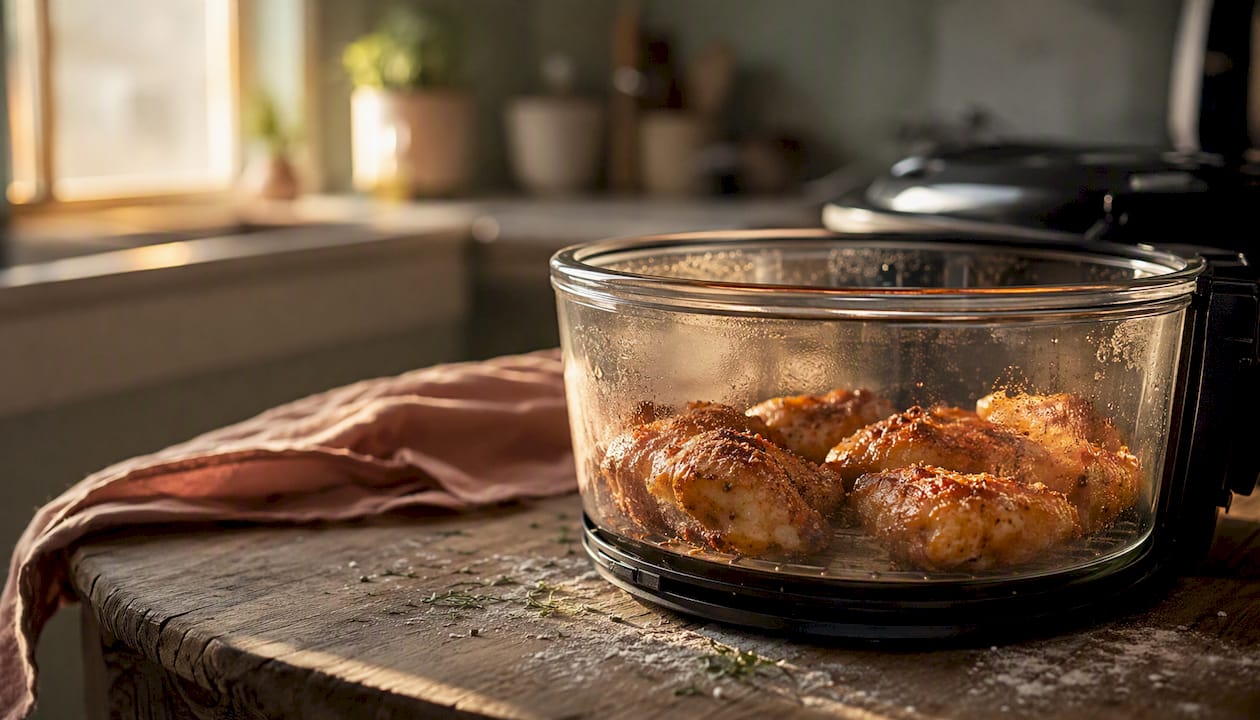
Borosilicate glass is chemically inert at the temperatures an air fryer reaches, typically 200°F–450°F. There’s no coating to scratch, no polymer to degrade, and no question about what’s touching your food. That’s the core appeal.
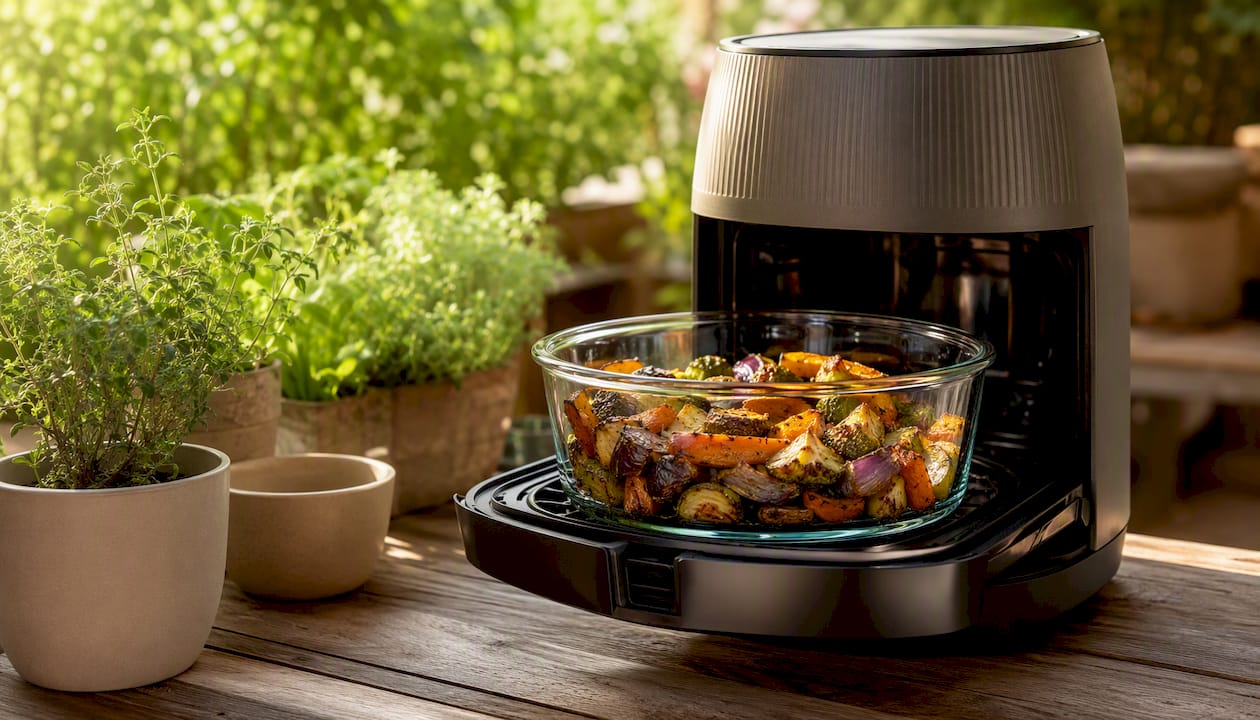
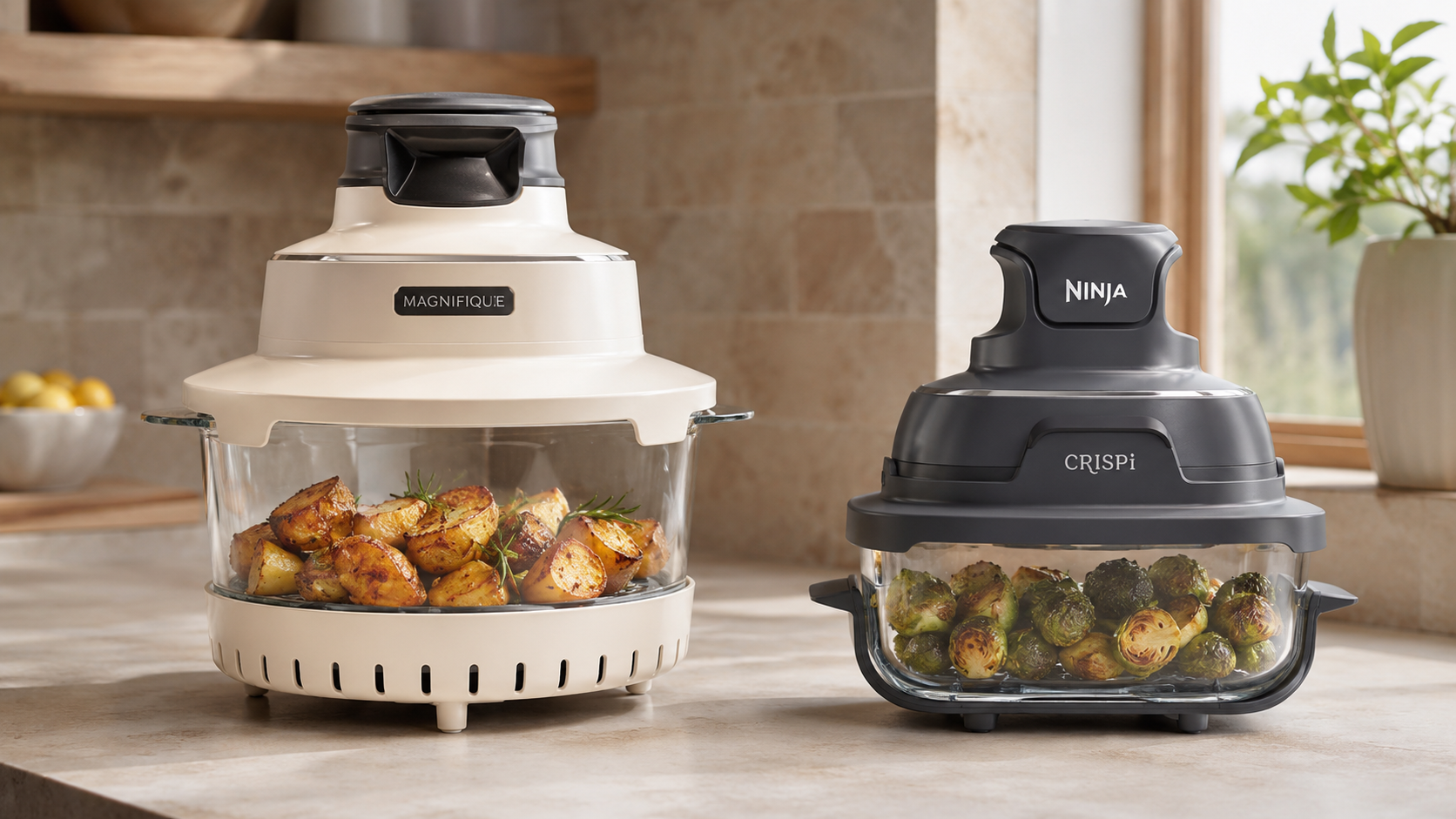
The visibility advantage is bigger than it sounds. CNET’s hands-on testing of 20 air fryers found that glass-bowl designs let you monitor food without opening the chamber, which preserves internal heat and produces more consistent crisping. Every time you pull a drawer to check on fries, you lose heat and interrupt the cooking cycle. Glass removes that habit entirely.
Here’s the honest tradeoff list:
Follow your air fryer’s instructions for preheating and handling its glass bowl. For better crisping, use the supplied rack or crisper plate, leave room for air to circulate around the food, and use a little oil when needed.
Pro Tip: Avoid sudden temperature changes, such as pouring cold liquid into a hot glass bowl.
Unlike a coated basket, a glass bowl has no nonstick layer to wear away. It can last for years with careful handling, though chipped or cracked bowls should be replaced.
What does bare stainless steel offer as a food-contact surface?
304 stainless steel (also called 18/8 stainless) is a food-safe, corrosion-resistant alloy with no nonstick coating. It’s the same material used in commercial kitchen equipment, and it’s safe as a food-contact surface as long as it’s genuinely uncoated.
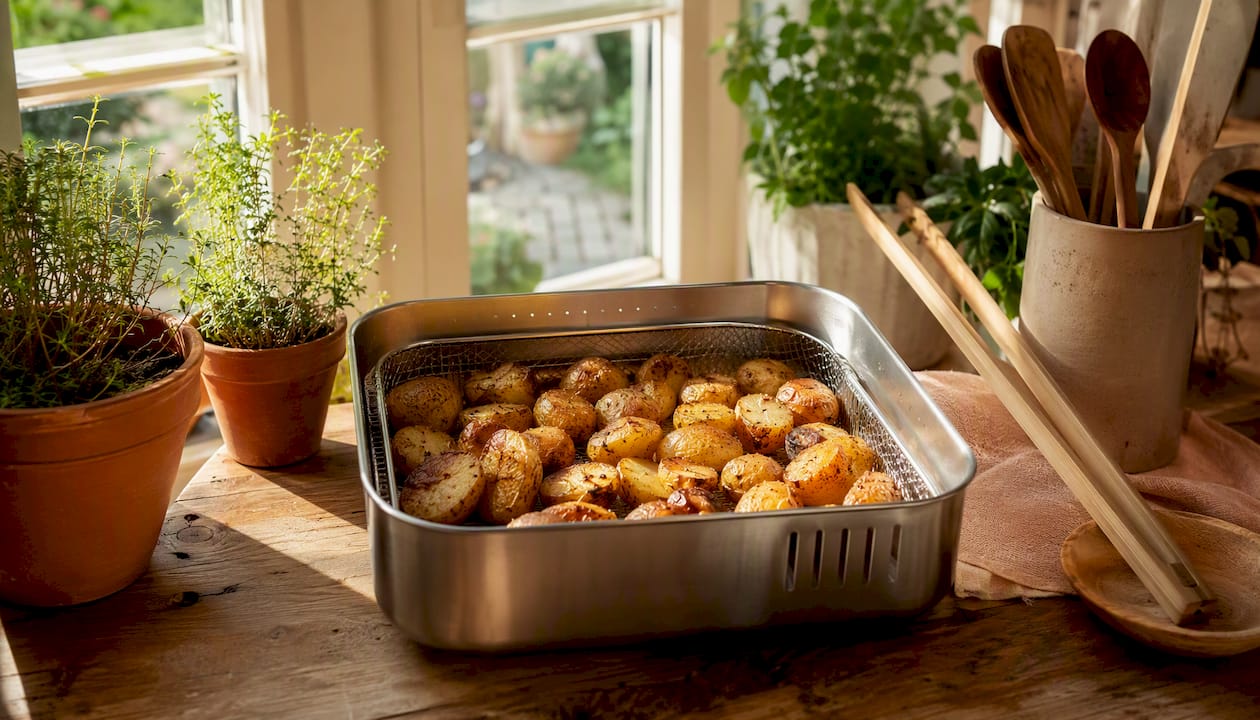
The thermal advantage over glass is real. Stainless conducts heat faster and more directly, which translates to better contact browning on the bottom of food. If you’re cooking chicken thighs, steak bites, or anything where a seared crust matters, bare stainless delivers that more reliably than glass.
Practical tradeoffs:
Sticking is the main friction point. Stainless needs oil, full stop. A light coat of avocado or grapeseed oil before cooking handles most sticking, and a 15-minute soak after cooking makes cleanup manageable. What stainless doesn’t do is degrade the way a ceramic coating does. Discoloration (a blue or gold tint from high heat) is cosmetic and doesn’t affect food safety.
Weight is actually a draw here. A stainless basket is lighter than a borosilicate glass bowl of similar capacity, which matters if you’re pulling the basket out frequently or have limited counter space.
Pro Tip: Lightly oil the stainless surface and preheat it for 2–3 minutes before adding food. The hot metal releases food more easily and produces a better crust than loading food into a cold basket.
One important caveat: verify that the stainless basket or crisper plate has no nonstick coating applied to it. Some models use a stainless exterior with a coated interior surface. The spec sheet should say “bare 304 stainless” or “uncoated stainless” on the food-contact side.
What about ceramic coatings, enamel, and silicone? Are they genuinely PFAS-free?
These are the options you’ll see most often in “non-toxic air fryer” marketing, and they deserve an honest look.
The red flag to watch for across all three: a manufacturer that says “PFAS-free” without specifying what the food-contact surface is actually made of. “Non-toxic” and “clean” are marketing terms with no regulatory definition. Ask for the material spec sheet.
How do you actually choose a PFAS-free air fryer? A practical checklist
Shopping for a safe air fryer without PFAS is easier when you know exactly what to look for and what to skip.
Confirm before buying:
Red flags to walk away from:
Questions worth asking the manufacturer or retailer:
Shopping shortcut: If coating-free cooking is your priority, look for uncoated glass or bare stainless steel, then check every food-contact accessory. For coated options, follow the manufacturer’s care instructions and replace damaged parts as directed rather than assuming every coating needs replacement after a fixed number of years.
Which air fryers do I recommend?
These are the models I would start with, depending on the cooking setup you want:
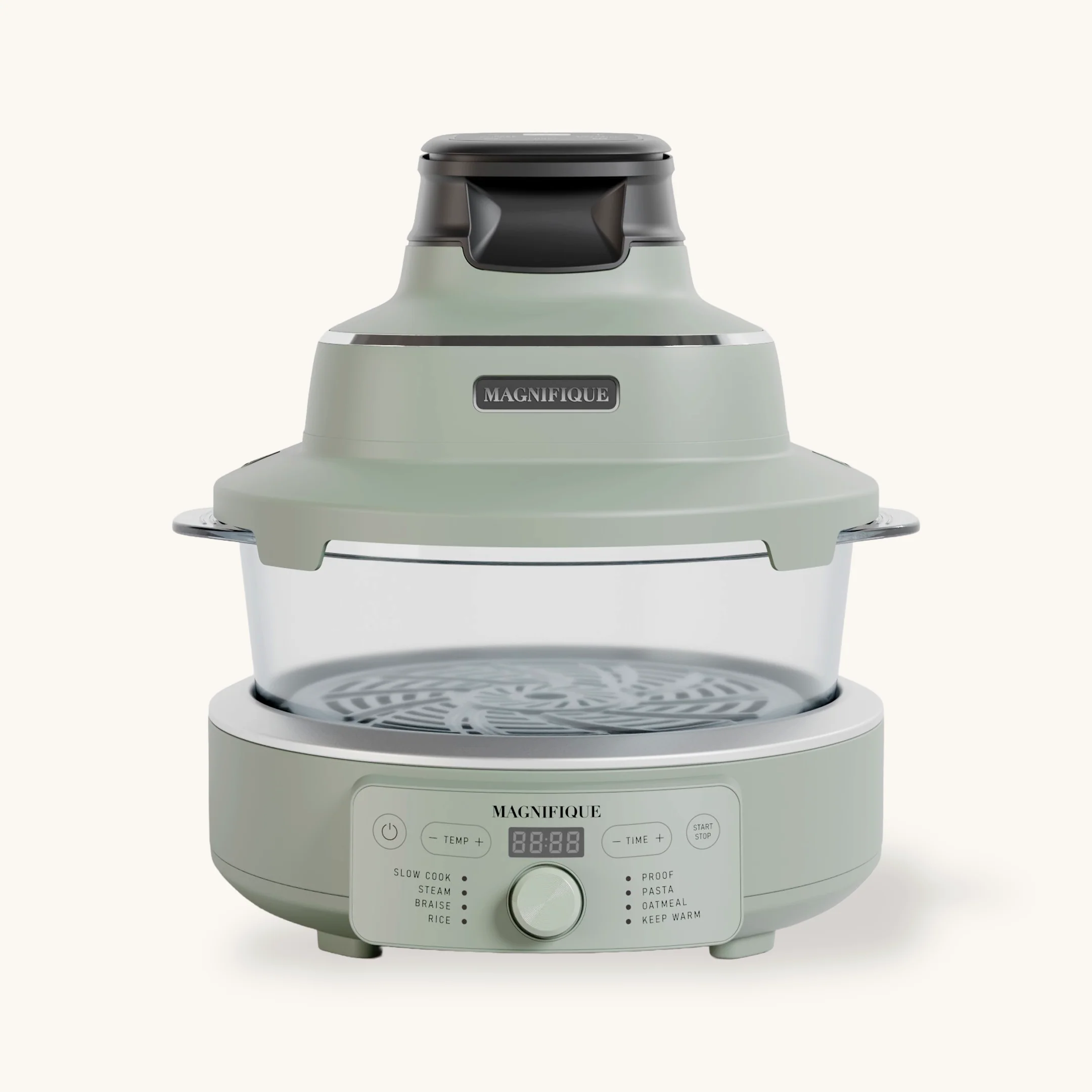
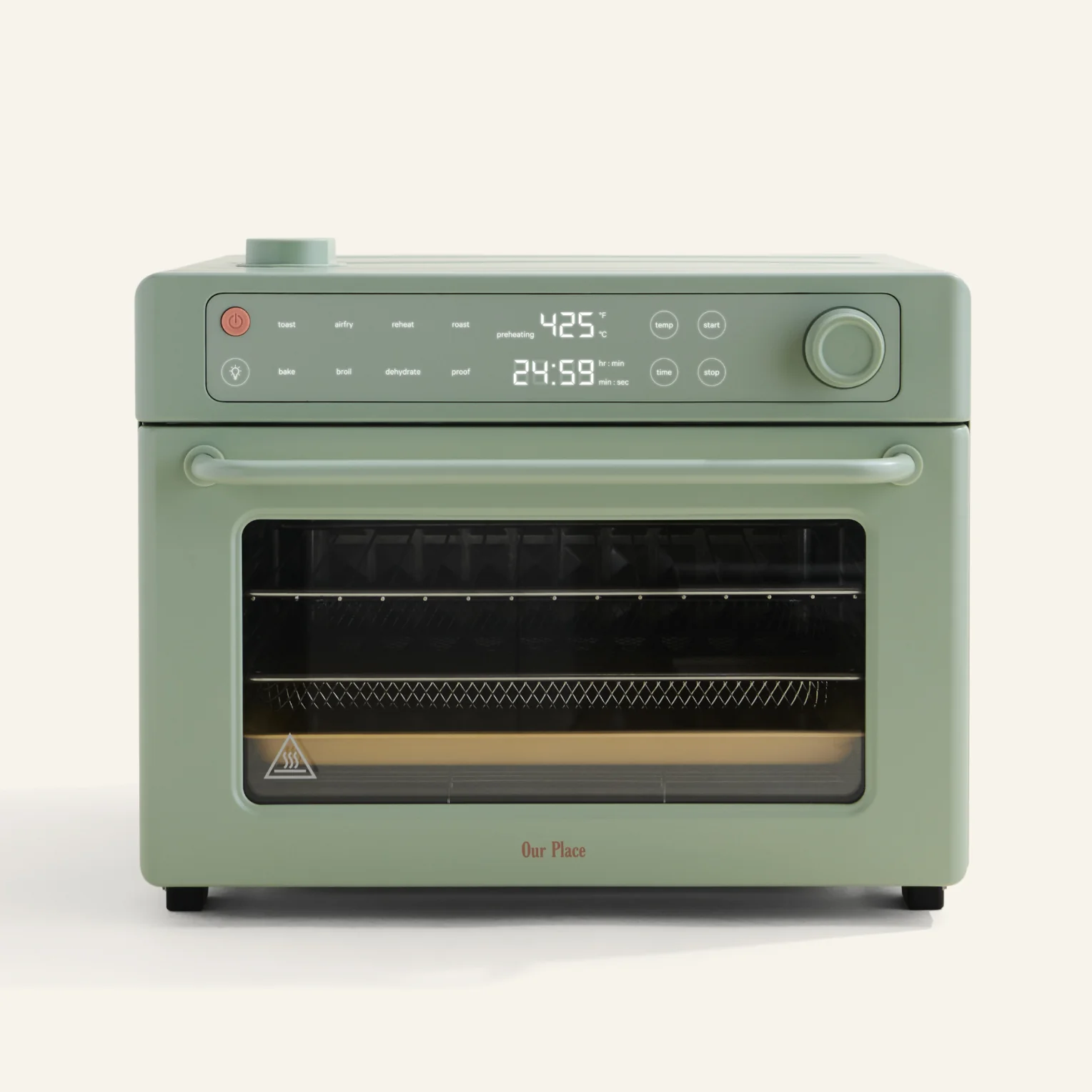
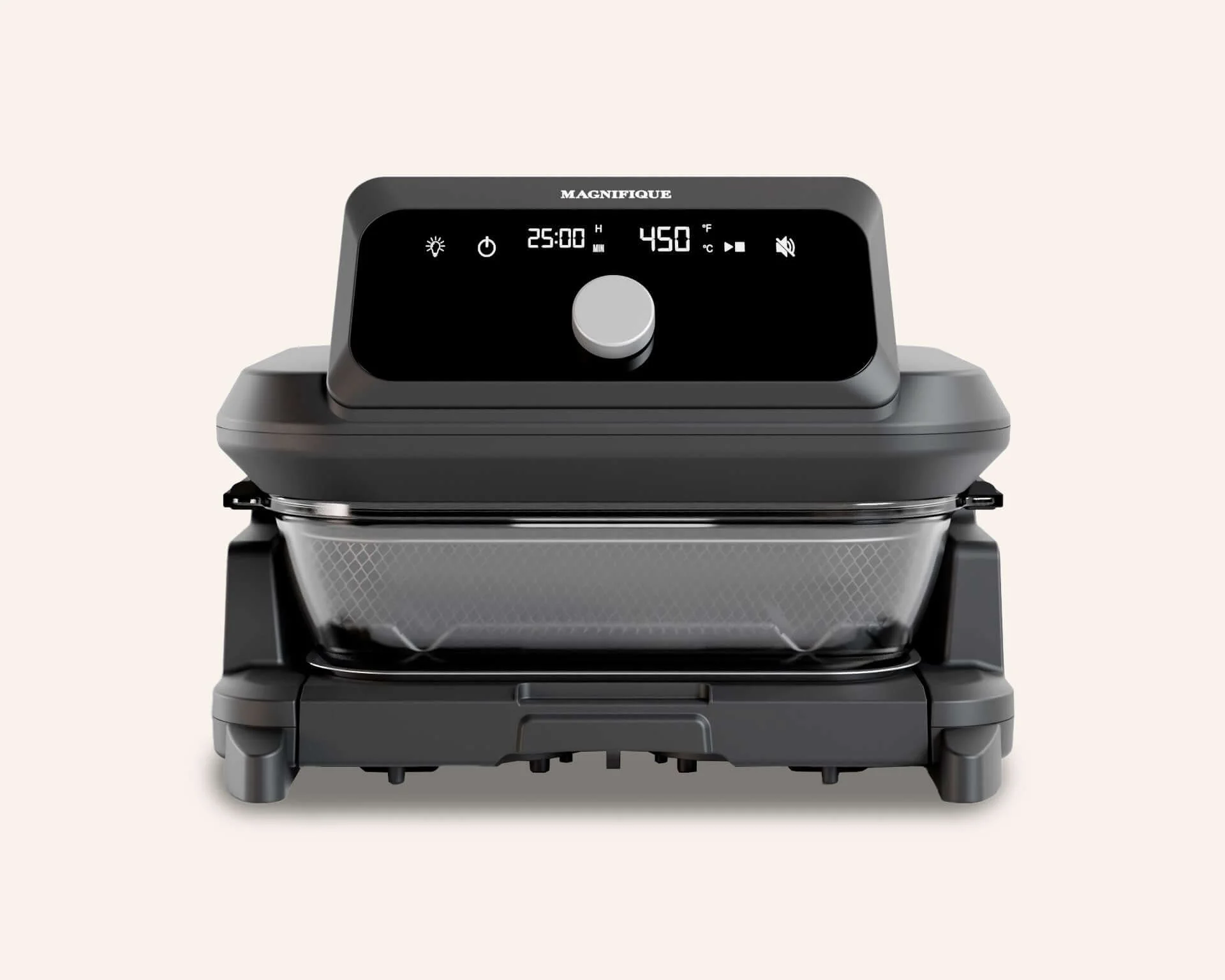


My full non-toxic air fryer guide covers additional options, manufacturer replies, and the materials behind each recommendation.
Frequently Asked Questions
How we evaluated claims and what evidence you can check
The evaluation framework here is straightforward, and you can reproduce it yourself.
Steps to vet a PFAS-free claim:
Trust signals to prioritize:
How to read manufacturer language:
“PFOA-free” is the weakest claim. “PTFE-free” is stronger but still doesn’t cover the full PFAS family. “PFAS-free” is the broadest claim but requires independent verification to trust. “Bare borosilicate glass” or “uncoated 304 stainless” are the most specific and verifiable descriptions.
Resources to consult: The EPA’s PFAS overview for health and regulatory context; Naturally Non-Toxic’s air fryer materials guide for editorial testing methodology; and the site’s editorial standards page for how claims are verified before a recommendation is made.

Naturally Non-Toxic makes the research easier
Sorting through PFAS claims, spec sheets, and marketing language takes time most parents don’t have. Naturally Non-Toxic does that work for you, researching ingredient safety, material certifications, and real product specs across kitchenware, baby gear, cleaning products, and more, so you’re not left guessing whether “non-toxic” on a label actually means anything.
If you’re building a safer kitchen beyond the air fryer, the non-toxic snack containers guide and the non-toxic bakeware guide apply the same material-verification approach to the rest of your cooking setup. Start with the how I research and choose products page to see exactly how every recommendation gets vetted before it goes on the site.


Sources
For model-specific materials, manufacturer responses, and my current recommendations, see my non-toxic air fryer guide.