Two-year-olds are chewers, throwers, stackers, and hoarders of small treasures. If I’m buying a second birthday gift, I start with what the birthday kid already does for fun. A toddler who steals the whisk while dinner is cooking is probably ready for a little chopping board of their own.
For these ten picks, I checked the age on the exact model and what little hands and mouths will touch, from the ink on a block to the stuffing inside a bunny. If you’re standing in a toy aisle or eyeing a hand-me-down, jump to what I check on the label. You can use it for any brand.
Three quick picks for a second birthday
Why I pay attention to toy materials at age two
If I had to choose between replacing a plastic truck that gets pushed around the rug and a soft vinyl duck my toddler chews every night, I’d start with the duck. How a child uses something matters. The finish on a puzzle knob ends up against their teeth. The ear of a favorite stuffed rabbit can spend a good part of the day against their face. Those are the parts I want the maker to tell me about.
Take that bath duck. Some phthalates are used to make vinyl flexible, and U.S. rules limit eight of them in accessible parts of children’s toys. On a new toy, “natural rubber” or “silicone” gives me a material I can actually choose. “BPA-free” alone leaves me guessing. That’s where I’d spend my shopping time before worrying about the truck.
I check the age before I fall for the materials. Two wooden play-food sets can use the same wood and paint, yet one has a chunky carrot that splits in half and the other has individual pretend blueberries. For a second birthday I’d take the carrot set marked 18 months and up. Beautiful materials can’t make a preschool-size piece any bigger.
How to choose a gift they’ll actually play with
If the child lives far away, ask their grown-up, “What’s the last thing they went back for after you put it away?” Hearing “the mixing bowl again” tells you more than “she likes educational toys.” Around two, many children are figuring out how to hold something steady with one hand while the other hand works. A bowl they can stir or a lid they can lift gives them a reason to use both hands.
| If the toddler loves to… | What to try before you buy |
|---|---|
| Fill, dump, and start over | Set out two bowls and a few of their biggest blocks. If they happily move the blocks back and forth, nesting cups could be a hit. A shape sorter that makes them find the right hole may interrupt the very game they enjoy. |
| Copy dinner prep | Give them a mixing spoon, a bowl, and a stuffed animal to feed. Do they stir for ten minutes, or do they carry everyone a plate? The first child might love a little pot. The second might get more play from pretend food. |
| Carry things from room to room | Put a laundry basket at the end of the hall and give them rolled socks to deliver. Watch whether they enjoy aiming for the basket or making the trip. That helps you choose between a soft ball and a pull-along. |
| Ask for the same story again | Borrow another board book about the thing they stop to point at on every page. For a child who always spots the dog, let a toy dog they already own turn up in the story. That pair makes a lovely quiet-time gift. |
If you’re still deciding between two gifts, think about the first thing the child could do with each one after the paper comes off. For a child who likes to do things “by myself,” the winner might be the set they can open, use, and put away on their own.
Gifts for building, pretending, and playing together
1. Uncle Goose Classic ABC Blocks with Canvas Bag
At two, the fun of these alphabet blocks is seeing how high the tower gets before someone knocks it down. There’s an animal to find on each block, so you can play “Can you find an animal?” long before your child knows the letter D. Uncle Goose makes the 28 blocks from Midwestern basswood, uses inks it describes as safe to touch, and rates the set for ages 2 and up. The canvas bag earns its keep at cleanup time.

- Canvas storage bag comes with the set
- Twenty-eight blocks to keep track of
2. Tegu Pocket Pouch Magnetic Wooden Blocks
The eight-piece Tegu Pocket Pouch in Tints is the set I’d bring to a restaurant. Four cubes and four short planks click together into a chair for a pretend passenger or a little tower you can pass across the table. Tegu rates these hardwood blocks for ages 1 and up. The magnets are enclosed, and the finish is a water-based lacquer. Retire any block that splits or exposes a magnet.

- Eight hardwood blocks with a water-based lacquer. felt travel pouch included
- Only two shapes. retire a block if its wood splits or a magnet is exposed
3. PlanToys Assorted Fruit & Vegetable Play Set
A toddler can hold a carrot steady, press the wooden knife through its hook-and-loop middle, then serve you both halves. The PlanToys fruit and vegetable set is rated for 18 months and up. The maker lists rubberwood, water-based dyes, and formaldehyde-free glue. I like that the tray gives the chopping a home even if you have absolutely no room for a play kitchen.

- Tray doubles as a play surface and storage
- Loose food halves need gathering
4. HABA My Very First Games: First Orchard
Can you pick all the fruit before the raven reaches the orchard? In HABA’s First Orchard, the grown-ups and kids win or lose together. This is the 2-and-up edition with chunky wooden fruit, a big color die, and cardboard orchard pieces. You can start by sorting the fruit into colors and introduce turns when your toddler is interested. Look for “My Very First Games” on the box so you get this edition.

- Short cooperative game with chunky wooden fruit
- Needs table space and help with setup
Gifts for little movers, musicians, and artists

5. PlanToys Dancing Alligator
Pull the string on the Dancing Alligator and its green body bobs and clacks behind you. This is a good match for a toddler who takes laps around the couch and checks over their shoulder to see who’s following. PlanToys uses rubberwood with water-based colors and rates this version for 12 months and up. On a hard floor, the clack is very much part of the gift.

- Moves and makes sound without batteries
- Clacks on bare floors
6. PlanToys Solid Drum
For the child who has already discovered the acoustics of your saucepans, I’d wrap the PlanToys Solid Drum. The rubber-tipped mallet makes different sounds depending on where it lands on the slotted wooden top. The maker specifies rubberwood, water-based dyes, and formaldehyde-free glue for this model, rated 18 months and up. Tap twice and let your toddler answer.

- Solid wooden drum
- Includes a rubber-tipped mallet
- Still makes noise, even with the soft tip
- Check the maker’s age recommendation
7. Honeysticks Originals and My First Coloring Book
The short, thick Honeysticks Originals crayons and coloring book give a little fist something to grip. The crayons are made with New Zealand beeswax and food-grade pigments. Honeysticks designs Originals for ages 1 to 3. I’d give these with a sheet of paper big enough for a whole-arm scribble. Save the brand’s watercolor set for age three, and sit together for coloring if crayons still go straight to the mouth.
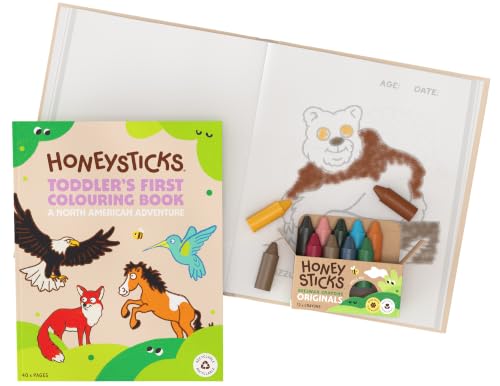
- Short, thick beeswax crayons are easy to grip
- Includes a coloring book that stores flat
- The round crayons can roll off the table
Gifts for cuddles, baths, and everyday use
8. Nanchen Bella Bunny Organic Soft Toy
I want to know what’s inside a lovey that’s going to be pressed against someone’s face every night. Nanchen’s Bella Bunny is handmade with organic cotton terry and filled with Bioland wool. Bella Luna lists it for babies as well as toddlers. Its size makes it easy to tuck under a little arm or into a stroller. The trade-off is laundry day. This bunny needs to be hand-washed.

- Organic cotton terry outside with Bioland wool filling
- Hand-wash only. small enough to tuck in one hand
9. CaaOcho Lily the Duck
If squeezing old bathwater out of a rubber duck gives you the creeps, CaaOcho’s Lily the Duck is the one I’d look at. This baby bath toy has a sealed body, and CaaOcho lists natural rubber and food-grade paint. Let it dry outside the tub and replace it if the seal opens. I’d skip natural rubber for a child with a known latex allergy.

- Sealed body keeps bathwater out
- Natural latex and air-drying to consider
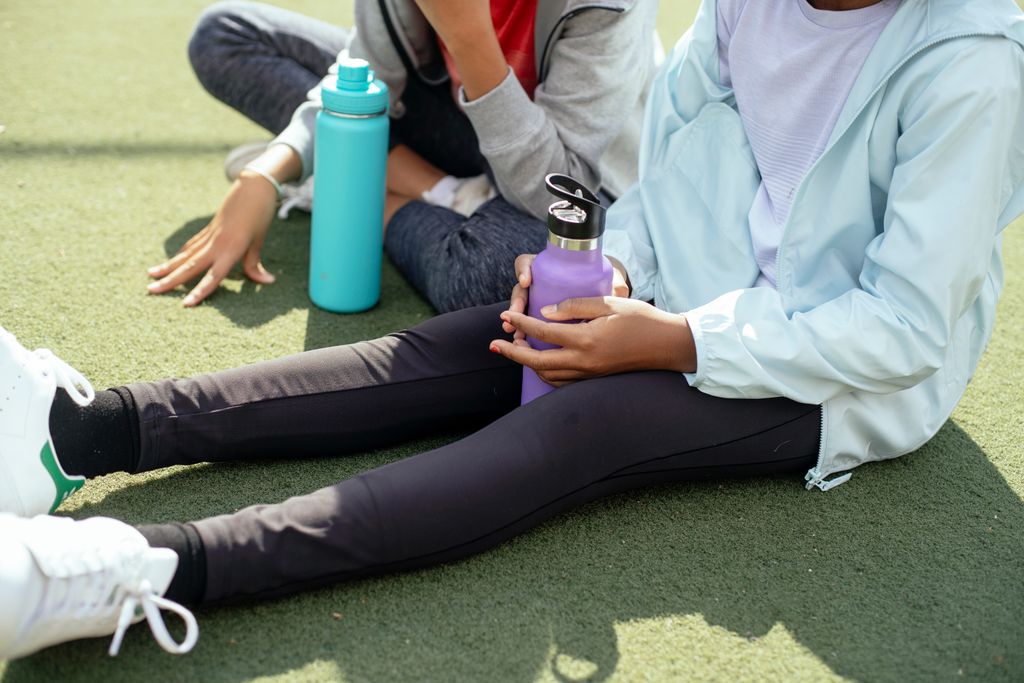
10. Pura Kiki 11 oz Kiddo Straw Bottle
For a toddler who already has plenty of toys, the 11 oz Pura Kiki Kiddo Straw Bottle is something they can unwrap and take to the park that afternoon. The bottle and collar are 18/8 stainless steel, and the drinking straw is silicone. Pura rates it for 6 months and up. I’d choose this single-wall version for its lighter weight and tuck the included cover on before dropping it into a bag.

- 18/8 stainless steel bottle with a silicone straw
- MADE SAFE certified
- Interchangeable tops as kids grow
- Includes a silicone travel cover
- Single-wall bottle does not insulate
- Use the travel cover to help prevent spills in a bag
How I check a toddler gift’s materials
The word “natural” on the box gives me less to go on than “cotton terry with wool filling.” Here’s what I look for when I’m shopping for a two-year-old.
What’s on the surface of a wooden toy?
Imagine two listings for a wooden puzzle. One says “natural wood and non-toxic paint.” The other describes a plywood base, solid beech pieces, and painted knobs. The second gives me enough to ask about the part my toddler will put in their mouth first. On a puzzle that’s usually the knob. On play food it’s the colored fruit and the join where the two halves pull apart.
“Water-based” describes how the finish is made. The pigments are a separate question. Flip the box over if you see an FSC logo, too. An FSC label that says “Packaging” refers to the box. On a listing that stops at “child-safe paint,” I’d send a short message. “What finish is on the red knobs, and what age is the puzzle in this photo rated for?”
For loveys, check both the fabric and the filling
Turn the bunny over. “Organic cotton” on the hangtag might describe the terry cloth on its ears. The sewn-in label may tell you there’s polyester fiberfill in the body. That’s a different purchase from cotton terry filled with wool. If the shop calls the whole toy GOTS-certified, its label should name the certifier and give a license number. You can use that number to look up the certified company.
For a keepsake someone is happy to hand-wash, I like cotton and wool. A daycare lovey can come home wearing yogurt on Tuesday and need to be back on Wednesday. For that child I’d choose a machine-washable, unscented toy with a clearly named filling and embroidered eyes. I also skip added stain protection on indoor play fabrics. Some stain-repellent treatments use PFAS, and I’d rather wash a cotton play mat than pay for a treatment the maker won’t identify.
For bath toys and straw bottles, follow the water
Look at the underside of a squeeze toy. If water gets through a tiny hole, how will you see inside it or get it completely dry? An open nesting cup is easy to check at a glance. A sealed toy can work too, as long as its seam stays closed. If a once-sealed duck starts squirting water, I’d retire it. A set of cups you can stack upside down is a much easier gift to live with.
On a water bottle, the words “stainless steel” tell you about the body. Zoom in on the underside of the lid to see what the drink passes through. Can the straw come out for washing? Can you buy that one part when a toddler bites through it? A replaceable straw is a feature worth paying for. Replacing an entire bottle over one chewed tip gets expensive fast.
What the label on a box of crayons can tell you
Beeswax names the base of a crayon. I still look for information about the colorants, the age range, and any added scent. For a first art gift, I like short, unscented crayons a child can grip with a fist. A giant sheet of paper is often the better upgrade. At two, the drawing can travel quite a way before anyone thinks to stop at the edge.
The ACMI AP seal means a toxicologist evaluated the formula for its intended use. “Conforms to ASTM D-4236” describes a review for chronic hazards and any warnings they require. It can appear on adult art supplies, too. I still check the age on the box. If a crayon is getting bitten in half, a wide clean brush and a little plain water will let that child draw great big marks on a dry patio and watch them disappear. You can check another art set in ACMI’s certified product search.
You can read more about how I research and choose products if you want to use the same checklist for another gift.
Which toddler gifts would I buy secondhand?
A recent set of wooden blocks with the maker stamped on the box is a good secondhand find. Before driving across town, I ask for two photos. One shows the brand, model, and any date or batch code on the toy or box. The other shows all the pieces spread out. The first lets me check recalls. The second tells me whether that bargain puzzle is missing the dog my toddler will ask for every single time. You can search by brand and model in the CPSC recall database.
In person, I look at block corners, the joints around enclosed magnets, and the neck and ear seams of stuffed animals. I’d take a plain wood block with light surface scuffs and smooth edges. I’d pass on a cracked magnetic block, a seam that exposes stuffing, or a battery door held shut with tape.
Painted heirlooms get a different answer. The CDC advises keeping toys made before 2009, including vintage and antique toys, out of children’s play because they can contain lead. A smooth-looking finish can’t tell you whether lead is present. I’d put Grandpa’s painted train on a display shelf out of reach and find a recent, identifiable train for the birthday child to roll across the floor.
When is a bigger set worth the money?
In one small study, 36 toddlers played on separate occasions with four toys or sixteen. With four available, they spent longer with each toy and found more ways to use it. An easy way to try that idea at home is to put a few blocks beside one favorite car. See what happens when there’s room on the rug for a garage.
If the child keeps running out of blocks while making parking spaces, extra blocks buy them something they already want to do. If they spend the whole afternoon driving in and out of a garage made from a shoebox, I’d keep the shoebox. For a birthday on a tight budget, I’d happily wrap a well-chosen secondhand toy and put my time into playing with it together.
What do you give a two-year-old who has everything?
A children’s museum membership, a zoo pass, or a toddler music class turns one birthday gift into repeat outings. If the family already has a membership, offer to take the birthday kid for a morning. “I’ll come get you Saturday and we’ll go see the turtles” is a pretty wonderful present at two.

Before buying a membership, check who can take the child. Can Grandma use the pass on her babysitting day? Is parking included? Can they pop in for forty minutes before lunch, or do they have to reserve the whole afternoon? For a family doing outings around nap time, those details decide whether a pass gets used twice or twenty times.
A library outing or a teddy bear picnic works on a small budget. For the child fascinated by buses, the ride to story time can be half the present. For the one who feeds their stuffed animals, invite their bear and pack a snack their grown-up knows they like. Put an actual date on the birthday card. The parent gets to say yes to a morning that’s already planned.
If you want something to wrap, a hand-drawn ticket tucked inside a birthday card works. My favorite part of this kind of gift is that the parent doesn’t have to find it a spot on the shelf afterward.
Frequently Asked Questions
Sources