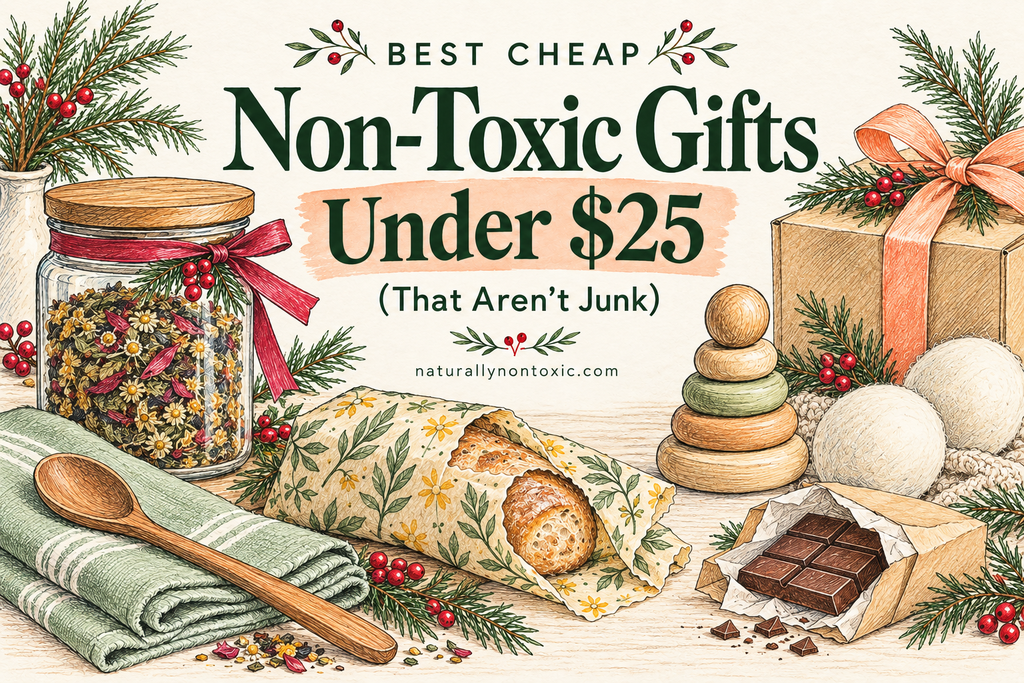
Here are the best cheap non-toxic gifts you can buy for under $25: small, practical picks in kitchen, wellness, kids, and pantry categories that avoid vague “clean” claims and hold up to real use. Each one earns its spot on materials, transparency, and durability, not trend appeal. For bigger budgets, the non-toxic holiday gift guide covers more ground.
Key Takeaways:
Top Picks: The Best Cheap Non-Toxic Gifts Under $25
The trouble with most “eco gift” roundups is that half the items are single-use novelty junk dressed up in kraft paper. A good gift should do something useful and not require a chemistry degree to evaluate. Reusables should hold up to repeat use; food and self-care gifts should be things the recipient will finish. Here’s a shortlist organized by what the item actually does, not just what it’s made of.
Prices are in USD before tax and shipping. Named product prices were checked October 6, 2026; other ranges are approximate shopping budgets. Sale prices and availability can change.
- Beeswax food wraps. The Beeswax Wraps Assorted 3 Pack is $18.99 from Zero Waste Store and uses organic cotton, beeswax, jojoba oil and tree resin. The wraps replace plastic cling wrap for cheese, cut fruit, or bread and can last up to a year with proper care. Wash in cool water; keep them away from heat and raw meat or fish.
- Glass food storage containers with bamboo or glass lids. Budget $12 to $20 for a small jar or basic set, depending on the size and lid. Plain glass made for food storage resists stains and odors and is easy to clean. Check the lid and gasket materials too; bamboo lids usually need hand washing.
- Wooden kitchen utensils. Budget $10 to $18 for a solid-wood spoon or a small basic set; olive wood often costs more. Look for smooth wood and a disclosed food-contact finish, such as food-grade mineral oil, rather than an unspecified “wood sealant.”
- Cast-iron chainmail scrubber. The Lodge Chainmail Scrubbing Pad is $24.90 on sale, down from $29.95. It has a stainless steel exterior and silicone core and is dishwasher-safe. It’s a useful gift for someone who cooks with seasoned cast iron.
- Solid shampoo or body bar. Brands that publish full ingredient lists (not just “natural fragrance”) price these between $10 and $18. How long a bar lasts depends on its size, formula, and how it’s stored between uses.
- Lip balm trio in glass or metal tins. Budget $12 to $20 for a small set; tins and pack sizes vary by maker. Skip anything listing only “flavor” or “fragrance” without naming the actual oils and waxes used.
- Plantable Sprout pencils. These pencils have a seed capsule where the eraser would be, so kids can plant the stub after use. Choose from herbs, flowers, or spruce, depending on the variety.
- Wooden stacking toy. Budget $15 to $24 for a small wooden stacker. Check the age rating and toy-safety compliance; “water-based paint” alone doesn’t tell you whether the finished toy has been tested.
- Wool dryer balls. Budget $12 to $20 for a small set of unscented, 100% wool dryer balls; compare the pack size before buying. They’re a reusable option for someone who wants to stop buying scented dryer sheets.
- Small-batch fair-trade chocolate or coffee sampler. A two- or three-item sampler from a fair-trade roaster or chocolatier costs $12 to $22 and reads as thoughtful rather than cheap.
The best cheap non-toxic gifts don’t need to look impressive in a gift basket. A useful kitchen tool, a favorite snack, or something that replaces a weekly purchase can be plenty.
Pro Tip: Before buying, search the brand name plus “ingredient list” or “material spec sheet.” If you can’t find one on the product page or by emailing the seller, that’s a red flag worth taking seriously, regardless of how the packaging looks.
You can shop these categories through brand websites, independent makers, or mainstream stores. Check the individual product rather than assuming a retailer’s “clean” label covers everything it sells. Availability shifts seasonally, so check current stock before you build a whole gift list around one item.
How to Choose the Best Cheap Non-Toxic Gifts
A $22 price tag doesn’t automatically mean an item is unsafe, and a $60 price tag doesn’t automatically mean it’s safe. Material and sourcing matter more than cost.
Materials to prefer:
Materials to avoid:
Certifications help, but only the specific ones. GOTS (Global Organic Textile Standard) covers organic fibers, processing chemicals, and environmental and social requirements. Fair Trade Certified addresses labor, environmental, and sourcing practices; it isn’t a blanket guarantee that a finished product is free of contaminants. A vague “eco-friendly” badge printed by the seller itself guarantees nothing.
Durability and reuse can reduce repeat purchases, but they don’t prove that a product is safer. A sturdy bottle the recipient uses every day is a better buy than a cupboard full of flimsy cups.
Your 30-second check before buying: open the product listing, search for the word “ingredients” or “materials,” and see if you get a real list or a marketing paragraph. If it’s the latter, ask the seller directly or move on.
Kitchen & Home Smalls Under $25
Food-contact items deserve a closer look, since they interact directly with what someone eats or drinks every day. Plain food-storage glass, stainless steel, and solid-wood utensils are practical places to start. “Uncoated ceramic” isn’t a safety guarantee: decorative pottery may be unsuitable for food, and some ceramicware can release lead.
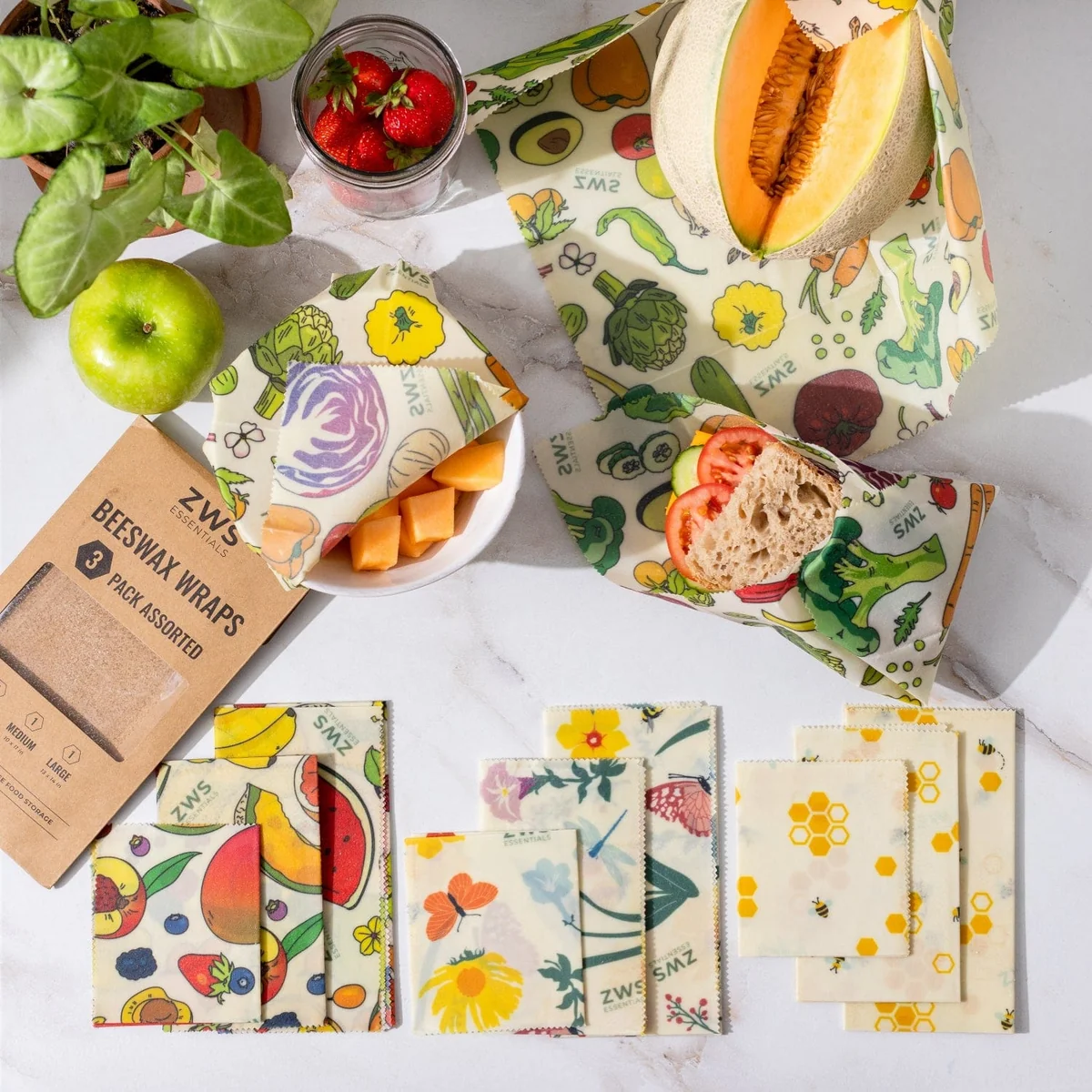
Pros: Organic cotton with beeswax, jojoba oil, and tree resin; three useful sizes; washable and reusable for up to a year.
Cons: Hand-wash in cool water; no hot food, microwaves, or raw meat; not vegan.

Pros: Glass containers with glass-and-silicone lids; dishwasher-safe; nest together for easy storage.
Cons: Glass can chip or break; the four-piece set includes just two containers and two lids.

Pros: Solid teak with a coconut oil finish; no added glue or lacquer; long handle for stirring and serving.
Cons: Hand-wash only; needs occasional oiling; wood grain and color vary.

Pros: Durable stainless steel chainmail; silicone core makes it easy to grip; dishwasher-safe.
Cons: Intended for seasoned cast iron and carbon steel; nearly the full $25 gift budget.

Pros: FSC-certified paper; wax-free; sealable closure; handy for sharing snacks without collecting containers afterward.
Cons: Disposable; best for dry foods; recycling depends on local acceptance and how soiled the bags are.
One category to watch closely: textiles marketed as “stain-resistant” or “water-repellent,” including some tablecloths, napkins, and oven mitts. These finishes sometimes rely on PFAS (per- and polyfluoroalkyl substances), a large group of chemicals, many of which break down very slowly and can build up in people and the environment. If a product claims stain resistance and doesn’t specify the finish chemistry, treat that as a pass, especially for anything that touches food or hot surfaces.
For readers building out a full food-storage swap, the PFAS-free food storage guide breaks down glass, silicone, and stainless options in more depth than a gift roundup can.
Wellness & Self-Care Under $25
Small self-care items make some of the easiest non-toxic gifts to get right, because the category has gotten genuinely better in the last few years. More brands now publish full ingredient lists instead of hiding behind “proprietary blend” language.

Pros: Plant-oil formula with mango butter and aloe; recyclable paper packaging; easy to pack without spills.
Cons: Soap-based formula can be tricky with hard water; contains almond oil; needs to dry between uses.

Pros: Beeswax and lanolin with coconut and sweet almond oils; peppermint and rosemary oils are named; convenient twist-up tubes.
Cons: Contains almond oil; not vegan; all three tubes are peppermint.
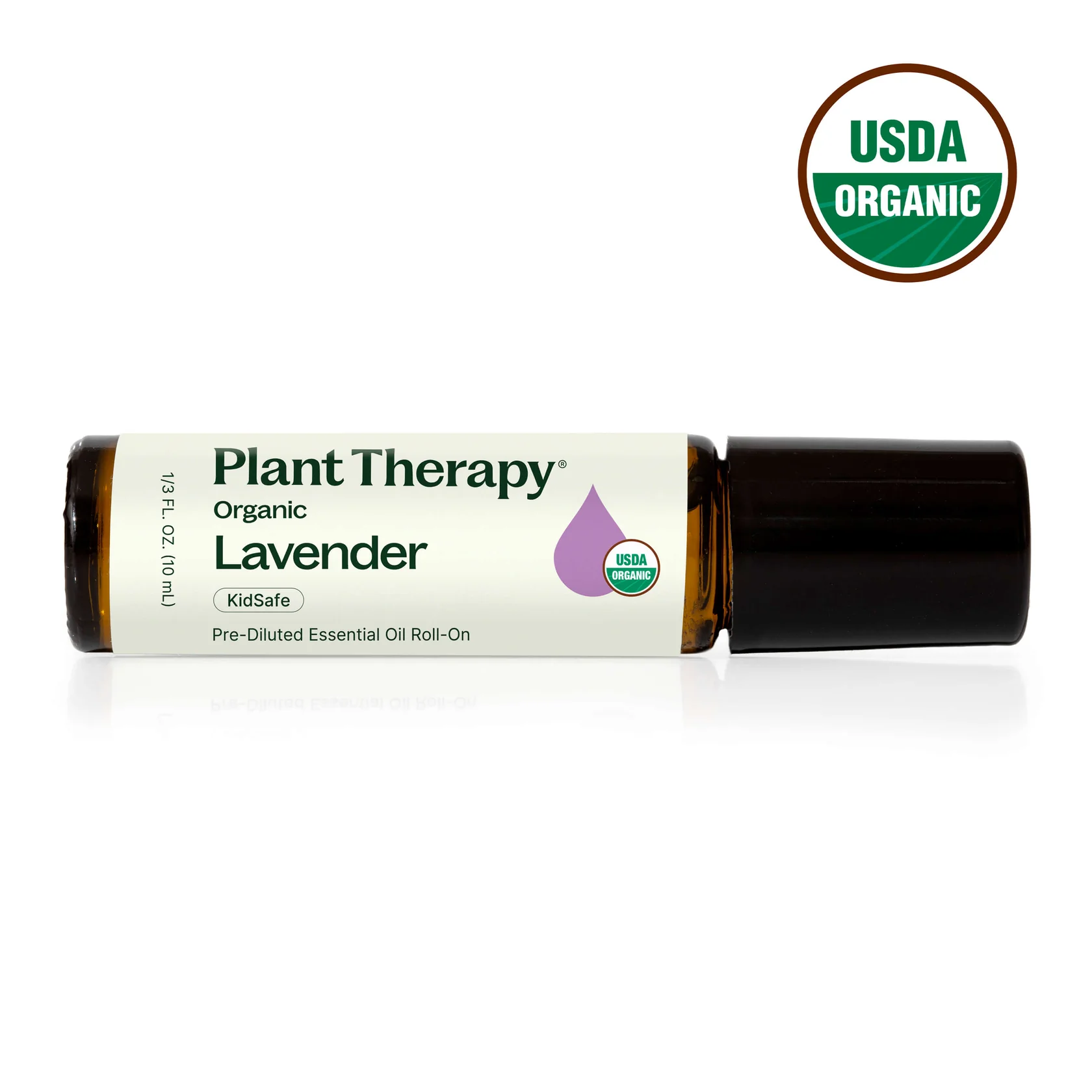
Pros: Just two organic ingredients; premixed in fractionated coconut oil; small enough to tuck into a purse.
Cons: Lavender scent won’t suit everyone; 10% essential-oil concentration can irritate sensitive skin.
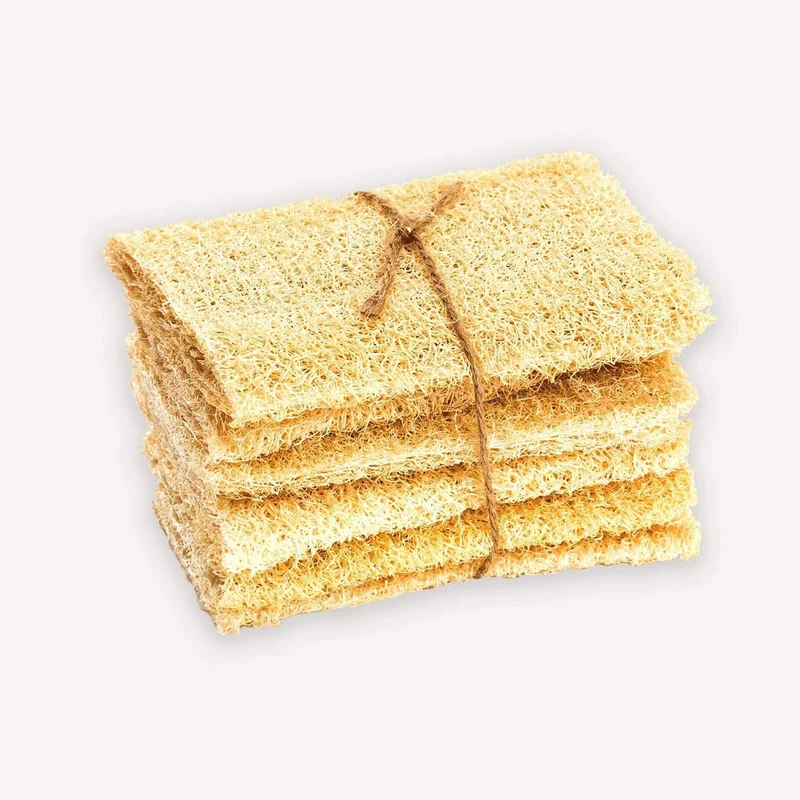
Pros: Made entirely from loofah plant fiber; compostable; six-pack can be split between stocking stuffers.
Cons: Needs to dry between uses; coarse texture may feel too rough on sensitive skin.
Two words to scan for on any label: “fragrance” and “parfum.” These terms can cover a mixture without naming every component. If you’re shopping for someone with fragrance sensitivities, I’d choose a product without added fragrance or essential oils.
Pro Tip: If a wellness product’s website doesn’t have a dedicated “ingredients” tab separate from the marketing copy, email them before buying. If the seller can’t provide the full list, choose something else.
Kids & Small Toys Under $25
Toy safety includes the materials, construction, and whether small pieces pose a choking risk. For toys sold in the US, look for compliance with applicable CPSIA requirements and the mandatory ASTM F963 toy safety standard. Manufacturers and importers of toys for children 12 and under generally need a Children’s Product Certificate backed by the required testing. A “non-toxic” badge alone doesn’t tell you that.

Pros: Two shapes and nine colors for stacking and sorting; chunky wooden pieces; flexible pegs that fold down.
Cons: Eighteen loose pieces to keep track of.

Pros: Organic cotton outer fabric; crinkly animal flaps for little hands to explore; comes in a gift box.
Cons: Contains polyester filling and plastic crinkle inserts; Wee Gallery specifies surface cleaning only.

Pros: Natural rubber; soft, textured surface; one-piece design with an opening for little hands to grip.
Cons: Not suitable for babies with a latex allergy; needs replacing if the rubber becomes sticky, cracked, or damaged.

Pros: Eight pencils with engraved quotes; plantable seed tips; a thoughtful little gift for teachers and gardeners.
Cons: No attached erasers; pricier than basic pencils; sprouting depends on growing conditions.
For toys marketed to children under three, check the age label and avoid loose pieces or damaged surfaces. An odor isn’t a reliable safety test: natural rubber has a smell, and some hazards have none. This guide goes deeper on what to avoid for the youngest recipients.
Where to Buy and How to Spot a Real Deal
- Indie makers (Etsy, small-brand websites) give you a chance to ask the maker about materials directly. Handmade doesn’t automatically mean tested, though, and holiday shipping can take longer.
- Specialty retailers can make reusable and low-plastic gifts easier to find. Check what their selection standards actually cover, then compare the item’s price with the brand’s own site.
- Mainstream retailers can be convenient for local pickup and returns, but double-check that the specific item, not just the store’s marketing, meets your standard. On marketplace listings, check who is selling and shipping it.
Watch for deals in early November and again in early January, when both indie shops and larger retailers clear seasonal inventory. Before buying from any seller you don’t recognize, ask for the full ingredient or material list and confirm the return policy in writing. A seller who hesitates to answer either question is telling you something.
Budget Categories and Stocking Stuffer Ideas
Not every gift on this list needs the full $25. Splitting your budget into tiers makes shopping faster and keeps you from overspending on filler.
Under $10: Plantable pencils, a single lip balm, a wool dryer ball two-pack, or a small herbal tea sachet. These work as stocking stuffers or add-ons to a larger gift.
Under $15: A pair of organic cotton socks, a small glass jar with a reusable lid, or a single solid shampoo bar.
Under $20: A three-pack of beeswax wraps or a small coffee and chocolate pairing.
$20 to $25: A wooden stacking toy, a lip balm set in tins, or the Lodge scrubber while it’s on sale.
Stocking stuffers specifically benefit from the “functional over novelty” rule. A wool dryer ball actually gets used every laundry cycle; a scented candle with an undisclosed fragrance blend often sits in a drawer. Choose around the person’s habits, though. Dryer balls won’t do much for someone who line-dries everything.
Pro Tip: Buy two of whatever’s cheapest and useful, like dryer balls or lip balms, and keep one in a “just in case” drawer for last-minute gifts. It saves a panicked store run later.
Gift Safety by Age Group
A gift that’s perfectly safe for a ten-year-old can be a genuine hazard for a toddler, so age-appropriate screening matters as much as material safety.
Under age 3: Choose toys labeled for the child’s age and avoid small, detachable parts, including decorative beads or pieces that could break off. Smooth wood, washable cloth, or silicone can all be options, but the finished toy still needs to meet the applicable safety requirements.
Ages 3 to 6: Small parts become slightly less risky but still warrant caution, especially for households with younger siblings. Watch for allergy triggers in consumable or bath-adjacent gifts, particularly nut oils in lotions or balms if the child has a known sensitivity.
Ages 7 and up: Choose around the child’s interests and the product’s age rating. For self-care gifts, ask a parent what the child already uses; a named essential-oil blend isn’t automatically suitable for children.
All ages: Check the full ingredient list and allergen labeling on edible gifts, regardless of brand size. Ask about the recipient’s allergies first; “may contain” warnings are voluntary, so their absence doesn’t rule out cross-contact.
Environmental Impact: Materials and Packaging Matter Twice
Non-toxic and eco-friendly overlap more than people assume, but they’re not identical. A gift can be perfectly safe for the recipient and still generate excess packaging waste, and the reverse is also true.
Packaging adds to a gift’s environmental footprint. Plastic clamshells, foam inserts, and ribbon all become extra waste. Prefer minimal packaging or containers the recipient will reuse; a “non-toxic” lip balm shipped in three layers of plastic still generates unnecessary waste.
Durability matters when the item gets used. A set of wraps or a reusable snack bag can replace repeated disposable purchases, but a bundle that sits in a cupboard won’t. For a $25 budget, one useful item is enough.
Verifying Seller Credibility and Avoiding Counterfeits
On open marketplaces, check the seller as well as the brand name. A familiar logo and a “non-toxic” badge don’t establish who is supplying the item or whether the claims are backed up.
Three checks before you buy from an unfamiliar seller:
Check whether the listing includes a specific material or ingredient breakdown, not just a badge graphic. Legitimate sellers can name the actual components; counterfeit or low-quality listings tend to rely on stock photos and vague claims like “eco-friendly” or “chemical-free” with nothing underneath.
Look up the brand independently, outside the marketplace listing. A quick search for the brand name plus “reviews” or “complaints” surfaces pattern problems fast, especially inconsistent product quality across the same listing.
Confirm the return policy explicitly. Personal-care products and sale items may have return restrictions even from reputable brands. Know those limits before buying; a generous return policy isn’t proof of product safety.
Wrapping Non-Toxic Gifts the Sustainable Way
A reusable gift doesn’t need layers of disposable wrapping. Glitter, foil, and plastic coatings can make wrapping paper unsuitable for ordinary paper recycling.
Reusable fabric wrapping, sometimes called furoshiki after the Japanese cloth-wrapping tradition, works well for smaller gifts and can double as a scarf or tea towel afterward. Plain kraft paper with twine and a sprig of dried herbs costs less than glossy printed paper and looks better in most cases. For readers who want a deeper breakdown of sustainable gift wrapping options, including reusable fabric methods and recyclable paper choices, it’s worth a look before your next wrapping session.
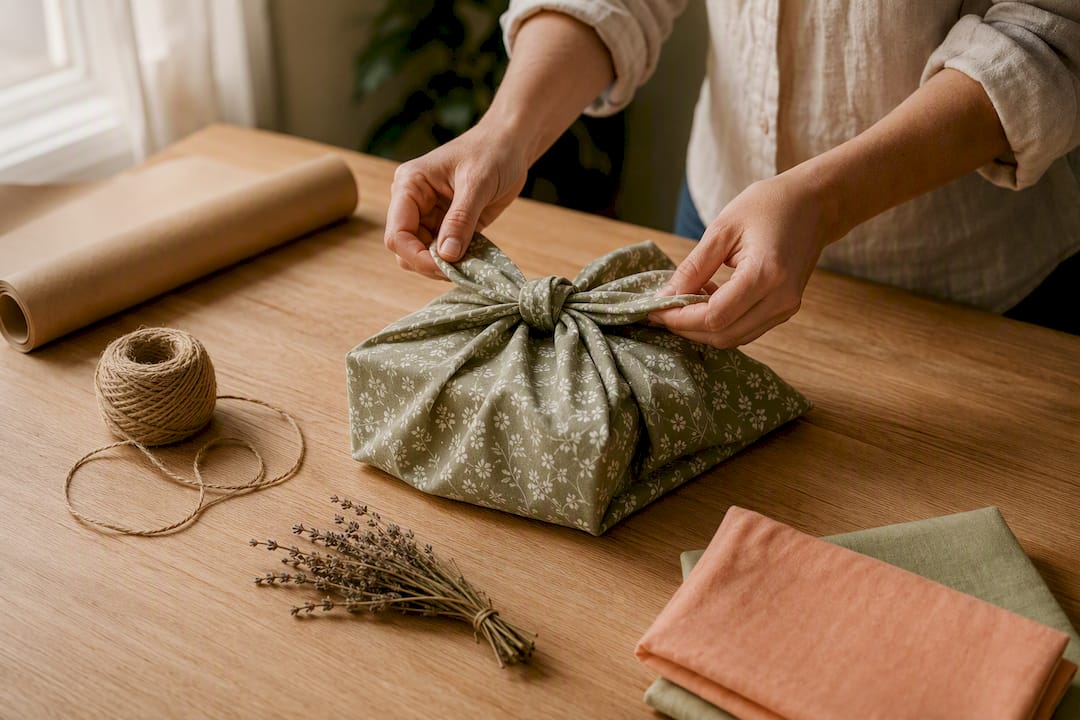
Skip foil-covered or glittery paper and plastic ribbon if you want a wrap that’s easier to reuse or recycle. Local recycling rules still vary. A small glass jar gift barely needs wrapping at all; a strip of twine and a tag does the job.
Why Small, Durable Gifts Beat Trend Items
Most gift guides optimize for how something photographs, not how long it lasts or what it’s actually made of. That’s backwards for anyone trying to reduce toxin exposure in their household, and it’s the gap this list was built to close.
The conventional advice to “just look for eco-friendly labels” doesn’t hold up under scrutiny. Labels are self-assigned by brands more often than not, and a product can call itself “green” while still containing undisclosed fragrance chemicals or PFAS coatings. Real evaluation means checking the material list, not the marketing copy on the box.
If you take one thing from this list, choose clear materials and something the person will use, then buy the most durable option within your budget. There’s no need to spend past your limit to give a thoughtful gift.
Where to Find More Non-Toxic Gift Ideas
If this list covered the categories you needed, you’re set. If you’re shopping for a bigger budget or a specific recipient, check out these resources. The non-toxic holiday gift guide includes options beyond this list’s $25 ceiling. For anyone buying for a baby or toddler specifically, Non-Toxic Baby Gifts: 5 Things to Avoid covers the material red flags that matter most at that age. And if you want to understand the standard behind every pick on this page, how Naturally Non-Toxic researches and chooses products walks through the actual evaluation process, not just a badge system. Start with whichever guide matches your budget, and check back before your next gifting occasion for updated picks.


Frequently Asked Questions
Recommended Gift Guides