Low-VOC paint can reduce indoor emissions compared with conventional solvent-heavy formulas, but the label does not tell the whole story. “Non-toxic” is not a regulated paint category, and even zero-VOC paint can release small amounts of chemicals while it dries and cures.
For most homes, I would choose a water-based interior paint with less than 5 g/L VOCs, a low-emissions certification such as GREENGUARD Gold or Green Seal, and a colorant system that does not significantly increase the VOC level after tinting.
Quick picks for most homes:
According to the EPA, paints and coatings are common household sources of VOCs, so choosing a lower-emissions formula and ventilating well can meaningfully reduce exposure during a painting project.
No matter which formula you choose, ventilate the room during painting and for at least two to three days afterward.
 ECOS Paints
My top overall pick for zero-VOC paint. ECOS offers water-based interior paints with unusually strong ingredient transparency, including published ingredient lists and CDPH emissions testing. Choose from matte, eggshell, and semi-gloss finishes, with custom color matching available.
Best for: Nurseries, bedrooms, and anyone prioritizing indoor air quality and ingredient transparency.
Pros: Zero VOC • Published ingredient lists • CDPH emissions testing • Multiple finishes • Custom color matching • Ships directly to your home
Cons: More expensive than big-box paint • Not widely available in physical stores
What does “low VOC” actually mean on a paint label?
VOCs (volatile organic compounds) are carbon-based chemicals that evaporate at room temperature. In paint, they come from solvents, binders, and colorants. As the paint dries, those compounds release into the air you breathe.
In the U.S., the EPA and state-level regulators established VOC limits for architectural coatings starting in the late 1990s, primarily to reduce outdoor smog. The indoor air quality implications came later, but the labeling thresholds stuck. Here is what the terms generally mean today:
The EPA’s technical overview of VOCs explains that off-gassing continues well after paint feels dry to the touch, because drying and curing are two different processes. A wall can feel dry in two hours and still be releasing compounds for days or weeks.
Third-party certifications are the most reliable way to verify a brand’s claims. Different certifications verify different things:
Pro Tip: Check the Technical Data Sheet for the exact product and sheen, and ask whether the manufacturer’s colorants change the listed VOC level. Some paint systems remain zero VOC after tinting, while others may not.
How do low-VOC, zero-VOC, and low-odor claims differ?
These three terms are not interchangeable, and confusing them is where most shoppers go wrong.
A zero-VOC base does not automatically guarantee that every finished color will remain zero VOC. Some traditional colorants add VOCs, particularly in deeper shades, while newer zero-VOC colorant systems may keep the finished paint within the zero-VOC range. Check the manufacturer’s technical data for the complete tinted system rather than judging the base paint alone.
| Claim | Typical VOC Level | Best for | Key Caveat |
|---|---|---|---|
| Zero / No VOC | Generally under 5 g/L | Bedrooms, nurseries, and lower-emission projects | Confirm whether the finished tinted system remains zero VOC |
| Low VOC | Commonly under 50 g/L for flat paint | General interior painting | Still requires thorough ventilation |
| Low odor | No standard threshold | Projects where strong odor is a concern | Low odor does not necessarily mean low VOC |
Low-odor paints deserve a special callout here. Manufacturers can reduce the smell of a paint without meaningfully reducing its VOC content, because some VOCs are odorless. Relying on your nose to judge safety is not a reliable strategy. A paint that smells mild can still be off-gassing compounds you cannot detect. The Center for Environmental Health specifically recommends zero-VOC, APE-free formulas for children’s rooms, precisely because odor is not a trustworthy proxy for safety.
For nurseries and rooms where a newborn or chemically sensitive family member will sleep, zero-VOC is the clear choice. For a living room repaint or a hallway refresh, a quality low-VOC line is a reasonable and practical option.
How long does off-gassing last, and when is it safe to re-enter?
Emissions are generally highest during application and immediately afterward, but smaller amounts may continue as the coating cures. Follow the manufacturer’s instructions and ventilate continuously during painting and for at least two to three days afterward. Infants, pregnant people, and anyone with asthma or chemical sensitivities may need to avoid the room longer.
BEHR notes that even zero-VOC products emit very low amounts of VOCs during painting and for 48 hours or longer, and cautions sensitive groups to minimize exposure during that window. That is an honest disclosure worth taking seriously.
Who may need to stay out of the room longer:
Pro Tip: Open windows and use a box fan facing outward to exhaust fumes. An air purifier with a substantial activated-carbon filter may also help reduce some gases, but a HEPA filter alone primarily captures particles and should not replace ventilation.
How to pick the right paint for your room and family
Start with the occupant, not the color. Here is a simple decision framework:
Room use and occupant sensitivity first. If the room will house a newborn, a child with asthma, or a family member with chemical sensitivities, prioritize a certified zero-VOC formula with colorants that do not significantly increase VOC content, while still following the manufacturer’s ventilation and re-entry instructions.
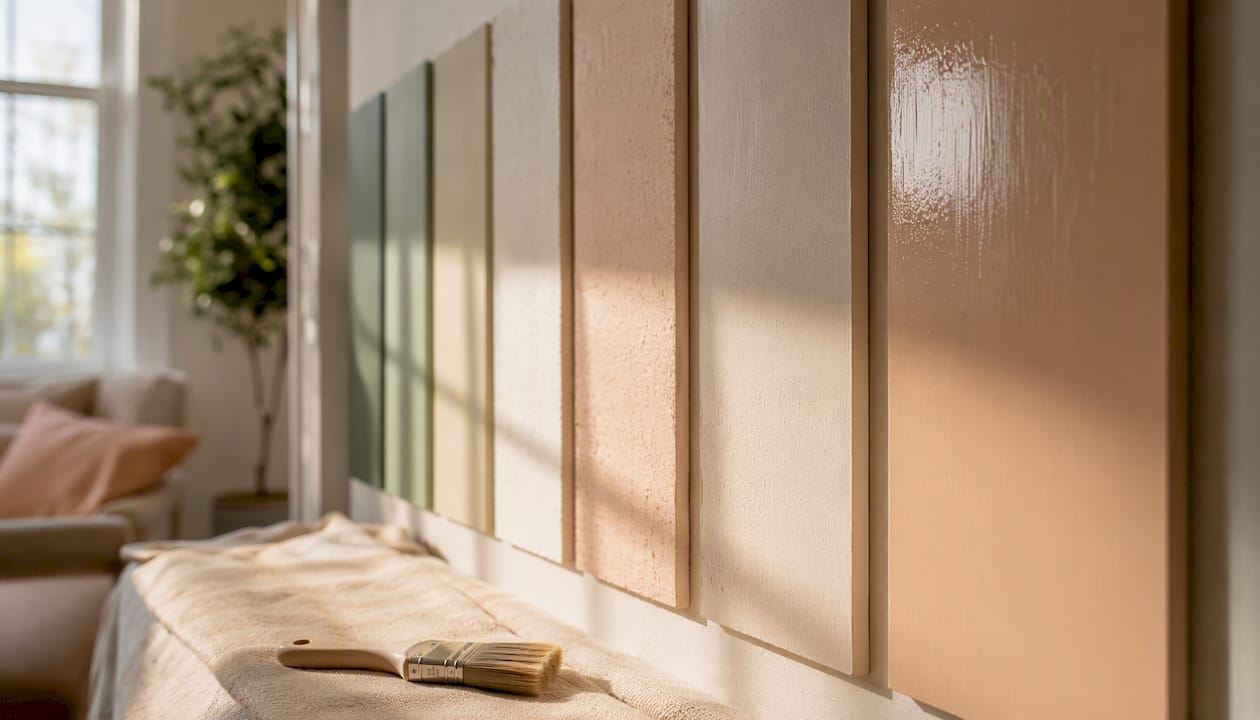
Finish matters for durability. Choose the finish based primarily on durability and washability, then verify the VOC level for that specific product and sheen.
Budget and availability. Zero-VOC specialty brands like ECOS Paints cost more per gallon than big-box options. If budget is a constraint, Sherwin-Williams ProMar® 200 and BEHR ECOMIX™ offer zero-VOC bases at more accessible price points.
Questions to ask in-store:
Primer choice also affects total emissions. If your project requires primer, choose a compatible low-VOC or zero-VOC formula rather than evaluating only the topcoat.
⭐ Best Zero-VOC and Low-VOC Paints to Consider
With so many “zero-VOC” and “low-VOC” labels competing for attention, the differences can get muddy fast. These are the paint lines I would actually narrow it down to, based on emissions testing, ingredient transparency, certifications, availability, and how practical they are to buy for a real home project.
ECOS Paints
My top overall pick for zero-VOC paint. ECOS offers water-based interior paints with unusually strong ingredient transparency, including published ingredient lists and CDPH emissions testing. Choose from matte, eggshell, and semi-gloss finishes, with custom color matching available.
Best for: Nurseries, bedrooms, and anyone prioritizing indoor air quality and ingredient transparency.
Pros: Zero VOC • Published ingredient lists • CDPH emissions testing • Multiple finishes • Custom color matching • Ships directly to your home
Cons: More expensive than big-box paint • Not widely available in physical stores
Benjamin Moore Eco Spec: Best Widely Available Option
Benjamin Moore Eco Spec is the best choice for shoppers who want a thoroughly certified zero-VOC paint they can purchase through a local paint store.
Eco Spec is zero VOC and zero emissions even after tinting with Benjamin Moore’s colorants. It is Green Seal certified and Certified Asthma & Allergy Friendly, and it is available in flat, eggshell, and semi-gloss finishes in more than 3,500 colors.
Unlike ECOS, Benjamin Moore paint is generally purchased through participating local retailers rather than directly from the manufacturer. That makes it easier to see colors in person, ask questions, and pick up additional paint locally if you underestimate how much you need.
BEHR PREMIUM PLUS ECOMIX: Best Budget-Friendly Pick
BEHR PREMIUM PLUS ECOMIX is my budget-friendly pick for shoppers who want an accessible zero-VOC paint without ordering from a specialty brand.
The formula contains at least 20% plant-based ingredients and is both USDA Certified Biobased and GREENGUARD Gold certified for low chemical emissions. It is sold in flat, eggshell, and semi-gloss finishes, with options suitable for bedrooms, living spaces, hallways, kitchens, bathrooms, trim, and other frequently used areas.
It is not as transparent about its complete formulation as ECOS, but its certifications, wide availability, and lower price make it a reasonable mainstream option.
Clare: Best for Ordering Paint Online
Clare is a convenient choice for shoppers who feel overwhelmed by enormous walls of nearly identical paint chips.
Its wall and trim paints are zero VOC, low odor, and GREENGUARD Gold certified. Clare offers a smaller, curated collection of colors, along with peel-and-stick swatches that make it easier to compare shades at home before ordering.
The limited finish and color selection will not suit every project, but Clare is one of the simplest options for choosing and ordering certified low-emissions paint entirely online.
For parents buying for a nursery, my non-toxic baby registry guide covers the broader picture of chemical exposures to avoid in a baby’s environment.
You can read more about how Naturally Non-Toxic chooses products and the standards applied across every category on the site.
Key Takeaways
A certified zero-VOC paint with a zero-VOC colorant system is a strong choice for bedrooms and nurseries, but the label does not eliminate the need for ventilation. Keep fresh air moving during painting and for at least two to three days afterward.
| Point | Details |
|---|---|
| Know the thresholds | Low VOC commonly means under 50 g/L for flat paint and under 100 g/L for non-flat finishes. Zero VOC generally means under 5 g/L. |
| Check the colorant | Some colorants add VOCs, while other paint systems remain zero VOC after tinting. Verify the complete finished formula. |
| Ventilate after painting | Emissions are generally highest during application and early drying. Follow the product instructions and ventilate for at least two to three days. |
| Understand certifications | GREENGUARD Gold tests chemical emissions. Green Seal evaluates VOC content along with additional ingredient and performance requirements. |
| Choose the right filtration | Ventilation is the priority. Activated carbon may help capture some gases, while a HEPA filter alone primarily targets particles rather than VOCs. |
EPA guidance says activated carbon or another gas-phase filter is needed to target gases. HEPA filtration alone is designed primarily for airborne particles.
Frequently Asked Questions
Related Non-Toxic Home Guides



Sources and Further Reading
- U.S. Environmental Protection Agency: Volatile Organic Compounds’ Impact on Indoor Air Quality
Information on common sources of VOCs, potential health effects, indoor concentrations, and ways to reduce exposure. - UL Solutions: UL GREENGUARD Certification
An overview of GREENGUARD and GREENGUARD Gold standards for independently tested chemical emissions from indoor products. - Green Seal: GS-11 Standard for Paints, Coatings, Stains, and Sealers
Third-party requirements covering VOC limits, restricted chemicals, product performance, packaging, and environmental impact. - U.S. Environmental Protection Agency: Guide to Air Cleaners in the Home
Guidance on particle and gas filtration, including why HEPA filters primarily capture particles and activated-carbon filters are needed to target some VOCs and other gases.