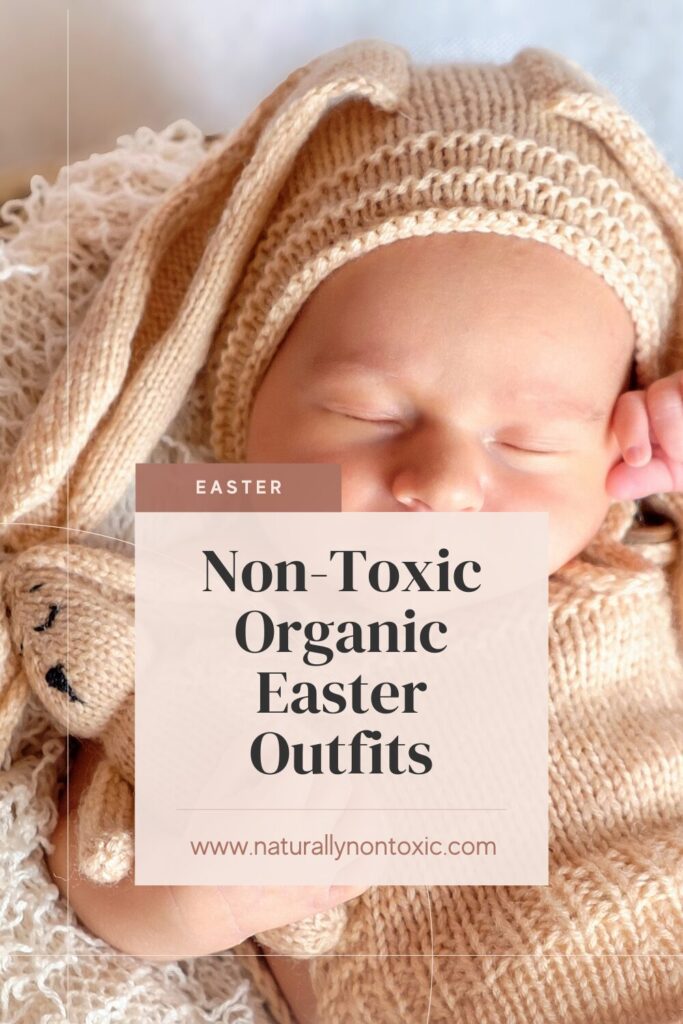
Easter outfits for babies and toddlers are basically a conspiracy to make me cry over the tiny adorable outfits.
I love the photos, but I also want non-toxic Easter outfits for babies and toddlers that do not come with mystery finishes and plasticky prints.
This guide is for parents who want cute organic cotton Easter outfits, GOTS certified baby clothes, and OEKO-TEX baby clothes options that feel genuinely safer and still look adorable in a basket next to a chocolate bunny.
I vetted every pick with the same rules: fiber transparency, real standards, and fewer chemical-finish red flags.
Why Choosing a Truly Non-Toxic Easter Outfit Matters
Baby skin is not the place where I want to “hope for the best.”
Even when a chemical finish is legal, it can still be irritating, and some contact allergens in textiles are well documented.
Formaldehyde-based resins, for example, have a long history in permanent-press fabric finishes and can trigger allergic contact dermatitis in some people.
Textile dye allergy also exists, and disperse dyes (often in synthetic fabrics like polyester) are common culprits in textile dermatitis cases.
And then there is the basic reality that babies drool, chew sleeves, and rub fabric into their face like it is their job, because it is.
So when I can choose a simple cotton outfit with a credible textile standard behind it, I do.

The Toxic Chemicals Hiding in Popular Easter Outfits
I am not here to panic anyone, but I am here to name the usual suspects.
If you have ever bought a “cute Easter outfit” that felt plasticky, stiff, strongly scented, or weirdly shiny, you already understand why this section exists.
❌ Formaldehyde finishes
Durable-press finishes have historically used formaldehyde-based resins, and formaldehyde textile resins can cause allergic contact dermatitis in sensitive individuals.
The good news is that washing can reduce formaldehyde levels in some garments, which is one reason I always wash new clothes before wear.
❌ PFAS-type stain and water repellency
PFAS have been used in consumer products including textiles, and PFAS-treated clothing can be a meaningful exposure source, especially for kids.
If an outfit is marketed as stain-proof, water-repellent, or spill-resistant, I want proof it is PFAS-free, not just a pastel color palette.
❌ Phthalates in “rubbery” prints and plasticized elements
Phthalates are widely used plasticizers in consumer products, including clothing, and the scientific literature includes extensive work on phthalates in textiles.
That is why I personally avoid thick, rubbery prints when I can, especially on a baby’s torso.
❌ Dyes and contact allergens
Textile dye dermatitis can be under-recognized, and disperse dyes are common causes, particularly in synthetic fabrics like polyester liners.
This is one of the reasons I prefer lighter colors and simpler prints for kids with reactive skin.
❌ Heavy metals and residues
I do not assume every outfit contains heavy metals, but I do take the “minimize and verify” approach for baby products.
OEKO-TEX Standard 100 Product Class I includes limit values for things like formaldehyde and extractable heavy metals, which is exactly why I like seeing it for baby clothes.
❌ Microfibers from synthetics
Polyester clothing can shed microfibers both when laundered and through everyday wear, and research shows release to air can be comparable in magnitude to release to water.
This is not an “instant danger” claim, but it is another reason I lean cotton for baby basics when possible.
Are Organic Cotton, Bamboo Viscose, and “Snug-Fit” Pajamas Really Non-Toxic?
This is where most shopping guides get fuzzy, so I am going to stay annoyingly specific.
“Organic cotton” is good, but it is not the full story
The USDA regulates “organic” for agricultural products like raw cotton fiber, but the National Organic Program does not include specific processing or manufacturing standards for textile products.
So “organic cotton” can be a great start, but I still look for a textile processing standard (GOTS) or a harmful-substance testing standard (OEKO-TEX).
Snug-fit pajamas are often a safety strategy, not a chemical strategy
In the U.S., children’s sleepwear standards cover sleepwear above size 9 months through size 14.
Those rules allow sleepwear to meet requirements either by passing flammability tests or by being “tight fitting” as defined by specs.
So snug-fit is often used to meet safety rules without relying on chemical flame-retardant treatments, but you still want good fabric and credible standards.
How I Tested These Easter Outfits for Safety
I did not send pajamas to a lab. Here is what I did do, and you can copy this process exactly.
My repeatable vetting method
First, I looked for full fiber content with percentages, not vague “blend” language.
Second, I prioritized standards that actually mean something:
Third, I flagged common finish keywords that correlate with the stuff I avoid: stain-resistant, wrinkle-free, antimicrobial, odor-control, and “no ironing required.”
Fourth, I downgraded outfits with heavy decorations, rubbery prints, glitter, or a costume-like “plastic feel,” because those are harder to evaluate and more likely to involve coatings and plasticizers.
Fifth, I favored listings that show certificate numbers or at least make the certification scope clear, because OEKO-TEX itself encourages certificate verification via label check.
Before You Shop…
Many of the items below ship with Amazon Prime. Not a member yet? Prime Trial offers new customers a 30-day trial for Prime or a 6-month trial for Prime for Young Adults.
The Best Non-Toxic Easter Outfit Brands in 2026
These are the brands I feel good recommending for babies and toddlers when “non-toxic” is a real purchasing requirement, not a cute buzzword.
Little Planet by Carter’s
If you want mainstream accessibility with surprisingly solid certification info, this line is a strong contender.
The bunny sleep-and-play listing shows 100% organic cotton, OEKO-TEX Standard 100 certification with a certificate number, and references GOTS certification.

Parade Organics
Parade is very direct on product pages about GOTS-certified organic cotton and azo-free dyes.
That combination makes it one of my favorite “photo outfit that can survive real life” picks.

Monica + Andy
This brand is a safe gift pick when you want a soft, simple piece with a clear GOTS callout.
Their product pages also include a “lead, phthalate, and flame-retardant free” statement, which I treat as a brand claim but still appreciate as transparency.
⚠️ Iffy Brands (Look Eco, But Don’t Fully Pass the Test)
This section is not me saying these are “bad.”
This is me saying I would not buy them without doing extra checks.
“Organic cotton” listings with no textile standard
If “organic cotton” is the only safety detail and there is no GOTS certification, no OEKO-TEX label, and no certificate number, I downgrade it.
The USDA’s own policy memo is clear that NOP organic rules cover raw fibers but do not include specific textile processing standards.
“Bamboo” pajamas or rayon/viscose
I do not count bamboo viscose pajamas as a non-toxic win.
In most cases, they are rayon made from bamboo, not true bamboo fiber, and the FTC says that process typically uses toxic chemicals and is far from eco-friendly.
Multipacks with cute prints but unclear dye and trim standards
Multipacks can be great, but they are also where I see the loosest transparency.
If I cannot find any standard like OEKO-TEX 100 or GOTS, I’m likely to skip it.
❌ Toxic Easter Outfit Brands to Avoid
I am careful with the word “toxic,” because not every product is the same.
This section is about brands and marketplaces with repeated concerns around chemical compliance and low transparency, where I personally would not buy baby clothing unless there is a strong, verifiable certification on the exact item.
SHEIN and similar ultra-fast-fashion platforms
Multiple investigations and regulator-driven reports have flagged chemical noncompliance issues in some products, including very high levels of certain restricted chemicals in South Korea’s reporting.
Because baby clothes sit on skin (and get chewed), I do not treat this category as “worth the gamble.”
Temu–style ultra-cheap marketplaces
European consumer groups have reported hazardous chemicals in some tested products.
Even if a specific item is fine, the listing churn and lack of consistent transparency makes it a no for me on baby outfits.

Smart Non-Toxic Easter Outfit Hacks (That Actually Work)
If you already own an outfit, or you are shopping last minute, these are my realistic safety upgrades.
Wash everything before wear
This is not just a “mom habit,” it has evidence behind it.
A study on textile formaldehyde content found that washing and drying reduced formaldehyde levels in the tested items.
Avoid “performance” finishes on baby clothes
“Stain resistant” and “wrinkle free” are convenience features, not baby needs.
Given what we know about PFAS in textiles and formaldehyde resins in some textile finishes, I treat “performance” language as a reason to pause.
Use a clean base layer under a questionable outfit
If Grandma bought the outfit and it is not returning, I get it.
Put a certified, simple cotton onesie underneath so the “unknown” fabric has less direct skin contact.
Skip heavy prints right on the chest
Dye and print chemistry is complicated, and textile dye dermatitis can be triggered by certain dyes, especially in synthetic fabrics.
If your kid has eczema or very reactive skin, solids and lighter colors are usually my safest styling move.
Some frequently asked questions About Non-Toxic Easter Outfits
Non-Toxic Easter Outfits = Less Skin Drama
For me, the goal is not perfection.
The goal is fewer chemical-finish red flags, more verified standards, and an outfit your kid can actually move in.
If you take nothing else from this guide, take this: start with a certified cotton base layer, wash before wear, and do not let a glittery plastic bunny costume convince you it is “worth it.”
Eco-Friendly Easter Baskets: Non-Toxic Gift Ideas for Children
How to Dye Easter Eggs Naturally (No Toxic Food Dyes Needed!)
References