Laundry may seem like a boring chore, but for parents and anyone with sensitive skin, it can feel more like an ordeal. In this guide, I’ll share what I consider “non-toxic” laundry choices, which ingredients really bug sensitive skin (and why), and simple swaps that keep clothes clean and comfy. Consider it your crash course in clean laundry.
Quick Answers
It means avoiding common irritants in detergents and softeners (like synthetic fragrances, dyes, harsh surfactants, etc.) and choosing simpler, gentler ingredients (like plant-based soap, baking soda, or enzyme cleaners).
Yes. Many detergents contain fragrances (e.g. limonene for citrus scent, linalool for floral) and dyes that often trigger contact dermatitis. Other culprits are preservatives (parabens, formaldehyde-releasers) and surfactants (like sodium lauryl sulfate) that can dry out or irritate skin.
Switch to a true fragrance-free, dye-free, hypoallergenic detergent. Use natural boosters like baking soda, vinegar or enzymatic stain removers, and wool dryer balls. These gentle swaps clean well without leaving irritating residues.
Look for products labeled for sensitive skin and always check the ingredients. Even “dermatologist-tested” or “eco-friendly” claims can hide irritants, so read the label. Use only the dose needed (extra detergent leaves more residue) and consider an extra rinse cycle to wash out leftover soap.
The single best move is to ditch scented detergent and fabric softeners. The Cleveland Clinic notes that switching to fragrance-free, dye-free laundry products often “helps keep your skin calm”. Also, use the right amount and rinse well.
What I Consider “Non-Toxic Laundry”
Here’s my laundry checklist. Dealbreakers I avoid like the plague, and better choices I actually use:
Skip fragrance & dyes. I personally refuse to use anything that smells “perfumed.” Synthetic fragrances often sneak in allergens (phthalates, synthetic musks) that can irritate skin and lungs. Use scents from essential oils only, if you tolerate them. Any hint of artificial color in detergent is also a no-go, since dyes can trigger rashes.
Gentle cleansers only. Harsh cleaners like sodium lauryl sulfate (SLS) or its cousin ammonium lauryl sulfate (common foaming agents) can dry out and inflame skin. I look for plant-derived surfactants (like coconut-based cleansers) or mild detergents formulated for babies/sensitive skin (no SLS, no SLES).
No hard chemicals. Bleach (sodium hypochlorite) and ammonia are a hard pass. They can burn or irritate skin and lungs on contact. Instead I use color-safe oxygen bleach (sodium percarbonate) when needed and skip ammonia-based whitener.
Avoid quats (fabric softeners). Quaternary ammonium compounds (like distearyldimonium chloride) are in traditional softeners. These can actually trigger asthma or allergy symptoms in some people. I skip liquid/solid softeners and dryer sheets altogether.
Smaller loads, more rinse. A little lesser-known trick: never overload the washer and measure detergent carefully. Too much soap means more residue on clothes, which can irritate skin. I even do an extra rinse on my most sensitive loads (like baby clothes) to be sure detergent is all gone.
Better choices I reach for:Fragrance-free detergents (like gentle, plant-based brands), unscentedwool dryer balls (for static and softening), and boosters like baking soda. I may throw in a splash of pure essential oil (like lavender) into wool balls sparingly, only if I know my family tolerates it, otherwise I skip scents entirely.
Here are the laundry ingredients I’m willing to fight the detergent aisle over, with science-backed reasons:
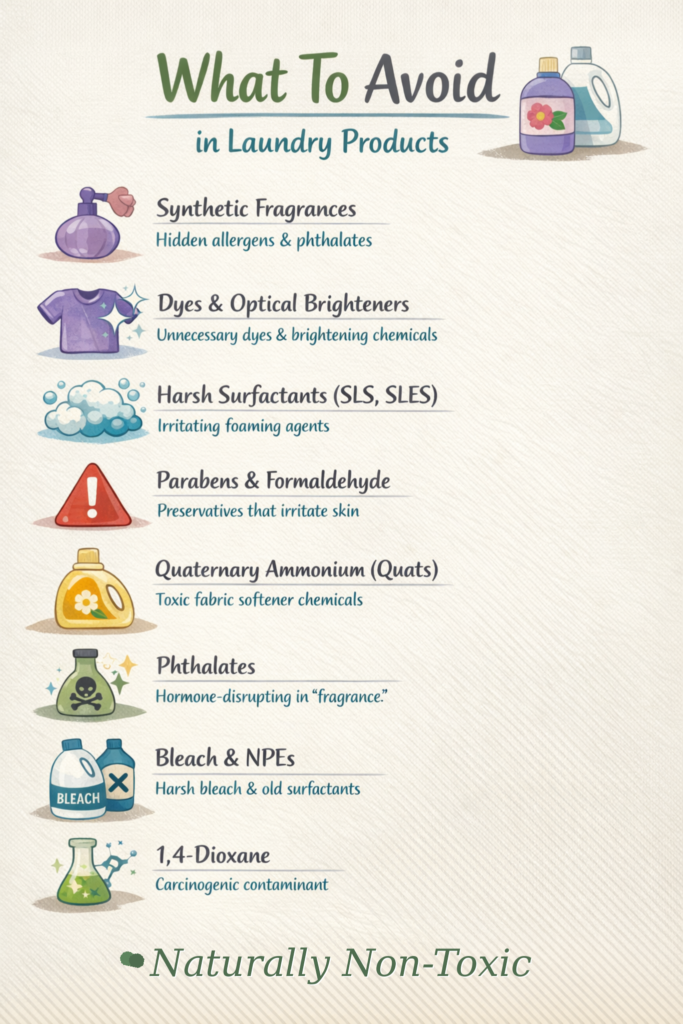
Synthetic Fragrances (“Fragrance”): These are mixes of chemicals used to scent detergent. Studies show fragrance chemicals (like limonene, linalool) are common allergens. Fragrance mixes can cause contact dermatitis (itchy rash) and even trigger asthma or respiratory issues.
Dyes and Optical Brighteners: Detergents often contain blue/purple dyes and “whitening agents” (optical brighteners) to make clothes look brighter. But these do nothing for cleaning and can bother sensitive skin. Optical brighteners embed in fabrics and accumulate over time, possibly causing skin irritation and even affecting hormones or development according to some studies.
Harsh Surfactants: Agents like sodium lauryl sulfate (SLS) or sodium laureth sulfate (SLES) are super common. They foam nicely but can strip oils and dry out skin. Even worse, the process that makes SLES can create trace 1,4-dioxane — a known carcinogen — as a byproduct. (1,4-dioxane isn’t listed on labels, but any “-eth” surfactant probably has some.) Many gentle brands now avoid SLS/SLES entirely.
Preservatives (Parabens, MI/MIT, Formaldehyde-releasers): Liquid detergents and softeners need preservatives to stay shelf-stable, but some (methylisothiazolinone or MIT, formaldehyde donors, parabens) are notorious irritants. EWG warns that MI is a “potent skin allergen” often in fabric softeners. Likewise, small amounts of formaldehyde can lurk in “preservative” blends and are linked to eczema and sensitivity. I steer clear of any “preservative” (or “antibacterial”) chemicals that I can’t clearly identify.
Phthalates: These chemicals are used to make scents last longer. Labels usually just say “fragrance,” so phthalates can be hiding there. Research links phthalates to hormone disruption, possible fertility issues and other problems. It’s another reason I avoid fragrance altogether, since “unscented” products are typically phthalate-free.
Quaternary Ammoniums (Quats): Used in softeners and dryer sheets, quats are what reduce static. But many quats (like distearyldimonium chloride) can worsen asthma and possibly affect reproductive health. Since we don’t need these to clean, I skip them and use wool dryer balls instead.
Nonylphenol Ethoxylates (NPEs): These are old-school surfactants banned in the EU but still sometimes used in U.S. products. They break down into endocrine disruptors and are especially dangerous for kids’ development. I look for “ethoxylated” in ingredient names and avoid it.
Bleach/Optical Brighteners: Liquid chlorine bleach (sodium hypochlorite) is an obvious irritant and can burn skin and eyes. Many companies sneak in similar chemicals (sometimes under “optical brightener” or “UV brightener”). Bottom line: if it smells like bleach or is tagged as “brightener,” I skip it.
In practice, that means I skip anything scented in the laundry aisle (fabric softeners, dryer sheets, scented pods) and always pick the most transparent ingredient list I can find. The healthier options tend to highlight plant-based surfactants, enzymes, and baking soda, instead of marketing buzzwords.
✅ What to Look for Instead
Clean laundry doesn’t require magic, just some good swaps:
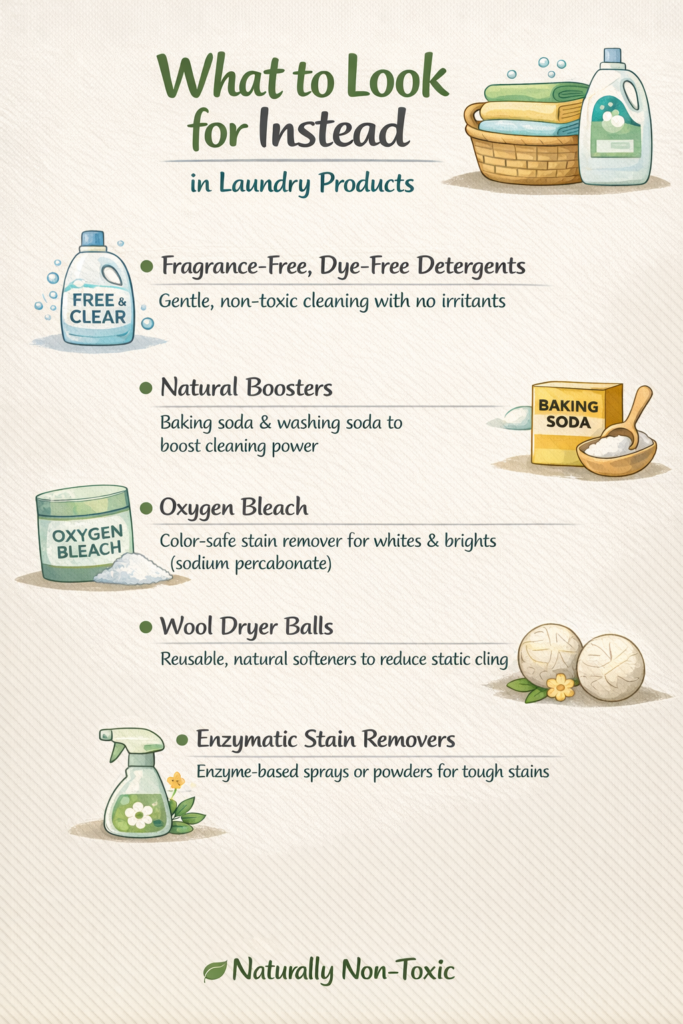
Fragrance-Free, Dye-Free Detergents: This is the backbone. Genuine fragrance-free detergents (often labeled Free & Clear or Sensitive Skin) avoid the major irritants. Look for short ingredient lists (fewer than 10 items) that include plant-based surfactants and enzymes. For example, some safe formulas use coconut or corn-derived surfactants which clean effectively without harshness.
Natural Boosters: Baking soda and washing soda are great odor and stain fighters. Baking soda (sodium bicarbonate) neutralizes smells and softly scrubs, and it can act as a mild fabric softener. Washing soda (sodium carbonate) is a stronger base that lifts dirt, too. A ½ cup of either added to the wash makes laundry soap work better without synthetic additives.
Oxygen Bleach: Instead of chlorine bleach, use sodium percarbonate (common “oxygen bleach”) for whitening or tough stains. It’s basically baking soda + peroxide and breaks down into water/oxygen, so it’s much gentler on fabric and skin. Many eco-friendly detergents include this for whitening.
Wool Dryer Balls: These reduce drying time and fluff fabrics without chemicals, replacing dryer sheets. They’re 100% wool and safe for even baby clothes. You can gently dab them with a few drops of essential oil if you want a scent, but be super cautious: many oils (lavender, citrus, tea tree, etc.) can irritate some people, so only use them if you tolerate them.
Enzymatic Stain Removers: For those stubborn stains, enzymes (protease, amylase, lipase) are your friends. They break down proteins, starches, and oils naturally. Look for non-toxic stain sprays or sticks containing enzymes (they often say “biodegradable” or “enzyme formula”) and treat stains before washing.
Material & Temperature: When possible, wash in cool or warm water (not hot). Heat can set some synthetic chemicals and shrink natural fibers. Also, natural fabrics (cotton, wool, silk) breathe better and are less likely to hold irritants than many polyesters, so I favor them for kids’ clothes and bedding.
Remember: even “natural” products should be vetted. Some “green” detergents still sneak in SLS or MIT. Personally, I rely on ingredient labels and certifications (like USDA Organic, EWG Verified, or EPA Safer Choice) to steer me toward non-toxic laundry formulas.
Switch detergent: Find a true unscented, dye-free detergent. Use only the recommended amount on the label. (Many of us use way too much detergent. More soap doesn’t equal cleaner clothes; it just leaves more residue.)
2.
Rinse well: After washing, run an extra rinse cycle if you can. This little step washes away leftover detergent that might irritate skin.
3.
Ditch the softener: Skip fabric softeners and dryer sheets.
4.
Spot-test new products: Whenever you try a new cleaner or additive, test it on a small batch first to see if you notice any reaction. It’s like patch-testing a new skincare product. Better safe than scratchy!
5.
Keep it simple: You don’t have to overhaul everything at once. Even one change (like throwing out your fabric softener) can make a big difference.
Common Mistakes or Myths
I used to believe a few myths myself. Let’s bust them:
Myth: “Plant-based” means gentle. Not always! Some “natural” detergents still hide SLS, MIT or weird stabilizers in the mix. Always check the ingredient list instead of trusting buzzwords.
Myth: “Dermatologist-tested” = safe. This term isn’t regulated, so a product can slap it on and still have dyes or fragrances. For example, a so-called hypoallergenic detergent might still contain optical brighteners that linger on fabrics.
Mistake: Using too much detergent. Big loads do not need super-sudsy amounts of soap. In fact, using excess detergent is a top mistake — it just leaves residue that can irritate skin. Measure carefully: your measuring cap’s “Max” line is usually more than enough.
Myth: If it’s “unscented,” it’s fragrance-free. Sneaky labels can claim “unscented” but actually contain masking fragrances to neutralize any odor. A true fragrance-free product will say “fragrance-free” and list no scented chemicals on the label.
Mistake: Relying on dryer sheets. I thought dryer sheets were harmless until I learned they coat fabrics with quats and fragrance for static control. These coatings remain on clothes (and in the dryer’s vent) and can aggravate allergies or asthma.
Myth: If my kid doesn’t itch, the detergent must be fine. Even if you don’t see a rash, chemical residues can still “cosmetically” soothe or irritate the skin’s surface. Minimizing all those extras is just good habit, especially for kids who may develop sensitivities over time.
In short, always question buzzwords and read labels. When in doubt, go fragrance-free and keep the ingredient list minimal.
Some Frequently Asked Questions
Generally, that means it’s free of known irritants: no synthetic fragrances, no dyes, no harsh sulfates (like SLS/SLES), no mysterious preservatives (like MIT or biguanide), etc. Instead, it uses gentler cleaners (often plant-derived) and simple ingredients like baking soda or enzymes. Studies suggest that switching to fragrance-free, dye-free detergents keeps skin calmer for sensitive people.
Yes, for most people. Fragrance chemicals are top triggers for contact dermatitis. Going fragrance-free (and essential-oil-free) removes a lot of variables. The Cleveland Clinic notes that for those with detergent allergies, using a fragrance-free, dye-free product often keeps skin calm.
You definitely can. A bit of distilled white vinegar in the rinse cycle is a classic safe hack. It acts as a fabric softener, helps neutralize odors, and can remove residual soap. EWG even recommends it over chemical softeners. However, I personally did not like the lingering vinegar smell.
Yes, unless you have a wool allergy. They’re one of the most gentle dryer options. Made of 100% wool, they naturally soften clothes and reduce drying time without adding any chemicals. If you choose to scent them (some people dab a drop of essential oil on them), do so sparingly and ensure you (and your family) don’t react to that oil. Many experts recommend using them unscented to avoid any risk of allergic reaction.
Take a little “detergent detective” action. Wash a set of clothes with a new detergent and wear those for a couple days. If itching or rash appears only on those, detergent is the likely cause. The Cleveland Clinic suggests an “elimination trial”. Switch to a hypoallergenic detergent for a few weeks and see if symptoms improve.
Not necessarily. The term “natural” isn’t strictly regulated, and “green” can be marketing tactics. Not all eco-friendly detergents are created equal. Some still contain harmful additives. Always check ingredients for those specific nasties (fragrance, dye, SLS, etc.) rather than relying on marketing.
“Free & Clear” usually means no fragrance or dyes, which is good. But sensitive is a looser term. Some brands use “sensitive formula” yet include brighteners or stabilizers. The safest bet is a retailer or brand that lists every ingredient and has solid reviews for sensitive skin.
Yes. Even tiny amounts of detergent left in clothes can irritate some people’s skin over time. That’s why rinsing thoroughly (and using just the needed amount of detergent) is so important. If you or your child have sensitive skin, an extra rinse or a second wash on “rinse/spin” can help make clothes truly clean.
If you need to clean your washer (to remove mold or gunk), choose a non-chlorine, fragrance-free machine cleaner. Hardly anyone notices smells from moldy washers until it starts transferring to clothes. Running an empty hot cycle with vinegar or a washer-cleaner tablet (if it’s dye- and fragrance-free) is a safer approach than bleach.
Start Your Non-Toxic Laundry Routine
With a little know-how, doing laundry “naturally” isn’t hard or expensive. In fact, once you start skipping perfumes and harsh chemicals, you might wonder why you didn’t switch sooner! The key is: simplify and read labels.
Steinemann, A.C., Gallagher, L.G., Davis, A.L., & MacGregor, I.C. “Chemical emissions from residential dryer vents during use of fragranced laundry products.” Air Quality, Atmosphere & Health. (Published online 2011; journal issue later). (Springer Link)
U.S. Environmental Protection Agency (EPA). “Final Risk Evaluation for 1,4-Dioxane (TSCA).” (US EPA)
U.S. EPA. “Revised Unreasonable Risk Determination for 1,4-Dioxane” (PDF, 2024). (US EPA)
Agency for Toxic Substances and Disease Registry (ATSDR/CDC). “Toxicological Profile for 1,4-Dioxane” (PDF). (ATSDR)
U.S. Food & Drug Administration (FDA). “Allergens in Cosmetics” (includes fragrance-triggered contact dermatitis + possible respiratory effects). (FDA)
Lily Hart is the founder of Naturally Non-Toxic, where she helps families make safer choices with less greenwashing and more clarity. Based in Hawaii, she researches ingredient lists, brand disclosures, and product materials to identify lower-tox swaps for everyday life. She’s also a mom, which means her recommendations are rooted in real-life use, not perfection.