
Laundry stains happen, but you don’t need toxic chemicals to get clothes clean. In fact, many conventional stain removers contain ingredients that can irritate skin or pollute your home.
This guide explains which ingredients actually work, which to avoid, and when enzyme sprays, oxygen boosters, or soaks are the safest choice. We’ve done expert research as part of our Clean Laundry Starter Guide series to find products free of bleach, synthetic fragrances, and harsh preservatives.
You’ll also find a few DIY options and tips for tackling stains naturally. Let’s dive into keeping your laundry routine clean, green, and effective!
Why Avoid Conventional Laundry Stain Removers?
Typical laundry stain removers often hide a cocktail of harsh chemicals. Common ingredients like chlorine bleach, ammonia, and synthetic solvents may remove stains, but they can also pose health and environmental risks.
Toxic Chemicals Hiding in Common Stain Removers
☣️ Chlorine Bleach
Actually registered as a pesticide and has been linked to respiratory issues, hormone disruption, fertility problems, and even immune system damage.
☣️ Ammonia (and its derivatives)
A strong respiratory irritant that can cause organ damage and burns with frequent exposure. And perchloroethylene (“perc”), found in some dry-cleaning stain removers, is a probable carcinogen tied to organ and nervous system damage.
☣️ “Fragrance”
Another sneaky culprit. Many stain sprays and detergents have added fragrances to smell “clean,” but that one word can hide dozens of chemicals (including phthalates) that may disrupt hormones or trigger allergies.
☣️ Optical Brighteners
Chemicals that make fabrics appear whiter without truly cleaning them – also problematic. They don’t biodegrade easily and have been found to accumulate in aquatic life, with some brighteners acutely toxic to fish and other organisms. These brighteners can even deposit on clothes and potentially irritate sensitive skin.
Basically, it’s wise to avoid products with chlorine bleach, ammonia, sulfates like SLS/SLES, 1,4-dioxane (a contaminant in some detergents), formaldehyde-releasing preservatives, and artificial dyes or perfumes.
For this guide, those ingredients are automatic disqualifiers. If a stain remover contains any of them, it doesn’t make the list. No exceptions.
The reason is simple: these ingredients can affect indoor air quality, irritate skin, and raise longer-term health concerns. The good news is you don’t need them for results. Safer formulas can still handle real-life stains.
My Standards for a Non-Toxic Laundry Stain Remover
When I say “non-toxic,” I’m not using it as a vibe. I’m using it as a filter. A product only qualifies if it meets these baseline standards:
Plant-Based Surfactants:
Rather than petroleum-based detergents, non-toxic cleaners use surfactants from coconut, corn, or other plants (such as glucosides or decyl glucoside). These lift dirt and oils effectively without leaving harmful residues. They’re also biodegradable, so they won’t persist in the environment.
Enzymes for Stains:
Enzymatic stain removers use naturally derived enzymes (like protease, amylase, or lipase) to break down protein-based stains (blood, food), starches, and fats. These biological catalysts target stains at the molecular level, yet are safe for your skin and the planet. Enzyme cleaners are especially great for food, grass, and baby stains – basically anything organic.
Oxygen Bleach & Mineral Boosters:
Instead of chlorine bleach, non-toxic boosters rely on oxygen-based bleach (usually sodium percarbonate). This powder releases hydrogen peroxide when dissolved in water, which whitens and lifts stains naturally. Oxygen bleach is color-safe and breaks down into water, oxygen, and soda ash – completely biodegradable and planet-friendly. Other mineral-based ingredients like washing soda (sodium carbonate) or baking soda add gentle cleaning power and deodorizing without toxins.
Free of Synthetic Fragrance & Dyes:
The safest stain removers are unscented or only use natural essential oils for scent. They contain no artificial dyes. This makes them far less likely to irritate skin or off-gas in your laundry room.
No Harsh Preservatives:
Conventional cleaners often use formaldehyde-releasers or strong synthetics to preserve formulas. Non-toxic alternatives avoid these. Many are sold as dry powders (which need no preservative). The result is a product without hidden carcinogens or allergens.
Certifications and Ratings:
As an extra peace of mind, look for products that are EWG Verified® or rated “A” in the Environmental Working Group database, as well as those with the EPA Safer Choice seal or MADE SAFE certification. These third-party validations ensure the formula has been vetted to contain no known harmful chemicals. (Many of our picks below meet these high standards, so you know they’re truly trustworthy.)
Before You Shop…
Many of the items below ship with Amazon Prime. Not a member yet? Prime Trial offers new customers a 30-day trial for Prime or a 6-month trial for Prime for Young Adults.
⭐ Best Non-Toxic Laundry Stain Removers & Boosters
Choosing safer products doesn’t mean sacrificing cleaning performance. We’ve done heaps of laundry and tested loads of laundry stain removers to bring you the best non-toxic stain removers and laundry boosters available.
These expert-recommended products are free from synthetic fragrances and preservatives, yet proven to tackle everything from red wine to grass and baby food. We’ve included a mix of enzyme spray spot-treaters, powder boosters, and even a natural stain stick. Say goodbye to stubborn stains and hello to a healthier laundry routine!
1. Branch Basics Laundry Kit (Concentrate + Oxygen Boost)
Branch Basics has a cult following in the non-toxic living community – and for good reason. Their system is ultra-gentle, human-safe, and remarkably effective on stains. The Branch Basics Laundry Kit consists of two pieces: a multi-use Concentrate (a plant-based concentrate you dilute for an all-purpose cleaner) and the Oxygen Boost powder.

Together, they can tackle virtually any laundry stain or general cleaning task. For fresh stains, you simply spray on Branch Basics All-Purpose (the Concentrate diluted in a spray bottle). For tougher grime or set-in stains, add a scoop of Oxygen Boost to the mix or soak the garment in water with Oxygen Boost. The results often rival those of bleach or OxiClean, without any harsh chemicals.
🔎 What’s in it?
The Concentrate uses botanical surfactants (like decyl glucoside) and food-grade ingredients such as chamomile extract and sodium bicarbonate. It contains no fragrance, no preservatives, and is free of allergens.
The Oxygen Boost is a simple two-ingredient formula: sodium percarbonate (oxygen bleach) and soda ash. It’s an excellent bleach alternative and laundry booster that you can also use for soaking stains or even cleaning grout.
Importantly, Branch Basics products contain zero optical brighteners, chlorine, phthalates, or dyes. They are even free of SLS/SLES and any petroleum solvents. This system has earned accolades for being truly non-toxic and family-safe. (Branch Basics Oxygen Boost is EWG Verified and the concentrate is EWG-rated “A”, meeting extremely strict safety standards.)
👍🏼 Why we recommend it:
It’s versatile and economical. One bottle of concentrate makes multiple bottles of cleaner (so it reduces waste), and one product can handle laundry stains, countertops, floors – you name it. For laundry, using the spray plus Oxygen Boost can fade or remove old, set-in stains that other removers leave behind.
It’s gentle enough for baby clothes and has no smell (so no chemical or cloying scent left on fabrics). If you’re starting fresh with non-toxic cleaning, the Branch Basics kit is a game-changer. It proves that you don’t need a dozen toxic specialty cleaners – a few safe basics can replace them all.
2. Root & Splendor Foaming Laundry Stain Remover
For an enzyme powerhouse in a non-toxic formula, check out Root & Splendor’s Foaming Stain Remover. This newer contender is making waves because it’s 100% plant-based, bioactive, and even EWG Verified for its ultra-safe ingredient list. It comes in a foaming pump bottle – you simply pump the foam onto the stain, gently rub or let it sit, and then wash as usual. The foam clings to stains and gives the enzymes time to work their magic.

🔎 What’s in it?
Root & Splendor’s stain remover is fragrance-free and truly toxin-free (no synthetic preservatives, dyes, or anything). It contains a mix of six plant-derived enzymes targeted at different stain types, plus some natural surfactants.
This means it’s effective on a wide range of stains: proteins (like blood or egg), starches (like rice or potato), fats (oil, butter), and tannins (coffee, wine). Grass and mud are no match either. The company proudly lists every ingredient and they’re all simple and naturally derived. It’s even safe for kids’ clothing and cloth diapers.
👍🏼 Why we recommend it:
Performance-wise, Root & Splendor Stain Remover gets high praise. It works especially well on old stains that have been washed and dried before (just treat and rewash). The foam format is convenient for covering larger areas (like a big spill on a tablecloth or the entire front of a toddler’s shirt).
Another thing I appreciate: Root & Splendor is an eco-conscious small business, and their product is septic-safe and biodegradable. If you’re aiming for the strictest non-toxic criteria, this stain remover meets it – it earned the coveted EWG Verified™ mark, meaning it meets the strictest health standards and transparency.
Tip: Let the foam sit for up to 30 minutes on really stubborn stains; for extra tough cases, the company suggests using their laundry concentrate soap along with the stain remover for a one-two punch.
3. Buncha Farmers All-Natural Stain Remover Stick
Prefer a solid stain remover instead of a spray or powder? The Buncha Farmers Stain Stick is a beloved old-fashioned solution made with 100% natural ingredients. It’s basically a bar of soap specifically formulated for stains, and it works amazingly well.

To use the Buncha Farmers stick, you wet the stained area of your fabric with a bit of water, then rub the stick on it like you would a bar of soap. It creates a sudsy lather that you can massage into the fabric. Then toss the item in the wash (or rinse it out by hand).
This stain stick is excellent for tackling tough, stubborn stains such as grass, blood, wine, barbecue sauce, mud, and more. Because it’s a concentrated soap, it’s also great on greasy stains. It’s safe on all colors and fabrics – just avoid letting it dry on the fabric (wash it out after treating).
🔎 What’s in it?
The ingredients list is refreshingly short: saponified oils of coconut, canola, and vegetable, plus borax and a touch of essential oils (like litsea cubeba and eucalyptus). There are no synthetic chemicals at all – no fragrance oils (the light scent is from the natural litsea fruit oil), no preservatives, and no dyes or brighteners. The bar is biodegradable and septic-safe.
👍🏼 Why we recommend it:
It’s extremely gentle (you can even use it on cloth menstrual pads and baby clothes) yet surprisingly potent on stains. It doesn’t leave any residue or bleach spots. Since it has no chemical additives, it’s hypoallergenic and kid-safe. The stick format is also plastic-free and great for travel (no liquids).
One stick lasts a long time and is very cost-effective. If you’re trying to minimize packaging and want a back-to-basics solution, Buncha Farmers is a fantastic choice. It’s been around for years and has a loyal following among eco-conscious households – for good reason. The combination of natural soap and borax in the formula is a time-tested stain-fighting duo.
Pro tip: Cut a small piece of the stick off and dissolve it in hot water to create a spot-treating paste or to use in a spray bottle – a little goes a long way. Also, store the stick in a dry spot between uses so it doesn’t get mushy.
4. Pronounce Oxygen Laundry Booster with Enzymes
Pronounce’s Oxygen Laundry Booster is made for people who want an ultra-concentrated powder that handles stains and odors without chlorine, dyes, or fragrance. It’s one of the cleaner “oxygen + enzymes” options because they publish a full ingredient list (front and center) and keep the formula tight.

🔎 What’s in it?
The ingredient list includes washing soda (sodium carbonate), sodium percarbonate (oxygen bleach), plus supporting ingredients like sodium gluconate, silica, and an enzyme blend (protease, amylase, mannanase).
Pronounce also states the product is unscented and made with no dyes and no fragrances.
👍🏼 Why we recommend it:
This is a great fit when you want one product that can do double duty: brighten + boost detergent + help break down stains that respond to enzymes (food, grass, sweat, kid messes).
It’s also strong from a trust standpoint because the formula is clearly disclosed (no vague “proprietary enzyme blend” with zero details).
Tip: Add it directly to the drum before clothes. For set-in stains, dissolve it in warm water and use it as a soak, then wash normally.
5. Meliora Cleaning Products Soap Stick Stain Remover
Meliora’s Soap Stick is the simplest kind of pre-treat: a concentrated, fragrance-free bar you rub directly onto stains. It’s especially nice if you’re trying to avoid liquids, sprays, and preservatives altogether. Meliora also notes it’s MADE SAFE® certified and designed to eliminate the need for preservatives by staying solid.

🔎 What’s in it?
Meliora lists ingredients as a short soap-based formula: sodium cocoate, glycerin, organic cocos nucifera (coconut) oil, water. Meliora describes it as unscented and made without added fragrance, bleach, or chlorine.
👍🏼 Why we recommend it:
This is one of those “quietly powerful” tools. It’s not flashy, but it’s a solid hard yes for strict ingredient readers because it’s basically soap in stick form, so no liquid preservatives are needed.
It’s also great for travel, diaper bags, and anyone who hates clutter under the sink.
Tip: Wet the stain first, rub the stick to build a lather, then let it sit 5–15 minutes before washing. For oily stains, work the lather in and rinse once before laundering.
6. Truly Free OxyBoost – Oxygen Whitener
If you want a simple oxygen-whitener style booster (think: “oxygen bleach,” not chlorine), Truly Free’s OxyBoost is meant to brighten whites, lift stains, and freshen loads without fragrance. It’s positioned as a color-safe alternative to traditional bleach, and it’s easy to use as a boost in the drum or as a soak.

🔎 What’s in it?
Truly Free explains their oxygen bleach performance comes from only two ingredients: sodium carbonate (washing soda) + sodium percarbonate (oxygen bleach).
👍🏼 Why we recommend it:
If your goal is a fragrance-free oxygen booster to rotate in for sweaty towels, dingy whites, or kid messes, this fits the “simple mineral booster” category. It also avoids the chlorine-bleach route entirely, which is a big deal for sensitive homes.
Clean Laundry Guides
detox your laundry routine


✅ Low-Tox Alternatives (better than most, but not perfect)
Not every “clean” household follows the strictest, bare-minimum ingredient list. These don’t meet my strictest ‘cleanest ingredients’ standard, but they’re still a big upgrade from conventional stain boosters.
1. AspenClean Oxygen Bleach Powder (Stain Remover)
AspenClean’s Oxygen Bleach Powder is a strong stain-removing booster that’s fragrance-free and positioned for sensitive households. It’s also well-known for its safety credentials.

🔎 What’s in it?
AspenClean lists: sodium carbonate, sodium carbonate peroxide (sodium percarbonate), sodium citrate, and sodium silicate. I place it in “low-tox alternatives” because some readers (especially eczema-prone or ultra-minimal ingredient households) prefer a simpler oxygen booster without extra mineral builders like silicates/citrates.
👍🏼 Why it’s still better than most:
It’s fragrance-free and chlorine-free, and it has strong third-party trust signals (including an EWG listing that matches the label ingredients).
Tip: Oxygen powders work best when they fully dissolve. Use warm water when you can, and soak tough stains before washing for a noticeable jump in performance.
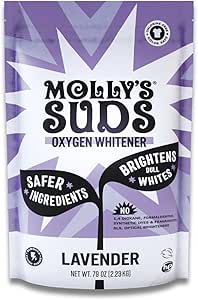
2. Molly’s Suds Oxygen Whitener (Bleach Alternative)
If you want an oxygen booster that’s straightforward and effective, Molly’s Suds Oxygen Whitener is a popular pick for brightening whites, lifting stains, and freshening towels. It’s designed as a bleach alternative and works well as a soak or wash booster.
🔎 What’s in it?
Molly’s Suds lists four ingredients: sodium percarbonate, sodium carbonate, citric acid, and pure essential oils and/or natural fragrances (depending on the scent version).
Choose the versions that rely on essential oils (lavender or lemon) rather than “natural fragrance,” or skip scented boosters entirely and stick with a fully fragrance-free oxygen powder.
Citric acid is another ingredient I treat as a dealbreaker for my cleanest tier. It shows up in a lot of “clean” products, but it’s commonly avoided in health-conscious homes, especially by families trying to minimize additives and potential triggers.
Most commercial citric acid isn’t squeezed from lemons. It’s typically made through industrial fermentation, often using Aspergillus niger (black mold). People who run a mold-sensitive home often flag that, even if the final product doesn’t “contain mold.”
👍🏼 Why it’s still better than most:
It’s an oxygen-based booster, not chlorine bleach, and the ingredient list stays relatively short and transparent compared to mainstream “whiteners” loaded with optical brighteners and mystery fragrance blends.
Also worth noting: Molly’s Suds has a Dark Wash Oxygen Brightener that doesn’t list citric acid, but it only comes scented with “natural fragrance” (no essential-oil-only option), so I still keep it in this low-tox tier.
❌ Avoid “Greenwashed” Options
Some products sound clean because the branding is soft and the claims are loud. But if you’re following a strict “hard no” list (no fragrance, no ethoxylated surfactants, no heavy preservative systems, no citric acid), these don’t make the cut.
DIY Non-Toxic Stain Removal Solutions
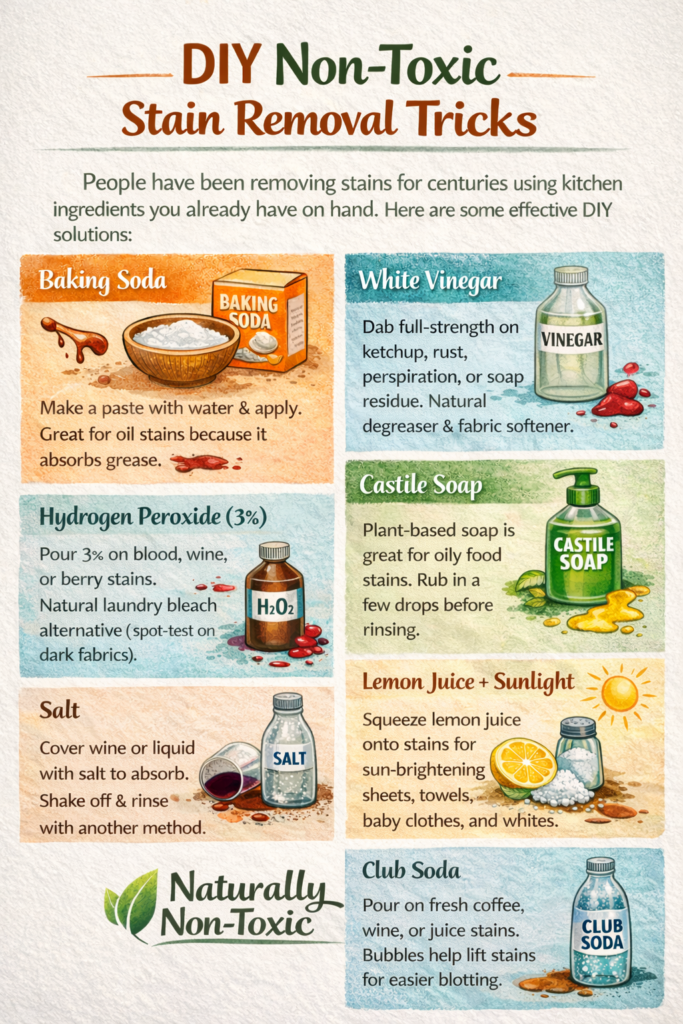
In addition to store-bought products, don’t overlook simple DIY remedies using ingredients from your kitchen. People have been removing stains for centuries with basic, non-toxic substances, and these methods still work great today. Here are a few effective DIY stain removal tricks:
Baking Soda:
Baking soda is a natural stain-lifting and deodorizing agent. Make a paste of baking soda and a bit of water and apply it to stains (especially good for absorbing oil/grease stains). Let it dry, then brush off and launder. Baking soda’s mild abrasive action and natural bleaching properties help tackle stains while neutralizing odors.
White Vinegar:
Plain distilled white vinegar is excellent on many stains. Its mild acetic acid helps dissolve alkaline substances like coffee and rust stains, and it can cut soap residue. Dab vinegar on perspiration stains or ketchup and let sit before washing. (Do not use vinegar with bleach, though – that combination is toxic.) Vinegar is also a natural fabric softener and deodorizer for laundry.
Hydrogen Peroxide (3%):
Soccer moms will love this one! A natural bleach alternative that’s very effective on organic stains like blood, wine, berries, and grass. It breaks down into water and oxygen, so it’s safe for people and the environment. You can pour 3% hydrogen peroxide directly on a blood stain and watch it fizz out the stain. It works best on light-colored fabrics (it may have a mild bleaching effect on dark colors, so spot-test first). Hydrogen peroxide is also great for armpit stains when mixed with baking soda to form a paste.
Castile Soap (or Natural Dish Soap):
A plant-based liquid castile soap can lift many stains, especially oily ones. You can apply a few drops of castile soap to a food stain or grease spot, gently rub it in, and rinse, it helps break up the oils.
Lemon Juice + Sunlight:
For whites or light color fabrics, lemon can act as a natural bleach. Squeeze fresh lemon juice on stain spots (works well for rust or berry stains), then lay the garment in the sun. The UV rays plus citric acid will naturally brighten the fabric. After a few hours, wash as usual. This is a gentle way to whiten dingy linens or remove yellowing. (Sunlight on its own can help fade stains like tomato sauce on white baby clothes – cloth diapering parents swear by sun-bleaching for residual stains.)
Salt:
For liquid stains like red wine, table salt can be a lifesaver. As soon as the spill happens, cover it with salt – the salt will absorb the moisture and pigmented liquid. Later, shake off the salt and treat the area with one of the above methods (e.g., a bit of vinegar or soap and water). Salt can also help scrub out gentle stains (like a salt + lemon rub for underarm sweat stains on whites).
Club Soda:
It’s not an old wives’ tale! Club soda (carbonated water) can help lift fresh stains, especially on carpeting or upholstery, by bubbling them to the surface. It’s a good first step for spills on clothes too. Pour club soda on a fresh coffee or wine spill, blot (don’t rub), then later treat with one of the above methods.
These DIY methods are cheap, chemical-free, and surprisingly effective. Every stain is different, so sometimes it takes a couple of approaches. You might, for example, treat a greasy stain with baking soda first to absorb oil, then follow with a castile soap scrub. Or treat a berry stain with vinegar, then wash with an oxygen bleach. The key is that you’re using safe pantry ingredients instead of reaching for chlorine or solvent-based removers.
Tips for Successful Non-Toxic Stain Removal
Using non-toxic products is half the battle; the other half is technique. Keep these tips in mind to get the best results from your stain-fighting efforts:
Act Fast: The sooner you treat a stain, the easier it is to remove. For fresh spills, immediately blot (don’t rub) the excess and apply your stain remover of choice. Quick action can prevent the stain from setting into fibers.
Dab or Blot, Don’t Rub: Rubbing a stain can push it deeper into the fabric or spread it. Instead, blot gently with a clean cloth or paper towel to lift as much as possible before treatment. When applying stain removers, you can gently agitate or tap the fabric, but avoid aggressive scrubbing especially on delicate materials.
Give it Time: Allow the stain remover to work for several minutes (or longer, depending on product instructions). Natural enzymes and oxygen cleaners sometimes need a bit of dwell time to break down the stain. For example, spraying and immediately washing might not be as effective as letting it sit for 10–15 minutes.
Use the Right Water Temperature: As a rule, use cold water for protein-based stains like blood or dairy – hot water can set these stains. Grease and oil stains, on the other hand, often respond better to warm or hot water (if the fabric allows) because heat helps dissolve oils. Always check your garment’s care label, but don’t be afraid to adjust water temp strategically.
Test for Colorfastness: When trying a new product (or DIY solution) on a colored fabric, test a small hidden area first. For instance, hydrogen peroxide should be patch-tested on an unseen seam of a dark garment.
Repeat if Needed: Stubborn or old stains might require a second treatment. If something is still visible after the first wash, do not put it in the dryer. Apply your stain remover again and wash again. Non-toxic removers can often get it out on another round, whereas heat-drying could set it permanently.
By following these tips and using the safe products (or DIY tricks) outlined above, you’ll find that you can conquer practically any stain without resorting to harsh chemicals. Patience and prompt attention are your friends in the stain game.
Final Thoughts: Clean Clothes, Clear Conscience
Non-toxic stain removers and boosters, whether a thoughtfully formulated enzyme spray or a scoop of oxygen bleach, can lift away grime just as effectively as their harsh counterparts. The bonus is peace of mind: you’re not dousing your home in fumes, irritating your skin, or washing harmful chemicals down the drain. From baby onesies to wine-stained tablecloths, there’s a safe solution for every mess.
Equipped with the product recommendations above and a few pantry tricks, you can build an eco-friendly laundry routine that tackles stains and preserves your fabrics. Many of these products also align with trusted certifications (EWG, Safer Choice, etc.), underscoring their safety and quality.
Finally, for more guidance on creating a truly clean laundry routine, be sure to check out our Clean Laundry Starter Guide (What to Avoid + Safest Materials). It complements this guide with deeper info on specific ingredients to avoid, DIY tips, and how to choose non-toxic laundry detergents and dryer sheet alternatives.
References
- Bleach exposure + respiratory effects (home use)
Matulonga, B., et al. (2016). Women using bleach for home cleaning are at increased risk of non-allergic asthma. (PubMed) - Bleach use + lower respiratory symptoms (population study)
Zock, J. P., et al. (2009). Domestic use of hypochlorite bleach… Journal of Allergy and Clinical Immunology (PDF). (JACI) - VOCs from cleaning products (including “green” products) in real use + chamber testing
Calderón, L., et al. (2022). Air concentrations of volatile organic compounds… (PubMed) - VOC hazard comparison: conventional vs “green,” and why fragrance-free lowers exposure
Temkin, A. M., et al. (2023). Volatile organic compounds emitted by conventional and “green” cleaning products… (ScienceDirect) - 1,4-Dioxane: sources + byproduct in ethoxylated surfactants (state of the science)
“State of the Science on 1,4-Dioxane…” Environmental Science & Technology. (ACS Publications) - 1,4-Dioxane + consumer products pathway to wastewater/drinking water
Doherty, A. C., et al. (2023). Contribution of household and personal care products to 1,4-dioxane…(ScienceDirect) - Isothiazolinone preservatives can persist in fabrics after washing
Marrero-Alemán, G., et al. (2021). Persistence of isothiazolinones in clothes after machine washing. (PDF). (PubMed) - Optical brighteners: environmental persistence / wastewater impacts (open access)
Salas, H., et al. (2019). Respirometric Study of Optical Brighteners in Textile Wastewater. (PMC) - Optical brighteners: government evaluation statement (aquatic life focus)
Australian Industrial Chemicals (AICIS). (2023). Fluorescent Brightener 71 and related chemicals — evaluation statement. (PDF). (AICIS)
join the newsletter
Want more non-toxic guides? Subscribe today.