
If you’re hunting for a non-toxic dishwasher detergent, you’re probably trying to protect your family without settling for cloudy glasses and “kinda clean” plates. I wanted the same thing.
The problem is a lot of “natural” dishwasher detergents still use synthetic fragrance, vague ingredient lists, or preservatives. Some are clean-ish, and some are just greenwashed.
In this post, I’ll break down the best non-toxic dishwasher detergents I’d actually use in a family kitchen, including powders, tablets, and a few gels. I’ll also cover dishwasher detergent pods, since convenience is tempting, but the PVA film situation deserves a real talk.
I’m including a separate section for non-toxic rinse aids, because hard water spots are real and nobody wants to re-wash “clean” dishes. I only list rinse aids that meet my criteria, with no sketchy surfactants or fragrance.
Then I’ll show you exactly how I vetted each option, what ingredients I avoid, and which popular “clean” products I’d skip. You’ll leave with a short list you can trust.
My Quick Top Picks for the Safest Non-Toxic Dishwasher Detergent & Rinse Aids
After testing dozens of products and ingredients lists, here are my go-to non-toxic dishwasher detergents. These top picks actually work and skip the chemicals. I recommend:



Why Choosing a Truly Non-Toxic Dishwasher Detergent Matters
Every time we run the dishwasher, we expose our families to leftover chemicals on plates and in the air. Conventional detergents often contain bleach, ammonia, sulfates, synthetic fragrances, and other irritants. These can leave residue on dishes and even tiny particles in rinse water.
Over time, such exposures may contribute to skin allergies, respiratory irritation, and even gut inflammation. In fact, a 2023 clinical study found that common dishwasher rinse agents can damage our intestinal barrier and trigger inflammatory responses. When I realized how “leaky gut” and chronic inflammation are linked to everyday cleaning products, I switched to safer options immediately.
Beyond health, conventional dishwasher soaps harm the environment. For example, dish detergents with phosphates can fuel massive algae blooms in lakes and rivers. (Some laws now limit dishwasher phosphorus to as low as 0.5% because of this.) The plastic films used in pods also worry me. Research suggests up to ~75% of those PVA films survive wastewater treatment and end up in waterways. Choosing a truly non-toxic detergent means fewer toxins on our dishes and in our oceans.
The Toxic Chemicals Hiding in Popular Dishwasher Detergents & Rinse Aids
Even products labeled “natural,” “green,” or “plant-based” can hide nasties. Here are the big offenders to watch for:
☣️ Chlorine Bleach & Chlorinated Surfactants
Some mainstream brands still use chlorine bleach or chlorinated solvents. These can form toxic byproducts (like chloroform) and irritate eyes, skin, and lungs. Infants and pets are especially vulnerable to bleach exposure.
☣️ Phosphates and Phosphonates
Built into many detergents to soften water, phosphates cause algae blooms when washed down the drain. Even a few percent by weight can make a huge difference. (That’s why 17 U.S. states now ban high-phosphate dishwasher soaps.)
☣️ Sodium Lauryl Sulfate (SLS) & Other Sulfates
These foaming agents are irritating to the skin and eyes. Chronic exposure can aggravate eczema or dermatitis in sensitive people.
☣️ Artificial Fragrances (Parfum)
Dish soaps can include undisclosed “fragrance” chemicals, many of which are linked to hormone disruption, asthma, and allergic reactions. One study found that fragranced cleaning products (like scented rinse aids) can exacerbate asthma and allergy symptoms in children.
☣️ Optical Brighteners & Dyes
These are pointless for cleaning. They make dishes look whiter or brighter by reflecting UV light, but can cause eye and skin irritation in susceptible folks.
☣️ Ethoxylated Surfactants (like PEGs, laureth sulfates)
Recent research shows that alcohol ethoxylates (found in rinse aids and some detergents) are the main culprits in causing gut barrier damage. Basically, these common chemical surfactants can remain on dishes and trigger inflammation.
☣️ Preservatives (e.g. MI/MCI)
Methylisothiazolinone and related preservatives can trigger severe skin reactions for some. I look for products that avoid these altogether.
☣️ Rinse Aid Chemicals
Popular rinse agents (like Jet-Dry or Finish) often contain hidden surfactants, polymers, and solvents. In the 2023 gut-barrier study, rinse aid left residue that seriously damaged intestinal cells. Even “free & clear” rinse aids from big brands may still have ingredients I’d rather skip.
In short, if you see any of the above on a label, I recommend steering clear (❌). I’ll say it plain: even some “green” brands aren’t as clean as they claim. It pays to read labels (or look up brands) and choose products with simple, transparent ingredients.
Are Powders, Gels, or Pods Really Non-Toxic?
The format of your detergent can make a big difference for waste and safety. Pods (in dissolving plastic films) are super convenient, but the PVA coating is controversial. Most evidence suggests PVA from pods doesn’t fully break down in treatment plants. About 75% escapes into the environment.
Gel or liquid detergents may dissolve faster, but they usually come in plastic bottles (more waste) and sometimes contain stabilizers or thickening agents. Powders (in cardboard boxes) tend to have less plastic waste. They also let you measure exactly what you need.
Performance-wise, pods, gels, and powders all work if they use good enzymes and oxi-boosters. The real issue is what’s inside them. A pod might still have no bleach or dyes, but it will still dump that PVA film in your dishwasher. A powder often contains less “extras” by necessity. I personally love powders for minimal packaging and clarity of ingredients.
How I Tested These Dishwasher Detergents
Here’s how I vetted and tried everything (evaluating products for my own family kitchen):
Ingredient Deep Dive:
I looked at every ingredient of each product and flagged anything on my “do-not-use” list: bleaches, sulfates, synthetic fragrances, preservatives like MI, etc. If any product had undisclosed “parfum” or suspicious ingredient names, it was automatically demoted. I also cross-checked with resources like the EPA’s Safer Choice database and Environmental Working Group (EWG) scores when available. For example, I noted that Eco-Me rinse aid scores an “A” on EWG, which aligns with my findings of its simple formula.
Third-Party Certifications:
Whenever possible, I looked for credentials like EPA Safer Choice or EcoCert/BioGro labels. While not foolproof, these certifications usually meant more transparency and safer chemistry.
In-Home Testing:
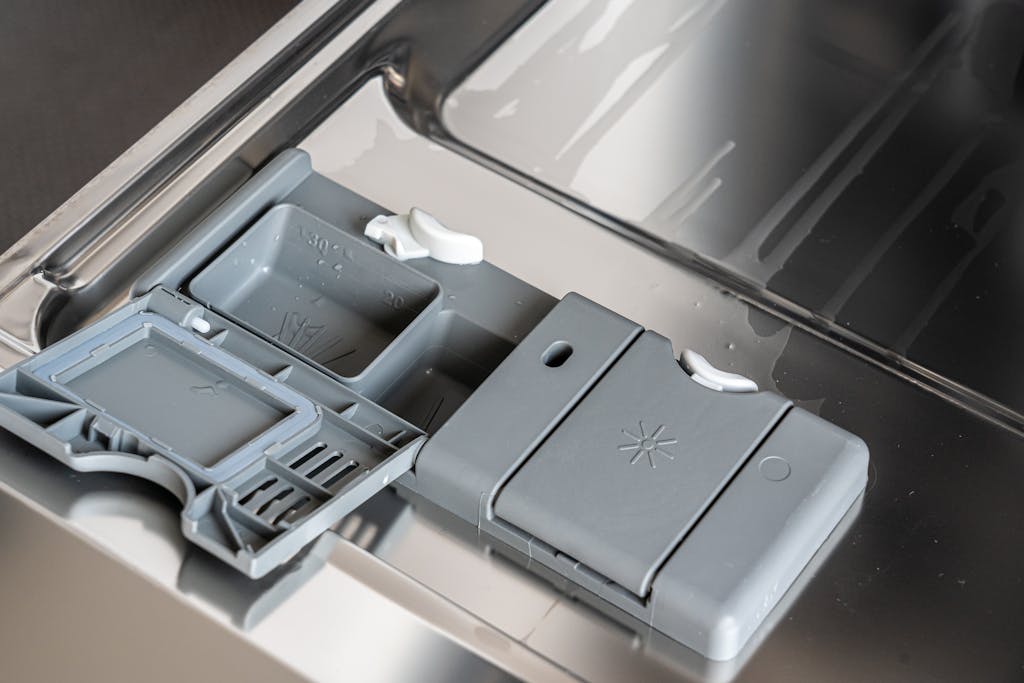
I ran each product in my dishwasher with typical dirty dishes. I compared results by sight. Did glasses sparkle or stay cloudy? Did I need multiple cycles? Did anything smell off afterward? I also checked the dispenser to see how well the detergent dissolved.
Rinse Aid Check:
For rinse aids, I tested them in hard-water conditions. I noted how much spotting was reduced versus plain water or a splash of vinegar. I only recommended rinse aids that visibly left dishes spot-free without leaving any unwanted film of their own.
With this method, I was ruthless about stripping away “greenwashed” claims and focused on true safety and performance.
Before You Shop…
Many of the items below ship with Amazon Prime. Not a member yet? Prime Trial offers new customers a 30-day trial for Prime or a 6-month trial for Prime for Young Adults.
⭐ The Best Non-Toxic Dishwasher Detergent & Rinse Aid Brands in 2026
Dishwasher detergents are functional products, so even the cleanest ones use a few lab-made ingredients to prevent filming and keep performance high. These are still the best non-toxic dishwasher detergents currently available.
⭐ Pronounce Labs Dishwasher Detergent
This is an unscented dishwasher powder that skips pod film completely, so there’s no PVA wrap and no “microplastic pod” issue to worry about. The brand fully discloses ingredients and keeps the formula tight: washing soda, sodium citrate, sodium percarbonate (oxygen booster), enzymes (protease + amylase), and a few performance helpers like sodium gluconate and sodium silicate, plus sodium polyaspartate to help prevent filming.
The package recommends using 1 scoop per load, but I actually need 2 scoops to get my dishes squeaky clean. Pronounce is my favorite non-toxic dishwasher detergent, and it’s what I currently use in my home. It’s designed for hard water and stuck-on food. Packaging is a lightweight, low-waste bag instead of a big plastic jug.

⭐ Blueland Dishwasher Tablets
These zero-waste tablets come unwrapped in a reusable tin and compostable refills. They’re fragrance and dye-free, with plant-based enzymes and surfactants. Every ingredient is listed and EPA Safer Choice certified. No plastic film to worry about either.
The ingredients are super similar to Pronounce, with the addition of microcrystalline cellulose to help hold the tablet together. I prefer less “extra” ingredients, but if you must have a tablet or if you are adjusting to giving up the pod lifestyle, Blueland tablets are a much cleaner choice!

⭐ Dirty Labs Ultra-Concentrated Powder
Housed in a cardboard box, this highly concentrated powder doubles as an enzyme booster. It’s non-toxic (no chlorine, phosphates, or ethoxylates) and contains a special Phytolase® bio-enzyme blend targeting tough stuck-on bits. It’s supposed to work even in hard water, thanks to its built-in water-softening additives.
Dirty Labs uses sodium carboxymethyl inulin rather than sodium polyaspartate as their anti-filming / scale-control polymer, so it’s a smidge cleaner than the other options and a bit more environmentally friendly since it uses the more biodegradable option. However, it just didn’t get my dishes as clean as Pronounce.

✅ “Low-Tox Alternatives” (better than most but not perfect)
These brands aren’t my cleanest picks, but they’re much safer than typical mainstream products & pods.
✅ Branch Basics Dishwasher Tablets
These tablets have no PVA wrapping, so you’re already ahead if you’re stepping away from pods and the whole “dissolving plastic” situation.
That said, the formula still includes a few ingredients I don’t love for my ⭐ Cleanest tier. Sodium metasilicate is a strong alkalizer that can be irritating in concentrated form, and ingredients like poly(itaconic acid-co-AMPS) sodium salt and sodium lauryl sulfoacetate push it into the “functional, but not my favorite” category for a non-toxic roundup.
So I rate Branch Basics as ✅ Low-tox. It’s a solid step up from conventional pods, but I personally wouldn’t choose it when cleaner, simpler options exist.

✅ Eco-Me Fragrance-Free Dishwasher Rinse Aid
This is one of the very few low-tox rinse aids I’m comfortable recommending. It’s a simple formula built around a mild acid blend (including citric acid) plus a plant-derived surfactant to help water sheet off dishes.
Eco-Me also scores an “A” in EWG’s cleaning database, which lines up with what I see on the label. It helps cut spots and haze without adding fragrance or leaving that weird “rinse aid smell” behind.
I’m rating it ✅ instead of ⭐ mostly because citric acid is derived from mold, so you may want to skip it if you’re sensitive or allergic.

✅ Nature Clean Dishwasher Rinse Agent
Nature Clean is another solid low-tox rinse aid that helps prevent spotting with a simple combo of citric acid and a plant-based surfactant. It’s fragrance-free, dye-free, and doesn’t rely on the harsher rinse-aid chemicals you’ll find in mainstream options.
I’m rating it ✅ instead of ⭐ because it contains citric acid, which is commonly produced through fermentation (often using Aspergillus niger). If you know you personally don’t do well with citric acid or fermented additives, I’d skip this one and choose a rinse aid that doesn’t use it.

❌ Avoid “Greenwashed” Options
Some products brag about being natural or even “baby-safe” but miss the mark. Here are a few to skip:
❌ Pods are a no from me…
I don’t care how “clean” the ingredient list looks, because the whole thing is wrapped in dissolving plastic film (PVA/PVOH), and research suggests a lot of it can slip through wastewater treatment instead of fully biodegrading.
And I’m not trying to casually season my dishes with microplastics.
So that’s why pod brands like Seventh Generation, Puracy, and Dropps land in my ❌ pile.
❌ Major Brand Pods/Powders (Cascade, Finish, etc.)
These are basically ammonia, bleach, optical brighteners, synthetic fragrance, the works. They’ll get your dishes spotless, but they leave behind chemicals you’d rather not ingest on your kids’ sippy cups.
❌ Method Power Dish Packs
Method has a hip, eco image, but their dishwasher tablets contain artificial color and undisclosed fragrances. They even add acrylic polymers to prevent clumping. In short, avoid their dish packs. They’re green in branding only.
❌ Babyganics Dishwasher Detergent
The name implies “safe for babies,” yet the formula lists polymers and ethoxylated surfactants (and even a synthetic preservative). It isn’t inherently toxic, but it’s far from as clean as its marketing suggests. I’d skip this if pure safety is your goal.
❌ Natural Rinse Aids with Ethoxylates
For example, some “natural” rinse aids (even Seventh Generation’s) still use PPG-4 laureth-8 or other ethoxylates under the hood. The Finish Jet-Dry Free & Clear (while fragrance-free) also contains hidden surfactants and preservatives. In general, any rinse aid that isn’t oil/vinegar based is suspect, given what we know from research.
Don’t be fooled by pretty labels. If a product contains any of the forbidden ingredients mentioned earlier (bleach, fragrances, dyes, ethoxylates, harsh preservatives), cross it off your list. Better safe than sorry. There are plenty of truly clean options above that work just as well.
Smart Non-Toxic Dishwasher Hacks
Here are a few tricks I’ve learned to make dishes even cleaner and my machine happier, without resorting to nasty chemicals:
Rinse Before Loading (Lightly):
Simply scrape off big chunks and give plates a quick rinse. This reduces food gunk and prevents clogging. Run a short pre-rinse cycle with just water (no soap) on extremely dirty loads. It cuts grease enough that I can use less detergent on the main wash.
Hot Water Preheat:
Before starting the dishwasher, I run the kitchen tap until it’s very hot. This ensures the dishwasher begins with hot water right away, which dissolves powder faster. (It’s an old restaurant tip – heat equals cleaner!)
Air-Dry Instead of Heated Dry:
If your dishwasher has an “air dry” or “swirl dry” option, use it. It uses far less electricity than the heating element.
Clean Your Machine Naturally:
Keep your dishwasher tidy by running an empty cycle once a month with white vinegar. Just use it sparingly and don’t make it an everyday habit. Some manufacturers warn that repeated vinegar use can wear down rubber seals and gaskets over time, so check your manual if you’re unsure. And please, clean your filter. I’m begging. People wonder why their “non-toxic detergent doesn’t work” while their filter is basically a compost bin. 😭
Non-Toxic Dishwasher Detergent = Safer Dishes, Safer Home
Switching to genuinely non-toxic dishwasher detergent and rinse aid means cleaner results and a healthier household. After all, your dishes touch your mouth (and your baby’s mouth), so why not minimize lingering chemicals?
By choosing products free of bleaches, fragrances, phosphates, and PVA, we reduce our family’s exposure and protect our local waterways. Plus, you get peace of mind knowing that safety doesn’t have to sacrifice cleanliness.
It took a while to sort through all the greenwashed products, but I’ve made the switch in my own home, and I feel great about stacking those spotless plates back in the cupboard. Give a few of these picks a try, and join me in saying goodbye to scary ingredients.
Some frequently asked Questions


References
- Ogulur I et al., “Gut epithelial barrier damage caused by dishwasher detergents and rinse aids,” Journal of Allergy and Clinical Immunology (2023).
- National Environmental Education Foundation, “Why Phosphate Free?” (2016).
- Rolsky C & Kelkar V, “Degradation of Polyvinyl Alcohol in US Wastewater Treatment Plants…,” International Journal of Environmental Research and Public Health 18(11):6027 (2021).
- Rudel RA et al., “Endocrine Disruptors and Asthma-Associated Chemicals in Consumer Products,” Environmental Health Perspectives 120(7):1005–1014 (2012).
join the newsletter
Want more non-toxic guides? Subscribe today.