
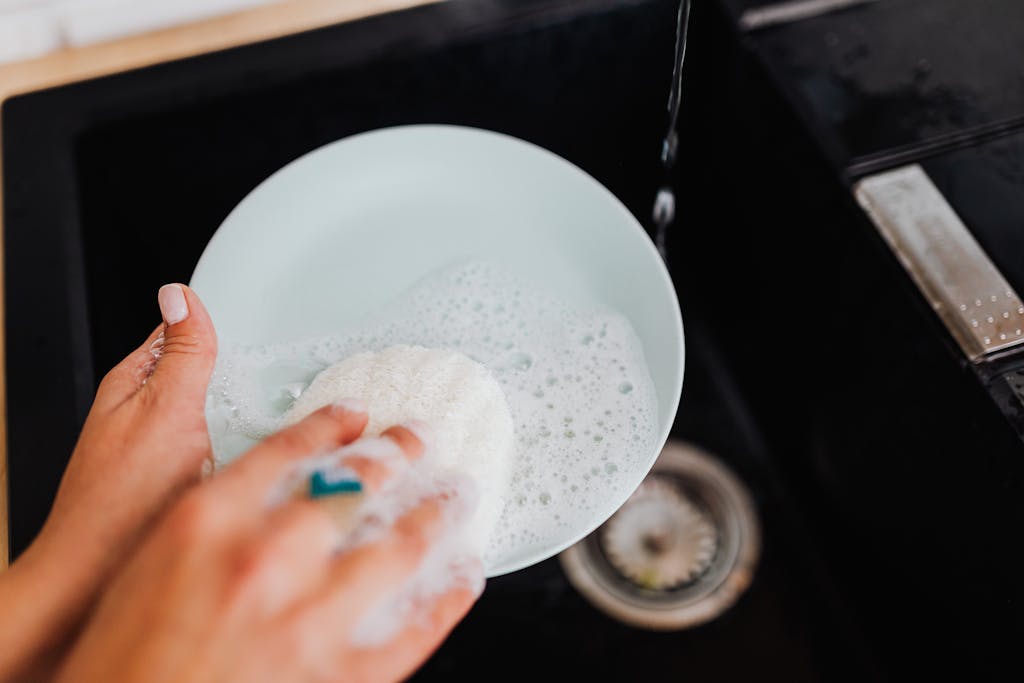
I do dishes so often that my sink and I are basically in a long-term relationship. No one likes toxic relationships, which is why I use non-toxic dish soap.
This is my 2026 guide to the best non-toxic dish soap options that actually work, plus the non-toxic sponges and dish brushes I like most for a safer swap.
My Quick Top Picks for the Safest Non-Toxic Dish Soaps
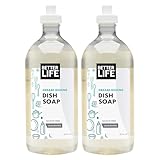


My favorite non-toxic sponge + brush setup (simple and very doable)
If you only change one “tool,” make it this: switch from a sponge to a dish brush for daily washing.
Research on real, used kitchen tools suggests brushes can be more hygienic than sponges and that “antimicrobial” sponges don’t solve the bacteria issue.
My easy starter combo looks like this:
If you use “magic eraser” style melamine sponges a lot, know that scrubbing can shed microplastics as the foam wears down.
Why Choosing a Truly Non-Toxic Dish Soap Matters
Dish soap is a rinse-off product, but it still matters.
It lives on your hands, touches your kids’ cups, and ends up going down your drain every day.
One of the biggest issues is fragrance.
Fragrance ingredients are a very common cause of contact allergy, and “fragrance” on a label doesn’t usually tell you what’s inside that scent blend.
If you’ve ever gotten dry, irritated hands from dishes, you’re not imagining things.
Dermatology research often uses sodium lauryl sulfate as a known irritant control in patch testing, which tells you how reliably it can inflame skin under the right conditions.
I also care about what goes down the drain.
For example, the EPA has flagged 1,4-dioxane as presenting unreasonable risk to human health and specifically discusses it in the context of consumer and commercial products washed down the drain and contaminating surface water used for drinking water.
The Toxic Chemicals Hiding in Popular Dish Soaps
I’m going to say “toxic” here the way most people mean it in real life: ingredients that are more irritating, more controversial, less transparent, or more likely to include unwanted contaminants.
This is not me calling your current soap “poison,” it’s me helping you spot what doesn’t fit a non-toxic goal.
☣️ Fragrance and undisclosed scent blends
Fragrance is a top trigger for allergic contact reactions, and the science on fragrance allergy has been around for decades.
What makes it tricky is disclosure: synthetic fragrance can be listed as “fragrance” or “parfum,” without naming the individual chemicals in the blend.
Even in rinse-off products, fragrance allergens may only require labeling above certain thresholds, which means “lightly scented” can still be complicated for sensitive people.
If eczema, dermatitis, migraines, or “my hands hate this” is part of your life, fragrance-free is often the simplest first move.
☣️ Ethoxylated ingredients and 1,4-dioxane as a byproduct concern
Some surfactants are made through ethoxylation, and that process can create 1,4-dioxane as a byproduct.
That’s why non-toxic shoppers often avoid ingredients like SLES (sodium laureth sulfate) and other “-eth” ingredients when they’re trying to minimize this category.
☣️ Preservatives like isothiazolinones (MI, MCI, BIT)
Preservatives exist because water-based products can grow microbes, which you do not want.
But some preservatives are also well-known skin sensitizers.
Research on isothiazolinones (including MI and related preservatives) discusses their role in allergic contact dermatitis and consumer exposure from household and personal care products.
☣️ Antibacterial agents (often unnecessary at home)
“Antibacterial” marketing sounds comforting, especially if you have kids.
But for routine home use, plain soap and water already works well for hygiene, and the FDA has taken action against certain antibacterial actives in consumer wash products.
Some dish soaps also include antibacterial agents in certain variants, which is one more reason I prefer a simpler formula unless you truly need that feature.
When I see “antibacterial,” I slow down and read every ingredient twice.
Before You Shop…
Many of the items below ship with Amazon Prime. Not a member yet? Prime Trial offers new customers a 30-day trial for Prime or a 6-month trial for Prime for Young Adults.
Are Dish Soap Bars, Concentrates, and Castile Soap Really Non-Toxic?
Sometimes the “non-toxic” win is not just the brand, but the format.
Here’s how I think about the popular options.
Dish soap bars can be a great low-waste choice if they keep the formula simple and skip heavy fragrance.
But “naturally scented” still counts as fragrance, and fragrance allergy can come from many individual fragrance chemicals, including botanicals.
Concentrates and refills can be a massive packaging upgrade if you’ll actually refill.
If the ingredients work for your household, I’m a fan of the “one refill jug, many refills” approach.
Castile soap is its own category because it’s a true soap, not a detergent.
If you use it for dishes, follow real dilution guidance (it’s concentrated) and expect it to behave differently in hard water.
Now the tools, because they matter just as much as the soap.
Used kitchen sponges can be heavily colonized with bacteria, and research suggests brushes often hold lower bacterial levels than sponges.
And if you love melamine “magic eraser” sponges, just know they can shed microplastics as they wear down.
That’s why I choose brushes + cellulose sponges for daily dish life.
How I Tested These Dish Soaps For Safety
I have two separate tests: one for safety vetting and one for real-life grease.
A product has to pass both to be a true recommendation.
My safety vetting checklist (what I did every time)
I started with the dealbreakers, especially around fragrance disclosure and ethoxylated ingredients.
Then I verified with brand ingredient lists, retailer ingredient lists, and (when available) safety data sheets.
My repeatable checklist looks like this:
My grease and “real sink” test
After each soap passed my ingredient test, I tested it in real life on my own dirty dishes. Because a dish soap can be “clean” and still be useless on grease.
Here’s the rating system I use in this post.
⭐ Cleanest = meets my stricter “non-toxic” standards, ✅ Low-tox alternative = a solid upgrade but not perfect, ❌ Avoid (greenwashed) = doesn’t fit a non-toxic swap (based on ingredients and/or disclosure).
The Best Non-Toxic Dish Soap Brands in 2026
Everything in this section is Amazon-available in the US as of early 2026 (and I still recommend reading the label when it arrives, because ingredient lists can change).
⭐ Yaya Maria’s Natural Dish Soap
If you want the shortest ingredient list in this whole post, this is it.
Yaya Maria’s lists six simple ingredients on its product page (water, glycerin, coconut oil, potash, castor oil, and an essential oil), plus a five ingredient unscented version.
It’s also listed in the USDA BioPreferred catalog under dishwashing products, which supports their USDA biobased positioning.
Yaya Maria’s is hands down my favorite dish soap. It’s what I use in my own home on a daily basis. I have hard water, but it doesn’t leave any residue on my dishes.
P.S. the lemongrass scent is my favorite.
my favorite dish soap
Yaya Maria’s
Buy directly from their website and use code NATURALLYNONTOXIC for 10% off.
pros
Cons
⭐ Better Life Dish Soap Unscented
Better Life’s unscented formula is built around plant-derived surfactants like glucosides, plus aloe and vitamin E (based on label ingredient disclosure).
The Amazon listing is very transparent with the full ingredients (most brands don’t even show you the ingredients) and highlights what it does not include (like SLS/SLES), which lines up with why many families choose it as a “safer swap.”

pros
Cons
⭐ Meliora Dish Soap Bar
If you want a truly minimalist, plastic-free dish soap, this is one of my cleanest picks. Meliora’s bar is MADE SAFE certified, uses a simple vegetable-soap base (organic coconut oil + sunflower oil), and skips synthetic preservatives and extras.
In real life, I like it best with a dish brush. I swirl the brush on the bar, add a splash of hot water, and scrub, and for greasy pans I soak first so I’m not trying to brute-force a bar soap. One note, bars can clog drains if you let soap gunk build up, so keep it dissolved and rinse well.

pros
Cons
✅ “Low-Tox Alternatives” (better than most but not perfect)
These brands are a huge step up from conventional dish soap.
They avoid the worst offenders and generally clean well.
That said, they do not meet my strictest non-toxic standards.
Longer ingredient lists, fewer details, or choices that raise yellow flags rather than hard stops.
Nothing super alarming, just not as clean or minimal as the top-tier options.
If this is what’s available, I would use them without panic.
But when cleaner, more transparent choices exist, I reach for those instead.
✅ AspenClean Dish Soap Refill Unscented
AspenClean lists a short ingredient set for the unscented refill, including water, salt, glucosides, glycerin, citric acid, and aspen bark extract.
It also explicitly positions this formula as fragrance-free and highlights a refill format designed to make multiple bottles.
In my sink tests, this one handled greasy pans without me needing half a bottle.
It rinsed clean and didn’t leave that “slick perfume coating”.

pros
Cons
✅ Dr. Bronner’s Baby Unscented Pure-Castile
Dr. Bronner’s lists a short ingredient set of oils, potassium hydroxide (used in saponification), and small supporting ingredients like citric acid and tocopherol.
It also publishes dilution guidance, including a dishwashing ratio, because castile is concentrated and works best pre-diluted.

pros
Cons
✅ ATTITUDE Nature+ Dishwashing Liquid Unscented
Attitude’s unscented formula lists surfactants like sodium coco-sulfate plus non-ionic glucosides, with preservatives like sodium benzoate and potassium sorbate, as well as citric acid.
The bottles are made of recycled plastic and they offer refill options to cut down on waste.
If you do end up choosing this brand, just make sure to use the unscented only. While some of the other brands on this list have non-toxic options scented with essential oils, Attitude’s scented dish soaps are not made with clean ingredients.
pros
Cons
❌ “Greenwashed” Dish Soap Brands to Avoid
This is the “I’m trying to reduce chemical load and avoid hidden extras” list.
These products clean dishes, but they use ingredient strategies I don’t choose for a non-toxic swap.
❌ Seventh Generation Dish Soap Free & Clear
Seventh Generation discloses ingredients, but it includes isothiazolinone preservatives like methylisothiazolinone and benzisothiazolinone in some formulas.
❌ Dapple Baby Bottle & Dish Soap Fragrance Free
Dapple is fragrance-free, but it uses benzisothiazolinone as a preservative.
❌ Biokleen Free & Clear Dish Liquid
Biokleen’s Free & Clear formula is fragrance-free, but it’s far from minimalist, and it can include ingredients like SLS, cocamidopropyl betaine, and phenoxyethanol.
❌ Method Dish Soap
Method lists fragrance allergens (like limonene and linalool) plus methylisothiazolinone and methylchloroisothiazolinone in at least some dish soap formulas.
❌ Mrs. Meyer’s Dish Soap
Mrs. Meyer’s ingredient lists commonly include fragrance (plus fragrance allergens) and isothiazolinone preservatives like MI and BIT.
❌ Dawn (especially scented and antibacterial variants)
Dawn lists surfactants like SLS and SLES, fragrance, colorants, preservatives like methylisothiazolinone, and (in some contexts) antibacterial agents like chloroxylenol.
SLES is also in the category many people avoid due to ethoxylation byproduct concerns.
❌ Palmolive Ultra Strength
Palmolive lists sodium laureth sulfate, fragrance, isothiazolinones, and dyes in its Ultra Strength ingredient disclosure. If you’re choosing truly non-toxic, that’s basically a greatest-hits album of what you’re trying to move away from.
Smart Non-Toxic Dish Soap Hacks (That Actually Work)
The easiest trick is a 3-minute soak.
Most stuck-on food comes off faster when you soak, and you’ll use less product and less scrubbing force.
Use a brush for the daily stuff and downgrade sponges to “backup.”
Research on used kitchen tools suggests brushes tend to be more hygienic than sponges and that antimicrobial sponges don’t automatically reduce bacterial load in real use.
Skip “magic eraser” sponges for everyday dish duty.
Melamine foam can shed microplastics when scrubbed as it wears down.
If you use castile soap for dishes, dilute it first.
Dr. Bronner’s publishes dishwashing dilution guidance, and it’s a good model for how concentrated soaps behave best.
FAQs about Non-Toxic Dish Soap
Non-Toxic Dish Soap = A Cleaner Kitchen With Less Guesswork
Switching to the best non-toxic dish soap did two things for me.
It made my sink feel simpler, and it stopped the constant “what am I rubbing into my hands” spiral.
A truly non-toxic dishwashing soap should do one job well: cut grease without blasting you with chemicals.
If it also comes in a fragrance-free dish soap option and lists every ingredient clearly, that’s the sweet spot.
If you want the easiest next step, start with one upgrade: pick a fragrance-free, plant-based dish soap and pair it with a dish brush.
That combo usually fixes the two biggest complaints fast: dry hands and stubborn grime.
Spring cleaning is the perfect time to detox the stuff that your family uses every day.
Swap the soap, replace the sponge or brush, and call it a win you’ll actually feel every time you wash a pan.
You Might Also Like…


References
join the newsletter
Want more non-toxic guides? Subscribe today.