
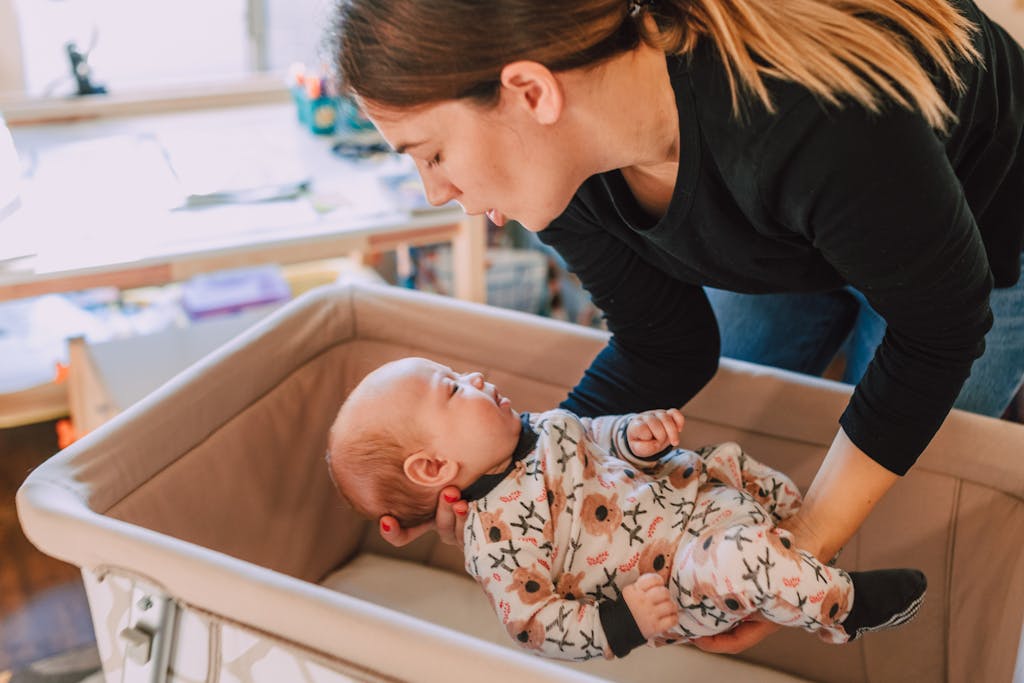
Non-toxic bassinets are harder to vet than they should be.
Most look safe, simple, and sweet. Then you check the mattress details and find vague words like “foam,” “fabric,” or “waterproof” with very little explanation.
For this guide, I screened each product by materials disclosure, third-party certifications, and sleep-surface design.
The cleanest options on Amazon are not all traditional bassinets. Some of the strongest picks are mini cribs, travel cribs, and play yards with bassinet attachments because they offer better transparency and longer use.
My goal is not perfection. I want fewer mystery materials, clearer proof, and safer swaps I can actually stand behind.
The biggest takeaway: there are not many truly impressive non-toxic bassinets on Amazon right now. The best options disclose the sleep-surface materials, meet the right federal standard for their format, and support their claims with meaningful certification or clear product details.
My Quick Top Picks for the Safest Non-Toxic Bassinets
I used a simple rating system here. ⭐ means “cleanest,” ✅ means “low-tox alternative,” and ❌ means “avoid for a non-toxic registry.”



These are the picks I would send to a friend who asked me for the shortest possible answer and had a baby registry tab open in the next window. They all earned a spot because they gave me more proof and fewer question marks than the average bassinet page on Amazon.
Why Choosing a Truly Non-Toxic Bassinet Matters
Newborns spend a lot of time sleeping, so I care about the materials closest to their face and body.
For bassinets, I look hardest at the mattress core, mattress cover, surrounding textiles, and any support board under the sleep surface.
I also separate “safe sleep” from “non-toxic.” They overlap, but they are not the same thing.
A bassinet can meet the required safety standard and still use conventional foam, vague waterproofing, or synthetic-heavy materials I would rather avoid when better options exist.
That is why I do not rely on cute photos, soft mesh sides, or thousands of reviews alone.
If a brand does not clearly explain what the baby is sleeping on, I treat that as a red flag. Not an automatic fail, but definitely not a top pick.
The Toxic Chemicals Hiding in Popular Bassinets
The main red flags I look for are polyurethane foam, unclear waterproof layers, composite wood support boards, and vague mattress descriptions.
Crib mattress and children’s sleep-environment research has found VOCs and SVOCs in this category, including chemicals related to plasticizers and flame retardants.
Formaldehyde is another concern with engineered wood and MDF. The U.S. Environmental Protection Agency regulates composite wood products for formaldehyde emissions under TSCA Title VI, so I want to see clear compliance or a low-emissions certification.
PVC and phthalates matter too, especially when a brand says “waterproof” but does not explain the waterproof layer. If a product uses plasticized materials near the sleep surface, I want more detail.
Flame retardants are another reason I look for clear disclosure. I prefer brands that state they do not use added flame retardants or provide stronger third-party emissions testing.
This does not mean every mainstream bassinet is automatically a bad choice.
It means I need more than soft mesh, pretty photos, and vague safety language before I call something one of the best non-toxic bassinets.
Are Bedside Sleepers, Mini Cribs, and Travel Cribs Really Non-Toxic?
Sometimes, yes. In some cases, they are the better buy.
A bedside sleeper can be a good option if it meets the correct federal standard and the brand clearly discloses the sleep-surface materials.
Mini cribs and travel cribs can also be strong picks. Many offer better material transparency, more GREENGUARD Gold options, and longer use than a traditional newborn bassinet.
That is why I included a few non-traditional options in this guide.
I care more about what the baby is actually sleeping on than whether the product is marketed as a bassinet.
I know that is slightly annoying if you came here wanting one neat category and one neat answer. I would rather be useful than neat.
How I Tested These Bassinets For Safety
I vetted each bassinet using the same four-part checklist.
I treated each certification differently. GREENGUARD Gold looks at emissions, OEKO-TEX focuses on textile testing, and GOTS applies to organic textile claims.
I only gave ⭐ status to products that were transparent enough to meet my stricter standards.
If a brand had beautiful photos but vague mattress details, it did not make the cleanest tier.
⭐ The Best Non-Toxic Bassinet Brands in 2026
⭐ Newton Baby Essential Bassinet
This is my favorite true bassinet for a clean-materials-first registry. Newton states that the mattress uses a foam-free Wovenaire core made from 90 percent air and 10 percent food-grade polymer, with no foam, glue, latex, or springs, and that the product carries GREENGUARD Gold certification.
I like it because the company actually tells me what the mattress is, which should not feel so rare in this category. It is the easiest true bassinet for me to recommend when “cleanest I can actually buy on Amazon” is the goal.

Quick pros: transparent mattress build, GREENGUARD Gold, washable components, true bassinet format. Quick cons: it is expensive for a newborn-only purchase, and parts of the cover are still synthetic.
⭐ Newton Bassinet & Bedside Sleeper
If you want the bedside version of that same cleaner-materials story, this is the stronger pick. Newton discloses the outer cover, inner cover, and core materials here too, and the bedside design gives you more night-feed practicality than the stand-alone Essential.
I would choose this over mainstream swivel sleepers when materials transparency matters as much as convenience.

Quick pros: GREENGUARD Gold, disclosed mattress build, washable, bedside access. Quick cons: larger and pricier than simpler bassinets.
⭐ Guava Family Lotus Travel Crib
This is not a classic bassinet, and I want to say that plainly. It makes my cleanest tier because the brand pairs GREENGUARD Gold with unusually strong restricted-substances language, including no PVC, phthalates, formaldehyde, flame retardants, lead, cadmium, arsenic, or mercury.
If you travel a lot, split time between homes, or just hate buying baby gear with a six-minute useful life, this is one of the smartest safer swaps in the nursery space. I chose the Guava Lotus for my family because I knew it would be useful beyond 4 months. I also liked that I could leave the side unzipped kind of like a Montessori floor bed when my baby got older.

Quick pros: strong disclosure, GREENGUARD Gold, lightweight, excellent travel option. Quick cons: not as convenient as a bedside bassinet for middle-of-the-night wake-ups.
⭐ UPPAbaby Remi Playard
The Remi is my favorite one-and-done alternative for parents who want a bassinet phase without ending up with yet another nursery item in storage. The product materials and certification story are stronger than average, with GREENGUARD Gold, a bassinet included, and an organic cotton mattress cover.
I like it because it keeps working after the newborn stage. That makes it a very practical registry move for parents who want fewer products and fewer material mysteries over time. It’s bulkier than the Guava, but if you don’t travel much then the difference is negligible.

Quick pros: bassinet included, GREENGUARD Gold, organic cotton cover, strong long-term value. Quick cons: bigger footprint and higher price than a basic bassinet.
⭐ Babyletto Origami Mini Portable Crib
This is my favorite “skip the bassinet drama and buy the cleaner mini crib” option. Babyletto states that it uses solid New Zealand pine, a non-toxic finish that is lead- and phthalate-safe, TSCA-compliant engineered wood in the support, and GREENGUARD Gold certification.
It is not a true bassinet, but it is one of the best non-toxic bassinets alternatives on Amazon for small spaces and longer use. If your room can handle the footprint, this is a very smart swap.

Quick pros: GREENGUARD Gold, solid wood, non-toxic finish, foldable, much better lifespan. Quick cons: not a bedside sleeper, and it takes up more space than a traditional bassinet.
✅ Low Tox (better but not perfect)
These bassinets are better than many mainstream options, but they do not meet my strictest standards.
I would still consider them for the right family, especially if budget, bedside access, or availability matters. They just come with more material compromises or transparency gaps than my cleanest picks.
✅ Baby Delight Heirloom Willow Wooden Bassinet
I like the general direction here more than I like the final materials story. Baby Delight uses GOTS-certified organic cotton fabric and a natural wood frame, but the product also includes polyester mesh and a polyester mattress without low-emissions certification for the full item.
That leaves it in my low-tox bucket instead of the cleanest tier. It is still better than a vague all-foam mystery bassinet, which is not nothing.
Quick pros: wood frame, GOTS-certified organic cotton fabric, attractive bassinet format. Quick cons: polyester mattress details and no GREENGUARD-style emissions proof.
✅ Baby Delight Beside Me Serenity Bassinet
This is the budget-friendlier Baby Delight option that still gives you organic fabric language and Amazon availability. The problem is that the listing leans on GOTS organic cotton without giving the same level of full mattress and emissions detail that I want for a top recommendation.
I can call it better-than-average. I cannot call it one of the cleanest non-toxic bassinets without overselling it.
Quick pros: lower price, organic cotton angle, bedside format, easy to find on Amazon. Quick cons: incomplete mattress composition and too many unknowns.
✅ Baby Delight Beside Me Dreamer Organic
This model has the same broad appeal as a lot of “organic” bedside sleepers. It uses GOTS-certified organic cotton fabrics, but the materials disclosure also includes polyester mesh and polyester filling, and there is still no GREENGUARD-style emissions proof for the product.
That makes it a decent compromise, not a cleanest pick. I would choose it over more generic polyester-heavy models, but I would not place it above Newton.
Quick pros: organic fabric story, strong bedside functionality, easier availability. Quick cons: synthetic fill and mesh, no low-emissions certification.
✅ BABYBJÖRN Cradle
I appreciate that this brand gives strong materials disclosure instead of mushy nursery language. The cradle uses OEKO-TEX Class 1 materials, which is a real plus, but the mattress includes polyether foam and a polyurethane-coated cover.
That combination knocks it out of my top tier for this specific guide. It is a cleaner mainstream option than many, just not the cleanest.
Quick pros: strong transparency, OEKO-TEX textile testing, light and airy design. Quick cons: foam-based mattress and polyurethane-coated cover.
✅ Chicco LullaGlide Bassinet
Chicco lands in my “better but not perfect” bucket because the product is GREENGUARD Gold certified, which gives me more confidence on emissions than a lot of conventional bassinets. At the same time, the materials profile is still fairly synthetic-heavy, with polyester and EVA called out in the research notes.
That means I see it as a compromise pick, not a standout clean pick. If you want a recognizable brand and a more mainstream price point, it is one of the stronger conventional options.
Quick pros: GREENGUARD Gold, bassinet format, easier mainstream buy. Quick cons: synthetic-heavy build and not my ideal materials profile.
✅ HALO Sleep BassiNest Luxe Swivel Sleeper
This is the convenience queen of the bunch, and I completely understand why parents love the bedside function. HALO also gets credit for clearly disclosing polyester surfaces and a polyurethane foam mattress core, which is more honesty than some brands offer.
Still, for a non-toxic guide, convenience alone is not enough for a top spot. I would only choose this if bedside access matters more to you than a cleaner materials profile.
Quick pros: excellent bedside ergonomics, clear disclosure, familiar design. Quick cons: foam-heavy and synthetic-heavy for this kind of list.
❌ Toxic Bassinet Brands to Avoid
I am using “avoid” carefully here. I am not claiming these products are automatically unsafe in a medical or regulatory sense.
I am saying I would avoid these specific models for a non-toxic registry because the materials proof is too weak, the mattress story is too conventional, or the brand asks me to trust too much with too little evidence.
❌ Maxi-Cosi Iora Bedside Bassinet
I like the recycled-fabric angle in theory, but the product pages stay fuzzy on the details that matter most to me. I could not verify the mattress and emissions story strongly enough for this guide.
❌ Arm’s Reach Clear-Vue Co-Sleeper
This is a very functional classic co-sleeper, but function is not my only filter here. The materials disclosure is too thin, and I could not verify the kind of low-emissions information I want before recommending it in this category.
❌ Evolur Lullaby Portable Bassinet
Evolur discloses a high-density foam pad, which at least tells me something real. The bigger issue is that I still do not get the stronger certification or fuller materials breakdown I want for a cleaner recommendation.
❌ Delta Children Sweet Dreams Bassinet
This is one of those budget models that looks innocent until you start reading the materials language. The generic “fabric” and waterproof mattress notes, paired with no meaningful low-emissions proof, push it out of consideration for me.
❌ Dream On Me Karley Bassinet
This one is popular because it is lightweight and cheap, which I understand. It still lands in my avoid section because the listing is too generic and polyester-heavy, with no strong emissions certification or detailed mattress disclosure.
Smart Non-Toxic Bassinet Hacks (That Actually Work)
If you already bought a bassinet that is not my top pick, do not panic.
Start with ventilation. Let the product air out in a well-ventilated room before use, and wash any removable sheets or covers according to the care instructions.
If you are still shopping, consider the format, not just the label.
A cleaner mini crib or play yard with a bassinet attachment may give you better material transparency, longer use, and more value than a traditional newborn bassinet.
My favorite low-tox hack is simple: buy fewer baby sleep products, and choose the most transparent one first.
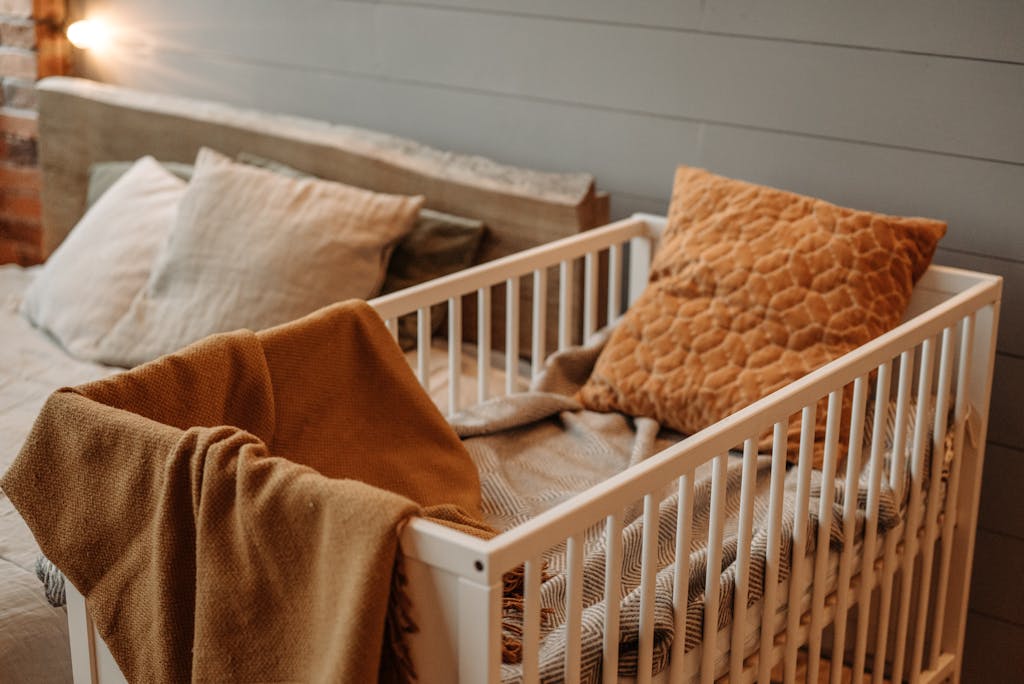
Some frequently asked Questions About Non-Toxic Bassinets
Non-Toxic Bassinets = Fewer Mystery Materials in Your Nursery
If you want the cleanest true bassinet on Amazon, I would start with Newton.
If you want the smartest registry pick overall, I would also consider the UPPAbaby Remi, Guava Lotus, or Babyletto Origami.
They are not all traditional bassinets, but they offer stronger transparency, longer use, and better value for many families.
The best non-toxic bassinets are not just the prettiest ones.
They are the ones with clear materials, safer sleep design, useful certifications, and fewer unanswered questions.
View all Baby posts
References
- American Academy of Pediatrics: Safe sleep recommendations and evidence base
- U.S. Consumer Product Safety Commission: Safe Sleep guidance
- CPSC: Bassinets and Cradles Business Guidance
- CPSC: Bedside Sleepers Business Guidance
- Code of Federal Regulations: Safety Standard for Bedside Sleepers, 16 CFR Part 1222
- Code of Federal Regulations: Safety Standard for Infant Sleep Products, 16 CFR Part 1236
- Code of Federal Regulations: Safety Standard for Non-Full-Size Baby Cribs, 16 CFR Part 1220
- Code of Federal Regulations: Safety Standard for Play Yards, 16 CFR Part 1221
- U.S. Environmental Protection Agency: Formaldehyde Emission Standards for Composite Wood Products
- U.S. Environmental Protection Agency: Formaldehyde and Indoor Air Quality
- National Institute of Environmental Health Sciences: Flame Retardants
- Infant exposure to emissions of volatile organic compounds from crib mattresses
- Are Sleeping Children Exposed to Plasticizers, Flame Retardants, and UV-Filters from Their Mattresses?
- UL Solutions: GREENGUARD Certification
- OEKO-TEX Standard 100
- Global Organic Textile Standard: The Standard
- Global Organic Textile Standard: Key Features
join the newsletter
Want more non-toxic guides? Subscribe today.